Halal Food in Bali: A Muslim Traveller's Guide
Bali is Hindu-majority, so pork is everywhere - but halal food is far easier to find than you'd think. My honest guide to eating well, safely and confidently as a Muslim traveller.
A reader called Aisha messaged me last month, a week before her first trip, half-apologetic and half-panicked. “I keep reading that Bali is all pork,” she wrote. “Am I going to spend my honeymoon eating plain rice and crisps?” I laughed, but kindly, because I remember thinking exactly the same thing before my first visit. So let me answer her the way I’ll answer you: no, you won’t. Halal food in Bali is far easier to find than the internet suggests, and yes, Bali is Muslim friendly in all the ways that matter day to day.
Here’s the thing most guides bury. Bali is Hindu-majority, the only Hindu-majority island in Indonesia, which is why pork (babi) turns up on so many menus and why the island’s most famous dishes aren’t halal. But Bali sits inside the world’s largest Muslim-majority country, and it has a big, long-settled Muslim community of Javanese, Madurese and Sumatran families. Where there are Muslim communities, there is Muslim food. Once you know where to look, you’ll eat brilliantly.
Is it easy to find halal food in Bali?
Yes, easier than you’d expect, especially in Denpasar, Kuta and anywhere near a mosque. The trick is knowing which cuisines are halal by tradition rather than hunting for a certificate on every door.
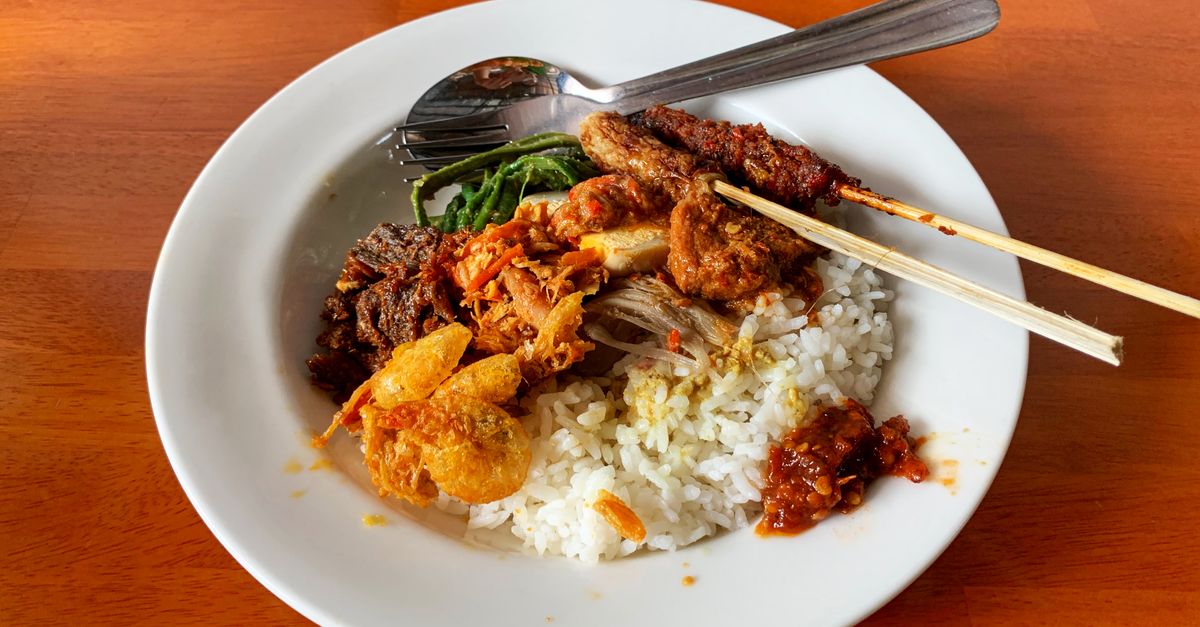
The single most reliable option across the whole island is Nasi Padang, the West Sumatran food you’ll see in warungs signed “Rumah Makan Padang” or “Nasi Padang”. These are run by the Minangkabau people, who are Muslim, so the food is halal by long tradition: no pork, no alcohol, just rows of rendang, gulai, ayam pop and vegetables you point at behind the glass. If you remember one thing from this guide, remember that a Padang warung is a safe fallback almost anywhere you find yourself.
After that, look for “Warung Jawa” (Javanese food) and “Sate Madura”, the travelling satay sellers from Madura who are almost always Muslim. Between Padang, Javanese and Madurese cooking, you have a genuinely wide range of proper Indonesian food, not a compromise. And if you ever want to understand the wider food scene you’re dipping into, my broader guide to what to eat in Bali sets the landscape.
Understanding halal certification (and when to relax)
Indonesia does have formal halal certification. For years the main authority was MUI, the Indonesian Ulema Council, and certification is now overseen by the government body BPJPH, so you’ll sometimes spot a halal logo or certificate displayed near the till. It’s a lovely reassurance when you see it.
But here’s my honest, practical view: don’t make certification the bar you refuse to eat below. Plenty of genuinely halal, Muslim-owned family warungs have never bothered with the paperwork, and turning them down means missing some of the best food on the island. I treat certification as a bonus, not a requirement. What I actually rely on is a mix of signals, who runs the place, what cuisine it is, and a direct question when I’m unsure.
A gentle phrase to keep in your pocket: “Ada babi?” (is there pork?) and “tidak pakai babi” (without pork). Many stalls also display “Halal” or “Muslim” signage precisely because they cater to Indonesian Muslim travellers. When a warung is signed Halal, run by a family in hijab, and serving Padang or Javanese food, you can eat with an easy heart.
What to avoid, and where it gets trickier
Being respectful of Bali’s Hindu culture means understanding that some of its proudest dishes simply aren’t for us. Babi guling, the roast suckling pig, is the island’s most iconic celebration food. Lawar, a minced-meat salad, often contains pork, and the red version, lawar merah, is traditionally made with fresh pig blood. Sate lilit can be pork too, though seafood versions exist. There’s no need to be squeamish or judgemental about any of this; it’s simply not our plate, and Balinese food culture deserves the same respect we’d want for ours.
Practically, the areas that need more care are the deep-Hindu tourist zones and fine-dining spots built around Balinese specialities. Alcohol is also widely served in tourist areas, so even at a pork-free restaurant it’s worth checking that a dish isn’t cooked with wine or that your neighbour’s beer garden isn’t the whole vibe. For a feel of how ordinary Balinese eateries work, and how to read them, my warung in Bali local food guide is a good companion, and it’ll help you spot the halal-friendly ones with confidence.
Where to base yourself, and eating through the day
If halal ease is a priority, Denpasar and Kuta are your friends. Denpasar, the island’s capital, has whole neighbourhoods, Renon and Dauh Puri among them, thick with Muslim-owned eateries and food markets. Kuta has a long-established Muslim traveller scene, with halal food stalls clustering near its mosque. North Bali (around Singaraja) also has strong Muslim communities. Seminyak and Ubud are more tourist-Hindu, but even there halal spots exist, you just plan a little more.
For breakfast, nasi goreng and mie goreng at a Muslim-owned warung are your reliable friends, and many hotels catering to Indonesian and Malaysian guests offer clearly halal spreads, ask when you book. Lunch and dinner are where Padang shines. For snacks and downtime, plenty of Bali’s café scene is naturally pork-free (think smoothie bowls, toasties and coffee), though do check anything with bacon or ham; I’ve pointed out some genuinely lovely spots in my roundup of the best Bali cafés. And when all else fails, the big international chains, KFC, McDonald’s, Pizza Hut, are halal-certified in Indonesia, which is handy for travelling with tired children.
Prayer, mosques and feeling at home
Bali is genuinely welcoming to Muslim visitors, and finding a place to pray is straightforward. There are beautiful mosques dotted around: Masjid Agung Ibnu Batutah in Nusa Dua, Masjid At-Taqwa and the large Masjid Agung Sudirman in Denpasar, and Ar-Rahmat Mosque in Kuta, which conveniently has halal food stalls right beside it. Smaller prayer rooms, musholla, are common in shopping malls and larger complexes, so you’re rarely far from somewhere to make salah. A prayer app for accurate times and qibla direction is all the extra kit you’ll need.
Conclusion
So this is what I wrote back to Aisha, and what I’ll leave with you. Bali will not have you living on plain rice. It will feed you rendang that falls apart at the touch of a fork, satay smoking over coconut husks, and nasi campur piled high at a family warung where someone’s grandmother is quietly running the show. Lean on Padang, Javanese and Madurese food, treat certification as a happy bonus rather than a rule, learn two or three polite phrases, and base yourself where the Muslim community already thrives. Do that, and Bali becomes not a place you survive as a Muslim traveller, but one you genuinely enjoy, pork-free, prayer-friendly, and every bit as delicious as everyone promised. Come hungry.
FAQs
Is Bali Muslim friendly?
Yes. Although Bali is Hindu-majority, it sits within Muslim-majority Indonesia and has a large, long-settled Muslim community. You’ll find halal food, mosques and prayer rooms without much trouble, and locals are used to welcoming Muslim travellers from across Indonesia, Malaysia and beyond.
Is it hard to find halal food in Bali?
Not really. It’s easiest in Denpasar, Kuta and near mosques, and the reliable trick is to seek out cuisines that are halal by tradition, Nasi Padang, Warung Jawa and Sate Madura, rather than checking every restaurant for certification.
What is the most reliable halal food in Bali?
Nasi Padang, the West Sumatran food served at “Rumah Makan Padang” warungs. These are Muslim-owned and halal by tradition, with no pork or alcohol, so they’re a safe fallback almost anywhere on the island.
Which famous Balinese dishes are not halal?
Babi guling (roast suckling pig) is the big one. Lawar often contains pork, and lawar merah is traditionally made with pig blood. Sate lilit can be pork too. These are cherished Hindu-Balinese dishes, so it’s simply a case of choosing differently, not judging.
Do I need to look for halal certification in Bali?
It helps when you spot an MUI or BPJPH logo, but many genuinely halal family warungs never get certified. Treat certification as a bonus and rely instead on the cuisine, the owners and a polite question if you’re unsure.
How do I ask if food contains pork?
Useful phrases are “Ada babi?” (is there pork?) and “tidak pakai babi” (without pork). Many stalls also display “Halal” or “Muslim” signage because they cater to Indonesian Muslim travellers.
Where should I stay in Bali for easy halal food?
Denpasar and Kuta are the easiest bases, with plenty of Muslim-owned eateries and halal stalls near the mosques. North Bali also has strong Muslim communities. Seminyak and Ubud work too, but you’ll plan your meals a little more.
Are there mosques and prayer facilities in Bali?
Yes. There are notable mosques in Nusa Dua, Denpasar and Kuta, and smaller prayer rooms (musholla) are common in shopping malls and larger complexes, so you’re rarely far from somewhere to pray.
Is halal breakfast available in Bali?
Yes. Nasi goreng and mie goreng at Muslim-owned warungs are dependable, and many hotels catering to Indonesian and Malaysian guests offer clearly halal breakfasts, just confirm when you book.
Is alcohol a problem for Muslim travellers in Bali?
Alcohol is widely served in tourist areas, but halal restaurants and Padang warungs are alcohol-free by nature. Just check drinks and cooking wine separately at mixed venues, and you’ll be fine.
Before you go: I wrote this in 2026 and double-checked every price, fee, opening time and rule I could, but Bali changes fast. Treat the figures here as a guide and confirm the latest details before you book or travel.