Bali's Water Crisis: What 16 Million Arrivals a Year Actually Costs the Island
Around 16 million visits a year, salty wells on the south-west coast, an overflowing landfill and a strained subak. What tourism costs Bali's water, where the headline figures come from, and how to visit more lightly.
Picture this: you’re in the shower at a villa in Canggu and the water cuts out mid-rinse. No trickle, no sputter. It just stops. It’s an imagined scene, but it’s closer to the truth than you might think. In some parts of Bali, residents report wells running dry in peak season, and seawater has already pushed into the groundwater along this stretch of coast.
We don’t talk about this enough. Not the travel bloggers, and definitely not the Reels of infinity pools at sunset. But behind every poolside shot there’s a water problem that has been building for years, and with visitor numbers at record levels it’s getting harder to look away from.
This isn’t a guilt piece. I love Bali. I’ve spent years here and I’m not going anywhere. But I think anyone planning a trip deserves the full picture, not just the pretty one. So here’s what around 16 million visits a year cost the island, where those numbers come from, and what you and I can do about it.
The numbers behind the Bali water crisis and tourism
Start with the visitors. BPS Bali, the provincial statistics office, recorded 6,948,754 direct foreign arrivals in 2025, up 9.72% on 2024 and a record for the island. Preliminary government figures released in January 2026 put total visits for the year, domestic and foreign together, at about 16.33 million, slightly down on 16.45 million in 2024. That total leaves out some land and sea arrivals, so the real number is higher. It counts visits, not people: plenty of us come more than once a year. Foreign arrivals for January to July 2026 were just over 3.9 million, about 2% below the same months of 2025.
Now the water. The figure you’ll see everywhere is that tourism uses around 65% of Bali’s water. It’s an estimate, not a measurement: it goes back to the Indonesian NGO IDEP, reported by Al Jazeera in 2019, and the Asia Media Centre was still citing it in 2026. The exact percentage is shaky. The pressure is real.
In North Kuta, the district that includes Canggu, a 2024 study in Jurnal Bali Membangun Bali, the provincial government’s research journal, found seawater had pushed into the groundwater at Canggu and Tibubeneng to a low or moderate degree, and most severely at Kerobokan Kelod, where the salty zone ran about 1,200 metres along the shore and 700 metres inland. The authors expect it to creep a further 35 to 56 metres inland each year if extraction carries on.
The Asia Media Centre also reported that in certain areas hotels now top up their supply with tanker deliveries, and that residents sometimes report wells running dry in peak season. So while some properties are bringing water in by lorry, some of their neighbours are watching their wells fail.
Dr I Nyoman Gede Maha Putra, who lectures in architecture at Universitas Warmadewa in Denpasar, put it plainly: “Physical development has accelerated again at an unprecedented rate since the post-COVID recovery.” Infrastructure, he said, “has not kept pace with the speed and scale of development”.
Where all that water goes, and why the subak feels it
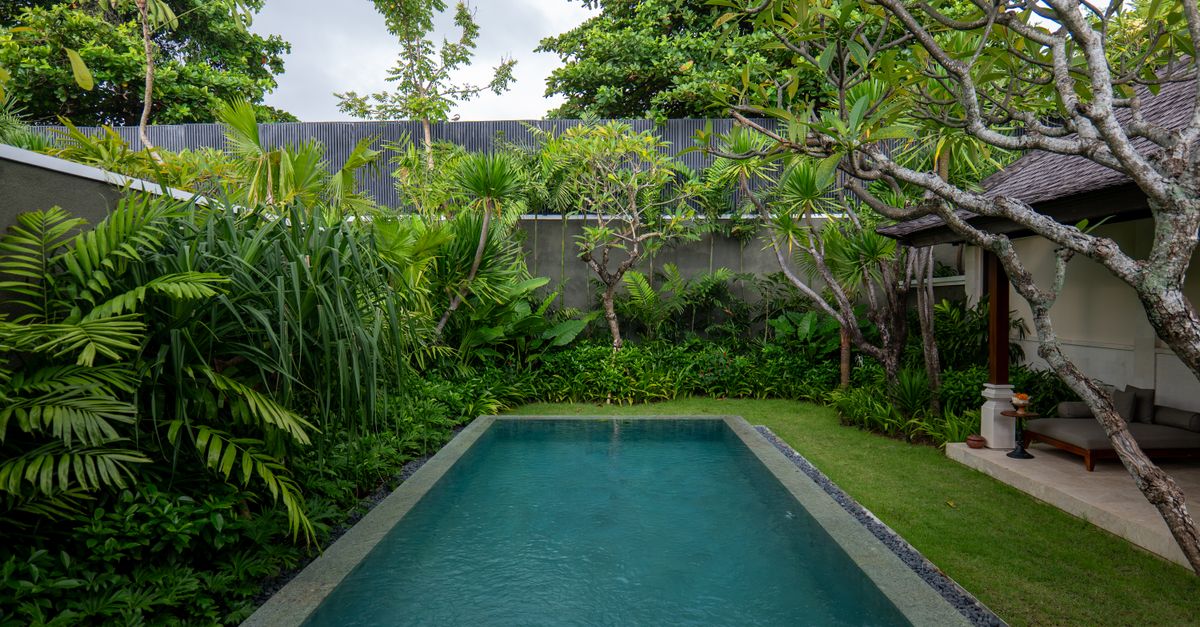
The water goes to pools and hotel bathrooms, of course. The less obvious users are landscaped resort gardens, laundries washing hundreds of sets of linen a day, golf courses, and a construction industry still putting up villas at a pace I find slightly dizzying.
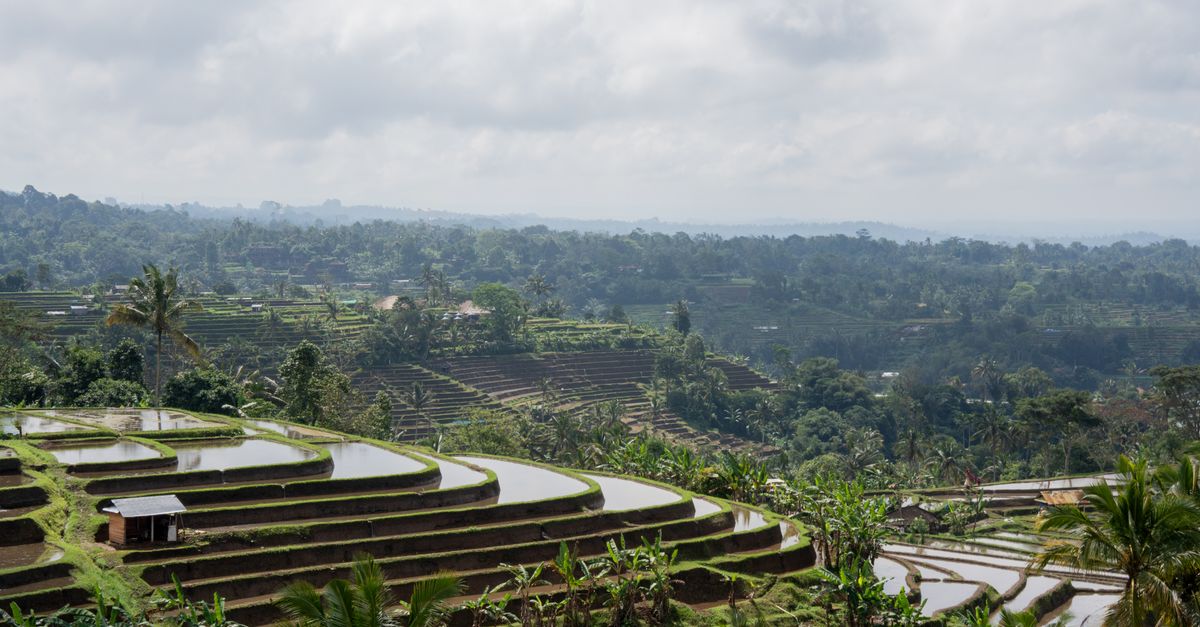
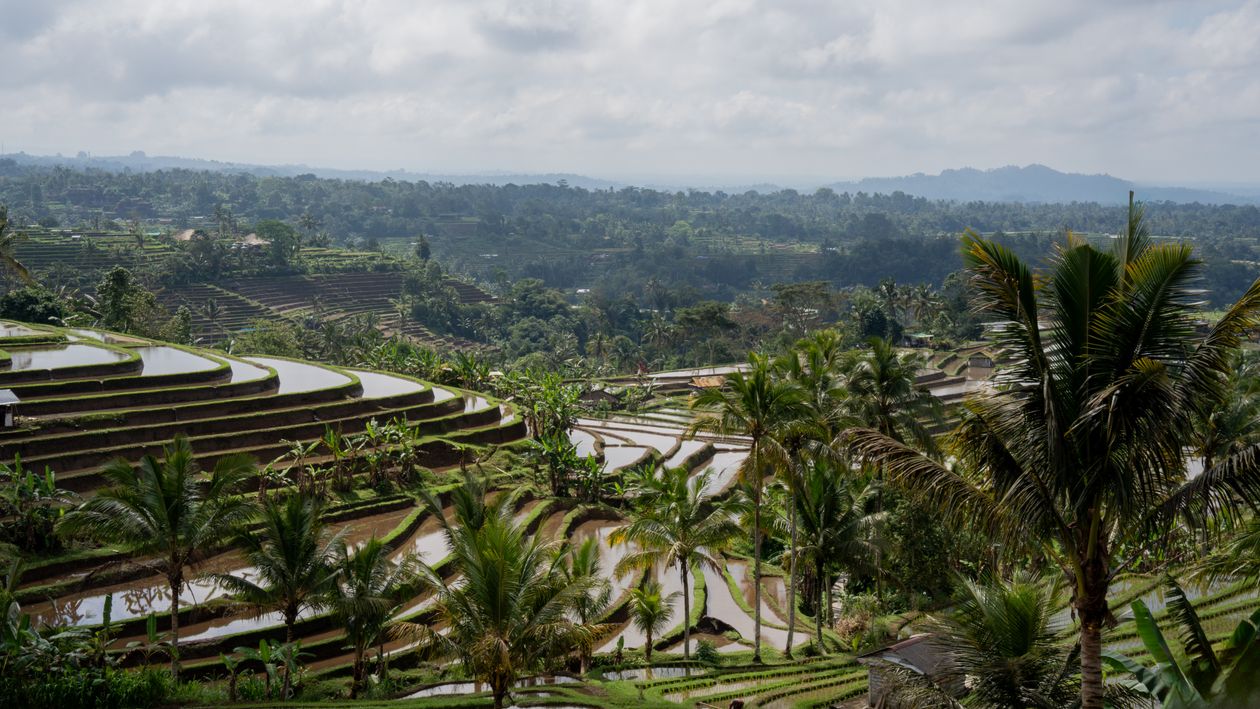
What makes this personal for me is the subak. It’s Bali’s cooperative irrigation system, which has shared water between rice farmers since around the ninth century. UNESCO added it to the World Heritage List in 2012 as the Cultural Landscape of Bali Province. The lakes and springs that feed it have shown declining levels in recent years, the Asia Media Centre reported, and in 2019 Al Jazeera cited figures showing Lake Buyan, which it called the island’s largest water reserve, had dropped 3.5 metres. When hotels, villas and farms all draw on the same sources, the rice terraces you’ve seen in every travel photo are the ones that go short. For the families who farm them, a well that fails in the busy months isn’t an abstract number.
The waste crisis sitting alongside Bali’s water problem
Water isn’t the only strain. Bali produces roughly 3,400 tonnes of rubbish a day, about 1.2 million tonnes a year, according to figures reported by The Jakarta Post. Around two-thirds of it is organic, and Ocean Gardener’s 2025 round-up puts the recyclable share at only about 17%.
The island’s biggest landfill, Suwung in south Denpasar, takes over 1,000 tonnes a day and has been over capacity for years. Its closure has been promised and pushed back several times. Organic waste was banned there from April 2026, then let back in twice a week until the end of July after waste collectors protested, and the province set 1 August 2026 for full closure, with some exceptions allowed. At the time of writing, how complete that closure is remains unclear. Agus Dei Segu, an expert adviser to the Governor, summed up the gap: “If the machine can only process one ton, while the garbage that comes is five tons, yes four tons is still a problem.”
Then there are the trash waves. Every rainy season, roughly November to March, monsoon rain and winds carry plastic out of the rivers and the sea and onto the beaches, and Kuta is one of the worst hit. In December 2017 the local government declared a “trash emergency” for Kuta and Legian beaches, the Canberra Times reported. In January 2025, AFP reported, Sungai Watch collected a record 25 tonnes of plastic in six days at nearby Kedonganan beach, and an audit traced most of it to cities on Java.
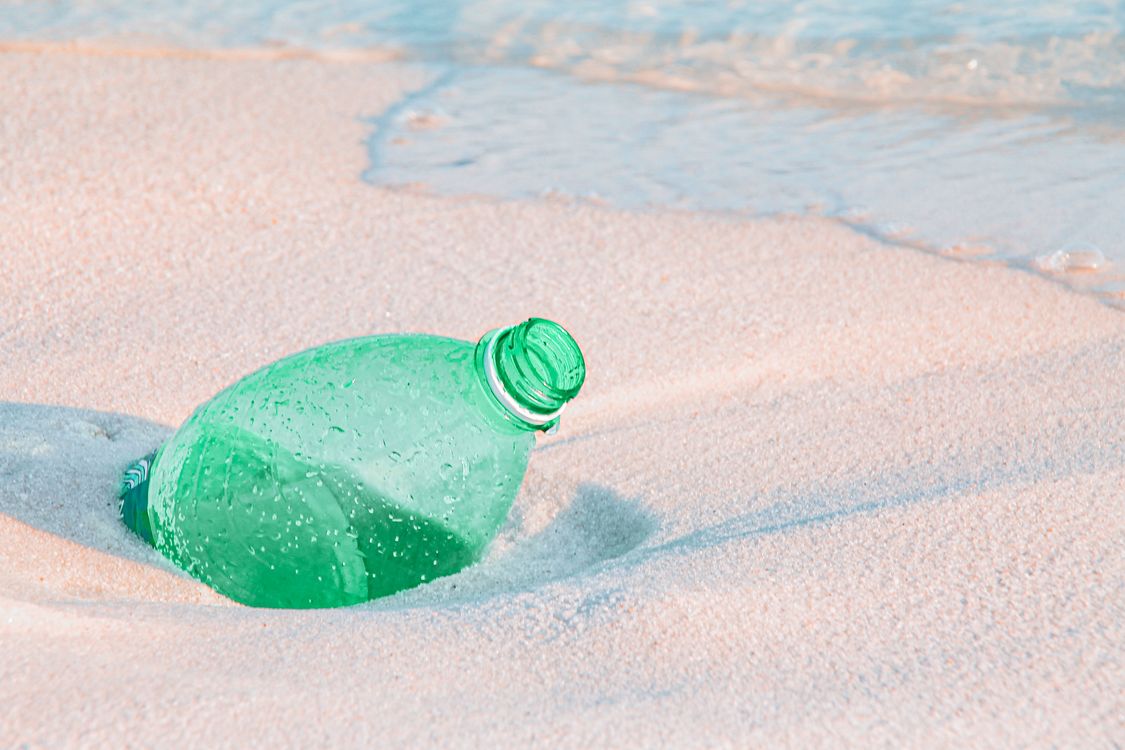
Sungai Watch has installed more than 180 floating barriers in Bali’s rivers and stopped over a million kilograms of plastic before it reached the sea. Communities are acting too. Ocean Gardener reports that 96% of Bali’s roughly 1,500 traditional villages (desa adat) have adopted customary rules mirroring the provincial plastic restrictions. But villages can’t fix a structural waste problem on their own.
What slow travel looks like in practice
Google’s 2026 travel trends report says interest in “slow travel”, staying in one place for longer, hit a record high this year. It doesn’t mention Bali; that link is mine. Here’s what it means in practice, from living here.
Choose where you stay carefully. A small, locally owned guesthouse or homestay usually uses far less water than a big resort with a pool, spa and daily linen change. Ask where the water comes from. Some places manage their bore wells responsibly; others haven’t given it a thought.
Stay longer in fewer places. Every move means another check-in, another set of laundered sheets, another transfer. Two weeks in one area instead of four short stops means less water and less waste, and you get to know the place properly.
Eat at warungs. A meal at a local warung is often around IDR 25,000–40,000 (roughly £1–2), against IDR 150,000 or more at many tourist restaurants. Warungs tend to use less packaging and buy locally, and the money stays in Balinese hands.
Carry a refill bottle. Refill stations and plenty of cafés in Canggu, Ubud and Seminyak will top you up, and the RefillMyBottle app shows where. Bali’s 2025 circular on single-use plastic also bars producing bottled water in containers under a litre, a rule that still stood after a court challenge in 2026, so refilling goes with the grain here.
Use reef-safe sunscreen. Oxybenzone and octinoxate, found in many standard sunscreens, have been linked to coral damage, which is why Hawaii banned them. Bali’s reefs already deal with sediment and plastic, so this one is worth the switch.
Can Bali fix this? What’s changing
It isn’t hopeless. Village leaders, NGOs and the provincial government are all trying, with mixed results so far.
The tourist levy of IDR 150,000 (about £6) is paid once per visit by foreign tourists and has applied since February 2024. The money is meant for culture and the environment: the province lists support for traditional villages, work at Suwung and on waste collection, and coral and mangrove restoration. Collection is the weak spot. Governor Wayan Koster said only about a third of foreign visitors paid in 2025, and the total for January to August 2026 came to around IDR 235 billion.
The waste-to-energy plant for greater Denpasar started construction in July 2026. It’s designed to take up to 1,500 tonnes a day, with full operation targeted for late 2027. That won’t cover all 3,400 tonnes, but it would make a real dent. Badung also has about 41 TPS3R sorting and recycling sites and Denpasar about 23, though most can’t yet keep up with the daily volume.
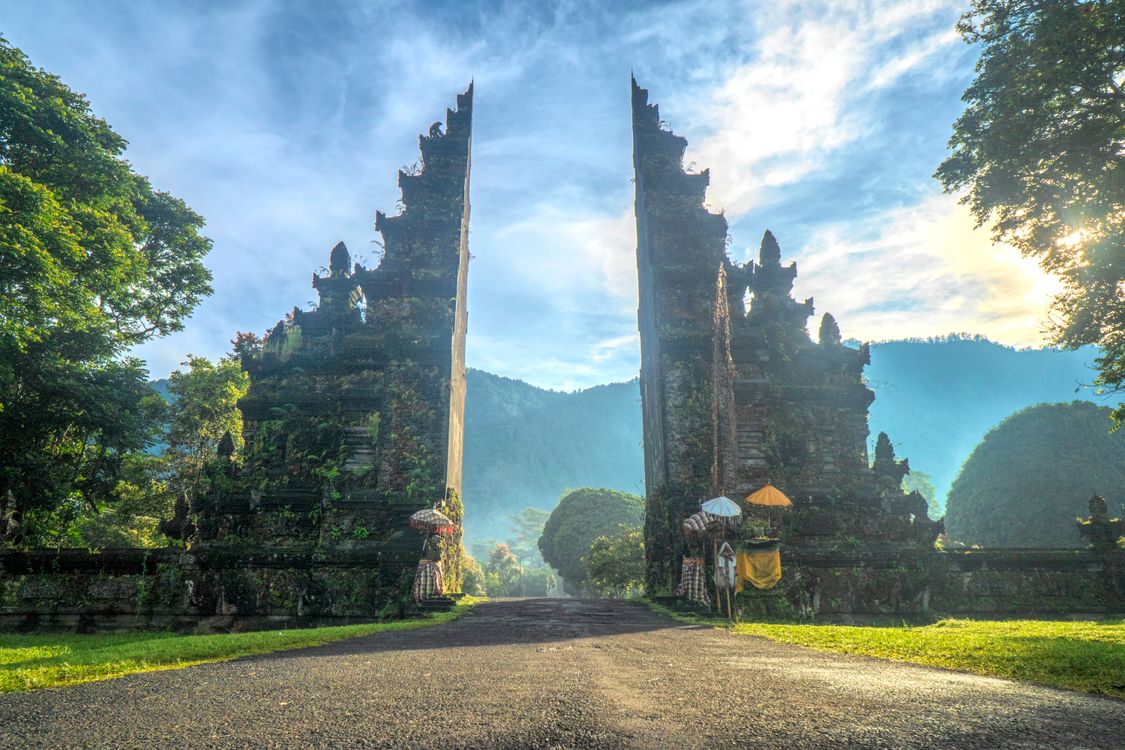
Dr Maha Putra’s view stays with me: “Landscape, agriculture, water systems, and cultural heritage should be treated not as obstacles to growth but as the foundations of Bali’s future.” I agree. Looking after the water and the land is what keeps tourism possible here at all.
Visiting differently
Bali’s water crisis isn’t a reason to stay away. It’s a reason to come differently.
This island has given me more than I can easily put into words: friendships, perspective, the stillness of a rice field at dawn. I can’t enjoy those things honestly without admitting what my being here costs the place and the people who live here.
Travelling responsibly doesn’t take sainthood. It’s a refill bottle in your daypack and a guesthouse where the owner knows your name. It’s nasi campur at a warung instead of a smoothie bowl at a beach club, and staying long enough that Bali becomes somewhere you know rather than somewhere you photographed.
If this struck a chord, tell me how you travel here on Instagram.
Before you go: the figures, rules and prices in this article were checked in October 2026 and can change, especially around the Suwung landfill and the tourist levy. Check the latest locally before you travel. This is general information, not professional advice.
FAQs
How much of Bali’s water does tourism use?
The most quoted figure is around 65%. It’s an estimate from the Indonesian NGO IDEP, not an official measurement, but it’s still widely cited.
How many tourists visit Bali each year?
BPS Bali recorded about 6.95 million direct foreign arrivals in 2025. Preliminary government figures put total visits, domestic and foreign, at about 16.3 million, not counting everyone who came by land and sea. That’s visits, not individual people. Foreign arrivals for January to July 2026 were just over 3.9 million.
What is the subak and why is it at risk?
The subak is Bali’s cooperative irrigation system, which has shared water among rice farmers since around the ninth century. It became a UNESCO World Heritage site in 2012. The lakes and springs that feed it have been declining as tourism and development draw on the same water.
Is Bali’s groundwater turning salty?
In parts of the south-west coast, yes. A 2024 study found seawater in the groundwater at Canggu and Tibubeneng, and high levels at Kerobokan Kelod, with the salty zone expected to move further inland each year if extraction continues.
What’s happening with the Suwung landfill?
Bali’s largest landfill, in south Denpasar, has been over capacity for years. Organic waste was banned there from April 2026, and the province set 1 August 2026 for full closure, with some exceptions. Check current local news.
What are Bali’s trash waves?
During the rainy season, roughly November to March, storms wash plastic from rivers onto the beaches, especially along the south-west coast around Kuta and Seminyak.
What does the Bali tourist levy pay for?
The IDR 150,000 levy, paid once per visit by foreign tourists, funds cultural and environmental work, including support for traditional villages, waste management, and coral and mangrove restoration. The Governor said only about a third of foreign visitors paid it in 2025.
How can I reduce my water use in Bali?
Stay in a smaller, locally owned guesthouse rather than a resort with a big pool, skip daily linen changes, and stay longer in fewer places. Carry a refillable bottle.
What is Sungai Watch?
Sungai Watch is an environmental organisation that installs floating barriers in Bali’s rivers to catch plastic before it reaches the sea.
Should I feel guilty about visiting Bali?
I don’t think so. Tourism pays a lot of Balinese wages, and the levy funds conservation work. What matters is how you visit: where you stay, where you eat, how much plastic you use and how long you stay.