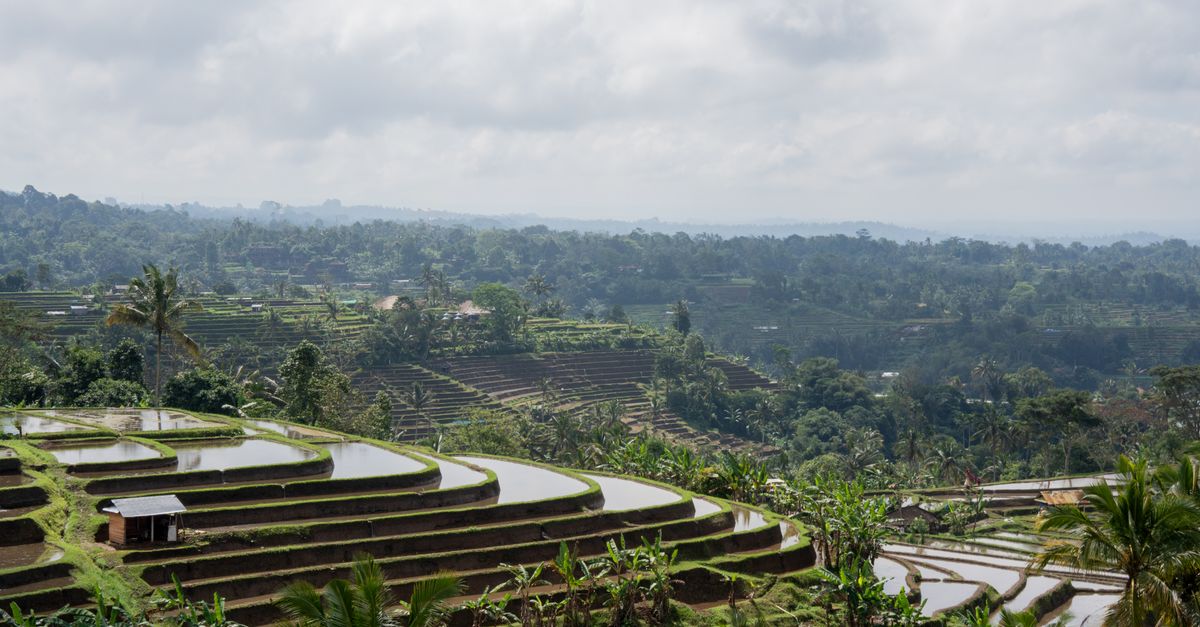
What to Eat in Bali: 20 Dishes You Absolutely Cannot Miss
My honest, first-hand list of the 20 Balinese dishes worth crossing the island for, and exactly where I'd order each one.
The first thing I ever ate in Bali was a plate I couldn’t name. A warung near Sanur, a glass cabinet of unlabelled bowls, and a woman who simply pointed and built me a mound of rice with about nine things heaped around it for the price of a coffee back home. That plate (nasi campur) is still the honest answer to what to eat in Bali, and it’s where this list begins. Because the real food here isn’t the smoothie bowls the algorithm shows you. It’s spit-roasted pork, duck that’s been buried in embers, satay wrapped around lemongrass, and a raw shallot sambal that’ll ruin every other sambal for you.
I’ve spent years eating my way around this island, mostly at plastic-stool warungs where the menu is whatever’s in the cabinet. Below are the twenty dishes I’d send any first-timer chasing: savoury, sweet, ceremonial and everyday. I’ve kept it dish-focused on purpose (I’ve got a separate warung guide if you want the where-and-how of those). A few have a backstory tied to Balinese Hindu ritual, and I’ve flagged those, because the food and the faith here are genuinely inseparable. Bring an appetite and small notes.
Nasi campur and babi guling: the two plates that define Balinese food
(keywords: nasi campur, babi guling, what to eat in Bali)
If you eat only two things, make it these. Nasi campur (literally “mixed rice”) is a scoop of rice circled by a rotating cast of small sides: shredded chicken, a spoon of lawar, a stick of sate, fried tempeh, peanuts, a fierce dab of sambal. No two plates are the same, which is the whole joy of it. I rarely pay more than IDR 25,000–40,000 and I leave full.
Then there’s babi guling, Bali’s spit-roasted suckling pig and the island’s loudest flavour. The pig is rubbed and packed with base genep (the foundational Balinese spice paste) and turned over coals until the skin shatters like glass. It started as ceremonial food (you’ll still see whole pigs at temple feasts), and it’s the dish I’d cross the island for. The famous stop is Warung Babi Guling Ibu Oka in Ubud, where a plate runs roughly IDR 60,000–75,000 and the queue forms before noon. Go hungry, go early, and don’t skip the crackling.
Bebek betutu, ayam betutu and the slow-cooked ceremony dishes
(keywords: bebek betutu, ayam betutu, traditional Balinese dishes)
Some Balinese food can’t be rushed, and bebek betutu is the proof. A whole duck gets stuffed with a dense spice mix, wrapped tight in banana leaves and coconut husk, then cooked low and slow, traditionally in a pit of embers underground, sometimes for the better part of a day. What emerges is meat so soft it gives up off the bone, soaked through with turmeric, galangal and chilli. It’s a ceremony dish at heart, which is why many warungs ask you to order it a day ahead.
Ayam betutu is the chicken version: quicker, easier to find, and a brilliant introduction if a whole spiced duck feels like a commitment. I had my best one in a roadside warung outside Gianyar, served with red rice and a sambal that made my eyes water in the good way. If you only get one shot at “ceremony food” on a short trip, ayam betutu is the dependable, no-pre-order entry point. And a properly made bebek betutu is the thing to plan a meal around.
Sate lilit, lawar and sambal matah: the Balinese plate’s supporting cast
(keywords: sate lilit, lawar, sambal matah)
These three turn up beside almost everything, and they’re half the reason a Balinese plate sings. Sate lilit is Bali’s own satay: spiced minced fish, chicken or pork blended with grated coconut and moulded around a lemongrass or flattened bamboo stick, then grilled. The lemongrass perfumes the meat from the inside; it’s worlds away from the cubed satay you might expect.
Lawar is the one that splits people. It’s a finely chopped mix of vegetables, grated coconut, minced meat and heavy spice, and the traditional ceremonial version can include blood. It’s a ritual dish, prepared communally before festivals, and eating it thoughtfully feels like being let in on something. If raw blood isn’t for you, plenty of warungs serve a “lawar putih” without it.
And then sambal matah: raw shallot, lemongrass, chilli and kaffir lime, glossed with hot oil. It’s the near-universal Balinese condiment and the flavour I miss most in the UK. I’d happily eat it on toast. Honestly, if you want to understand these from the inside, a Cooking Class in Ubud is the most fun afternoon you’ll have. You’ll grind the spice pastes yourself.
Nasi goreng, mie goreng and gado gado: the everyday Indonesian staples
(keywords: nasi goreng, mie goreng, gado gado)
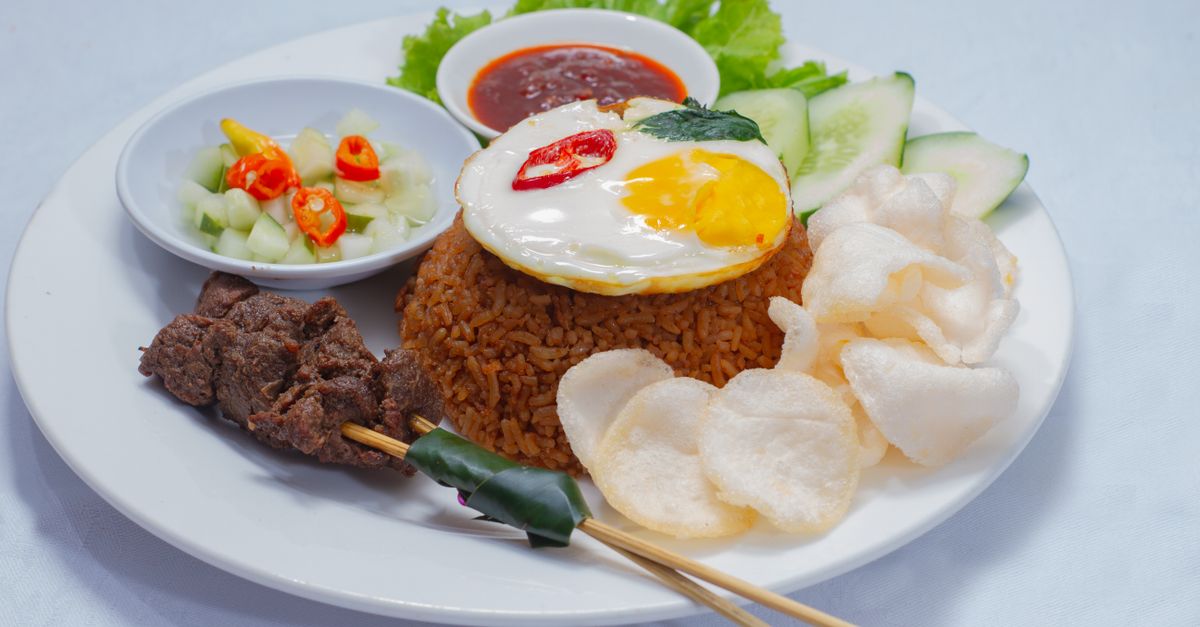
Not everything you’ll eat is uniquely Balinese, and that’s fine: some Indonesian staples are staples for a reason. Nasi goreng, fried rice with a glossy fried egg perched on top, is the dish you’ll order at 11pm when nothing else is open and be glad you did. Mie goreng is the noodle twin, just as ubiquitous, often a touch sweeter from kecap manis.
Gado gado is the one I push on anyone who claims they “can’t find vegetables in Bali”: blanched greens, beansprouts, tempeh, tofu and egg under a thick peanut sauce. It’s filling, it’s vegetarian, and a decent plate costs almost nothing. These three are the reliable fallbacks: when you’ve over-ordered babi guling for three days running, a clean plate of gado gado resets everything. Don’t let anyone snobbish tell you they’re beneath the “real” food list. They’re what the island actually eats on a Tuesday.
Pisang goreng, dadar gulung and the sweet things worth saving room for
(keywords: pisang goreng, dadar gulung, Bali street food)
Pace yourself, because Balinese sweets deserve a slot. Pisang goreng (banana battered and deep-fried until the edges go lacy and crisp) is the everywhere snack, sold from glass cabinets and warming trays for small change. Eat it hot; it’s never as good cold.
Dadar gulung is the prettier one: soft green pancakes coloured with pandan, rolled around grated coconut cooked down with palm sugar. The first bite is grassy and floral, then the sweetness lands. There’s also rujak, a spicy fruit salad of green mango, jicama, pineapple and wax apple tossed in a chilli-palm-sugar dressing, the snack I crave in the heat, sweet and sour and sharp all at once. Round out the list with tipat cantok (rice cakes and vegetables in peanut sauce) and a bowl of jukut ares, the gentle banana-stem soup that’s pure comfort. Twenty dishes, and I’ve still left things off, that’s Bali for you.
The honest answer to what to eat in Bali is: order the thing in the cabinet you can’t name, and order it where the locals are queuing. Start with nasi campur, chase down a proper babi guling, and let sambal matah recalibrate your whole sense of what a chilli sauce can be. I’m always adding to this. So if you’ve found a warung doing one of these dishes better than anywhere else, reply and tell me. My list is never finished, and the next plate I haven’t tried yet is exactly the one I want to hear about.
Before you go: I wrote this in 2026 and double-checked every price, fee, opening time and rule I could, but Bali changes fast. Treat the figures here as a guide and confirm the latest details before you book or travel.
Some of the links in this article are affiliate links: if you book through them I may earn a small commission at no extra cost to you. I only ever recommend things I would happily send a friend to.
FAQs
What is the most famous food in Bali? Babi guling (Balinese spit-roasted suckling pig) is the island’s most famous dish. It’s slow-roasted with the base genep spice paste until the skin crackles, and it began as ceremonial food for temple feasts before becoming a beloved everyday meal. Ubud’s Ibu Oka is the best-known place to try it.
What is nasi campur? Nasi campur means “mixed rice”: a scoop of rice ringed by several small sides. The sides rotate constantly and might include shredded chicken, lawar, sate lilit, fried tempeh, peanuts and sambal. It’s the everyday backbone of Balinese eating and usually costs very little at a warung.
What should a vegetarian eat in Bali? Gado gado is the easiest safe bet: blanched vegetables, tempeh, tofu and egg under peanut sauce. You’ll also find vegetable nasi campur, tipat cantok and plenty of tempeh and tofu dishes. Just confirm sauces are meat-free, as some sambals and broths use shrimp paste.
Is Balinese food very spicy? It can be, but it’s usually adjustable. The heat comes mainly from sambal, which is served on the side, so you control how much you add. Dishes like nasi goreng, gado gado and ayam betutu are mild to medium, while sambal matah and some lawar pack real heat.
What is sate lilit? Sate lilit is Bali’s signature satay, made from spiced minced fish, chicken or pork mixed with grated coconut. Instead of being cubed and threaded, the mince is moulded around a lemongrass or bamboo stick and grilled, so the lemongrass flavours the meat from within.
What is bebek betutu? Bebek betutu is a whole duck stuffed with spices, wrapped in banana leaves and coconut husk, then slow-cooked for hours, traditionally in an underground pit of embers. The result is intensely spiced, fall-apart tender meat. Many warungs need a day’s notice to prepare it.
How much does a meal cost in Bali? A warung plate of nasi campur typically costs around IDR 25,000–40,000, and a babi guling plate at a popular spot like Ibu Oka runs roughly IDR 60,000–75,000. Local food is genuinely cheap; prices climb sharply at tourist-facing cafés and beach clubs.
What is sambal matah? Sambal matah is a raw Balinese condiment of finely sliced shallot, lemongrass, chilli and kaffir lime, finished with hot oil. It’s served alongside almost everything and is bright, fragrant and fiery, many visitors say it’s the flavour they miss most after leaving.
Is the street food in Bali safe to eat? Generally yes, especially at busy warungs with high turnover where food is freshly cooked. Choose places with a steady local crowd, eat freshly grilled or hot-cooked dishes, and be a little more cautious with anything that’s sat out at room temperature.
What sweet foods should I try in Bali? Start with pisang goreng (crisp fried banana) and dadar gulung, the green pandan pancakes rolled around sweet coconut and palm sugar. Rujak, a spicy-sweet fruit salad, is the perfect hot-day snack, and you’ll find plenty of palm-sugar and coconut treats at markets.