
How to Order at a Warung in Bali: Nasi Campur, Prices and Not Looking Lost
The food is at room temperature on purpose, there is often no menu, and you point at what you want. A first-timer's guide to eating where the locals eat.
My first time at a warung, I stood outside for a full minute pretending to check my phone. Through the doorway I could see a glass cabinet packed with small dishes (rice, something fried, green things, what might have been chicken) and a woman behind the counter watching me with the patience of someone who has seen a hundred confused tourists that week. There was no menu. No prices on the wall. No queue to copy. I had no idea how to order at a warung in Bali, and I was too embarrassed to walk in and wing it.
So I went to a cafe and paid IDR 85,000 for a smoothie bowl instead. Not my finest moment.
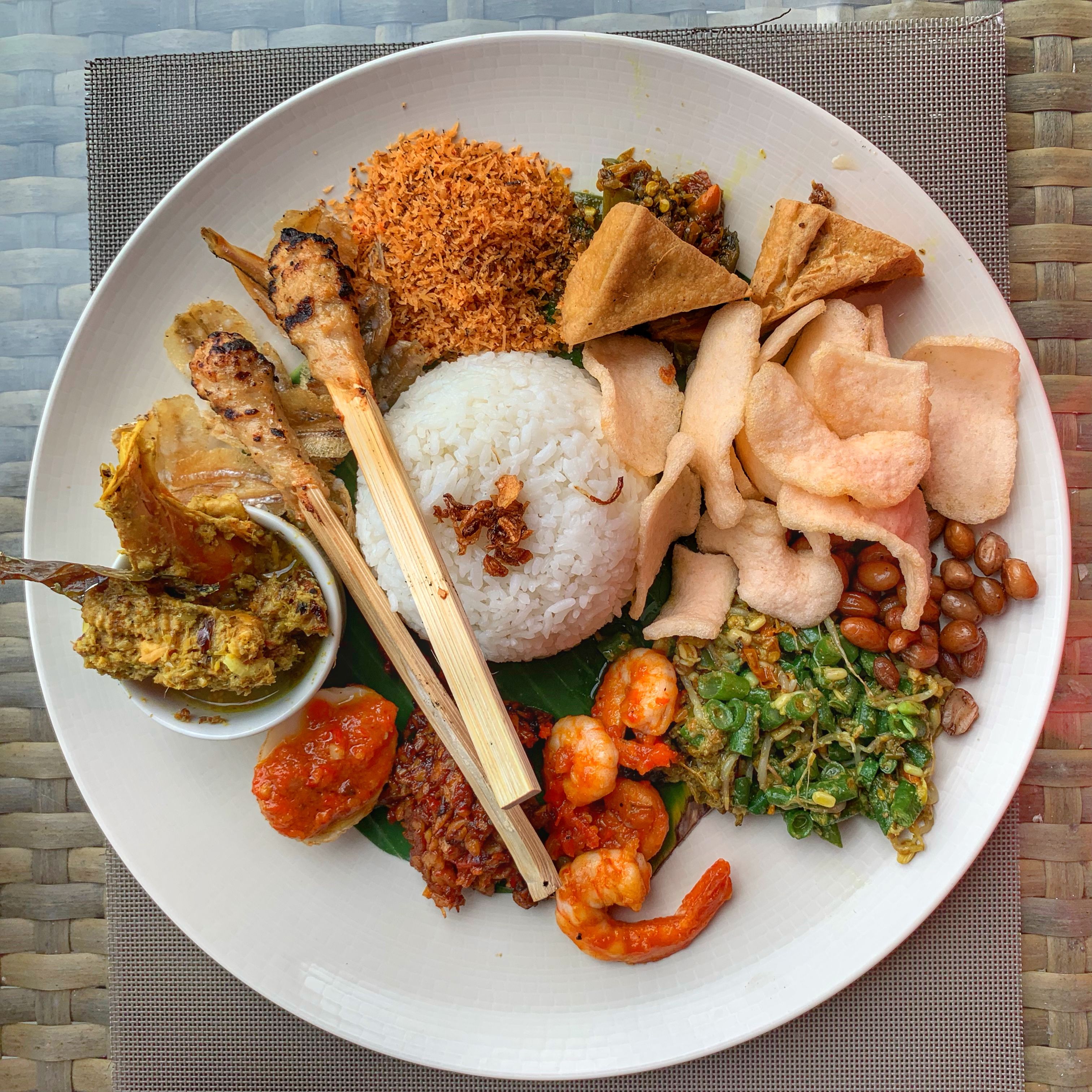
It took me three more days to actually walk into a warung and point at things. That meal, a plate of nasi campur with chicken, tempe, sambal, and some greens I still can’t name, cost me IDR 20,000. About £1. It was one of the best lunches I’ve had in Bali, and I’ve been eating at warungs almost daily since.
This is the guide to doing what I couldn’t: walking in, ordering, paying, and leaving feeling like you did it right.
What a Warung Actually Is (And Why You Should Eat at One)
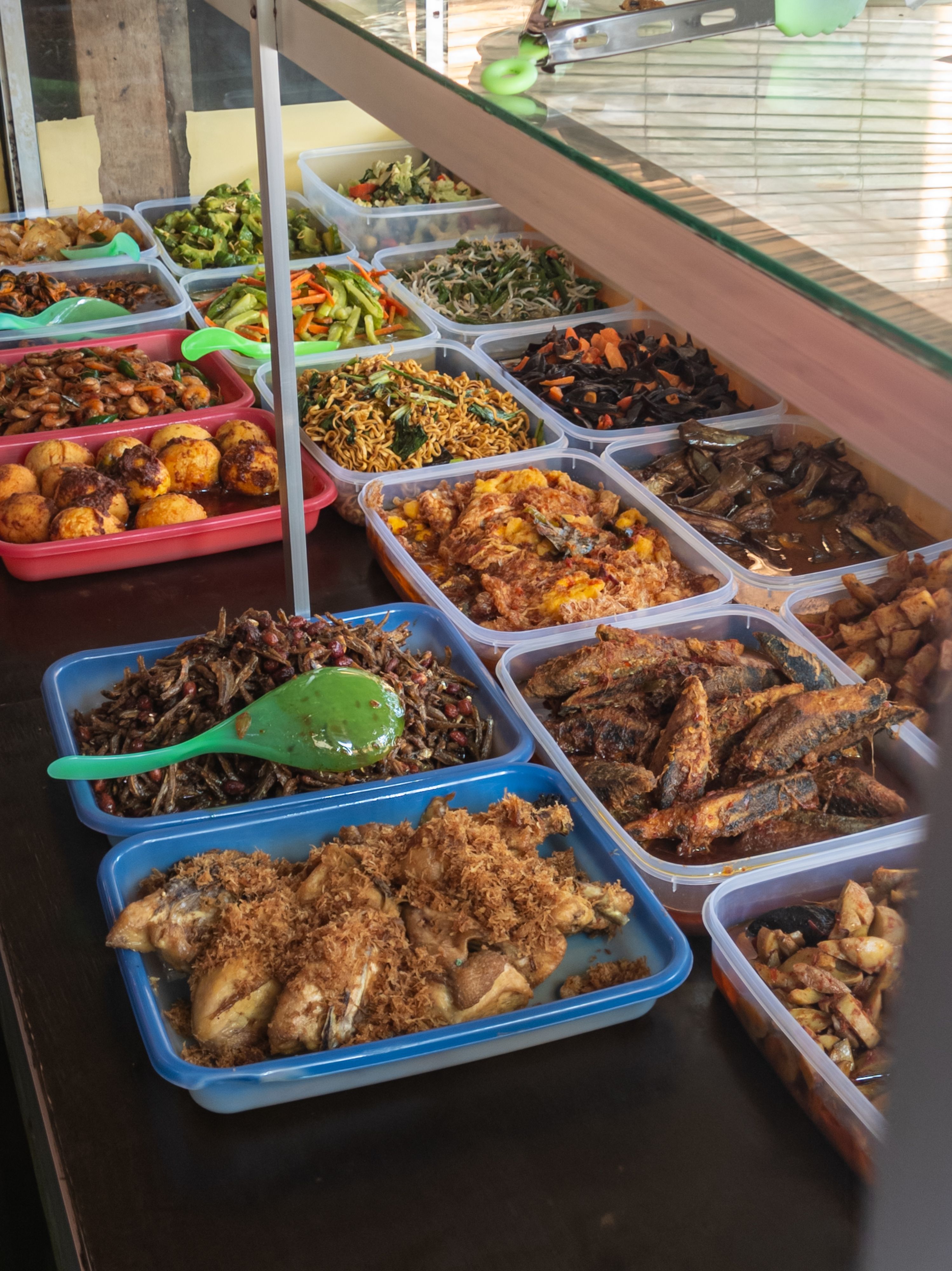
A warung is a small, family-run eatery. That’s it. Some are proper shop-fronts with tables and chairs, some are the front room of someone’s house with a plastic tablecloth and a TV playing Indonesian soap operas in the corner. What they have in common is a glass display cabinet near the entrance, filled with pre-cooked dishes that were made that morning.
The food sits at room temperature, and the first time you see it you’ll probably think something has gone wrong. It hasn’t. Nasi campur, the signature warung meal, is designed to be eaten at room temperature. The rice is cooked and set out, the dishes are seasoned to taste right without being reheated, and the sambals tie everything together. This isn’t a hygiene issue; it’s how Indonesian home cooking has worked for generations. Your nasi Padang in Jakarta is served exactly the same way.
Warungs are not street food. They have a kitchen, running water, and somewhere to sit. They’re closer to a family canteen than a food stall, and they’re where most Balinese people eat when they’re not at home. That’s the reason to go: you’re eating the same food, at the same prices, in the same places as the people who actually live here. The tourist restaurants on Jalan Raya Seminyak are nice, but they’re not Bali. A warung at lunchtime is.
How to Order at a Warung: Step by Step
Every warung works slightly differently, but the basic system is the same wherever you go. Once you’ve done it twice, you won’t think about it.
The pointing-and-choosing system
Walk up to the glass display cabinet. The dishes are laid out in trays or on plates: you’ll see rice, several meat dishes, vegetable sides, fried things, and usually a row of sambals (chilli sauces). You don’t need to know the name of anything. Just point at what you want and the person behind the counter will add it to your plate. One scoop of this, one piece of that. They’ll keep going until you stop pointing or say “sudah” (enough).
If you want rice as your base, say “nasi” and they’ll give you a mound of steamed white rice and build your plate on top. If you’d rather noodles, “mie” will get the point across.
Nasi campur: the thing you’ll order most
If in doubt, just say “nasi campur.” It translates to “mixed rice” and it’s the default warung order: a plate of rice with a selection of whatever the cook made that day. You’ll typically get three to five small portions: a bit of chicken or pork, some tempe, a vegetable dish, a spoonful of sambal, and maybe a small piece of egg or tofu. The cook chooses the mix for you. Every warung’s nasi campur is different, and that’s half the fun.
Asking for spice level
Sambal is served alongside almost everything, and some dishes come already spiced. If you can handle chilli, say “pedas” (puh-DAS), meaning spicy. If not, “tidak pedas” (tee-DAK puh-DAS), meaning not spicy. Somewhere in between? “Sedang” (suh-DANG), meaning medium. Most warung cooks will smile and adjust. And even if you say tidak pedas, there’s often a small dish of sambal on the side so you can add your own. That sambal is frequently hotter than you expect, so go easy the first time.
What You’ll Actually Pay at a Warung in Bali
This is what keeps me going back. Warung prices in Bali are absurdly cheap, and they haven’t crept up the way tourist-restaurant prices have.
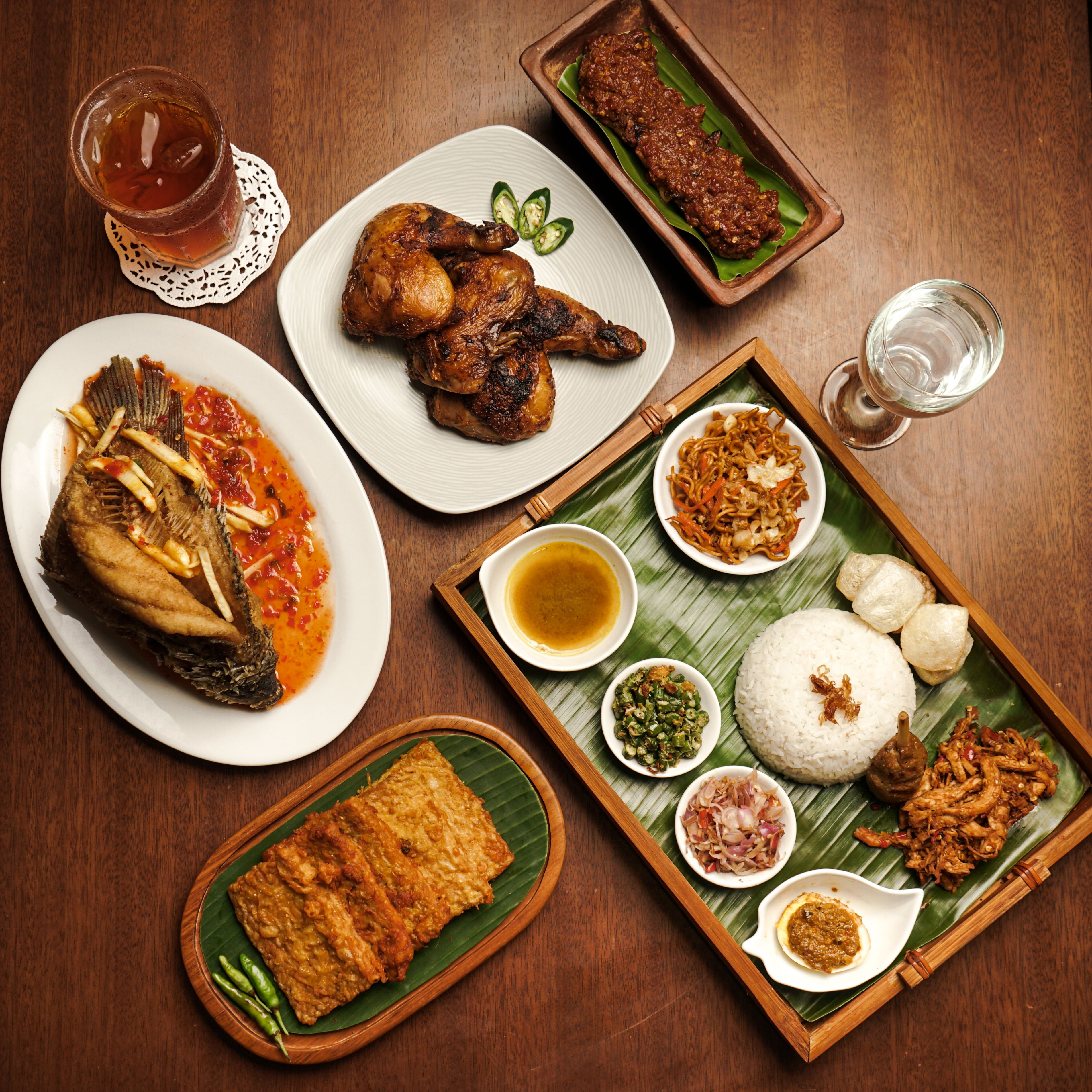
A plate of nasi campur costs IDR 15,000 to 35,000 (roughly £0.75 to £1.75 or USD 1 to 2.20). That’s a full meal: rice, protein, vegetables, sambal. At the lower end you’re eating at a neighbourhood warung away from the tourist strip. At the higher end, you’re in Canggu or Seminyak where prices edge up, or ordering extra protein.
Some specific dishes to look for and what they cost:
Babi guling (spit-roast suckling pig, Bali’s most famous dish): IDR 35,000 to 50,000 per plate (roughly £1.75 to £2.50). Best from specialist warungs like Ibu Oka in Ubud.
Ayam betutu (slow-cooked chicken in Balinese spice paste): IDR 30,000 to 45,000 per portion (£1.50 to £2.25). The spice paste makes this one: it’s slow-cooked for hours and the flavour goes all the way through.
Sate lilit (minced meat satay moulded onto lemongrass sticks): IDR 1,000 to 2,500 per skewer (a few pence each). Order five or six as a side.
Lawar (chopped vegetables and coconut with spices, sometimes with pork): IDR 10,000 to 20,000. A traditional Balinese side dish you won’t find at tourist restaurants.
Drinks are separate: a bottled water is IDR 3,000 to 5,000, a sweet iced tea (es teh manis) around IDR 5,000 to 8,000, and a fresh juice IDR 10,000 to 15,000.
Warung Etiquette Nobody Tells You
Nobody expects tourists to know any of this, and you won’t offend anyone by getting something wrong. But knowing a few things makes it smoother.
Pay with cash, and bring small notes. Most warungs don’t take cards. This is a cash economy. Keep IDR 10,000 and 20,000 notes handy. Handing over a IDR 100,000 note for a IDR 20,000 meal means the cook has to find IDR 80,000 in change, and she might not have it. I’ve seen tourists hold up a queue over this. A trip to a minimart ATM before lunch solves it.
Use your right hand for money. In Balinese (and broader Indonesian) culture, the left hand is considered unclean. Hand over cash and receive change with your right. This applies to most exchanges, not just warungs.
Eat first, pay after. At most warungs, you sit down, eat, then go up to pay when you’re finished. The cook often remembers what you had, or there’s a slip of paper with your order. Don’t try to pay before eating, as it’ll confuse the system.
Shoes off in home warungs. If the warung is literally someone’s front room and there are shoes lined up by the door, take yours off. If it’s a proper shop-front, keep them on. Just look at what other people have done.
Tipping isn’t expected. Warungs are not tipping establishments. That said, if you eat at the same place regularly (which you will), leaving an extra IDR 5,000 or 10,000 occasionally is a kind gesture. It’s noticed and appreciated, never demanded.
Is Warung Food Safe? The Honest Answer
This is the question everyone wants to ask and nobody wants to sound fussy about. Is warung food safe in Bali? Yes, with a couple of common-sense habits.
The biggest safety factor is turnover. A busy warung with lots of local customers goes through its food quickly, which means everything you see in the cabinet was cooked that morning and has been sitting out for a few hours at most. A quiet warung with two flies on the glass and no other customers? That food has been there longer. Go where the locals go. If the place is packed at noon, the food is fresh.
About the room-temperature thing: yes, the food sits out unrefrigerated. But it was cooked that morning, it’s heavily spiced, and most of it is fried or dressed in coconut, all of which slow bacteria. Balinese cooks have been doing it this way for centuries. The system works. That said, most warungs clear out their display and cook fresh the next day. They open early and close by 2pm or 3pm, once the food runs out.
Practical tips for your first few visits: stick with fully cooked dishes (fried, stewed, grilled) rather than raw salads or uncooked vegetables until your stomach adjusts. Eat at busy warungs during peak lunch hours (11am to 1pm). If something looks or smells off, skip it. There are a dozen other warungs within walking distance. And drink bottled water, not tap.
I’ve eaten at warungs almost daily for years. I’ve had one dodgy stomach in that time, and I’m fairly sure it was the cocktail from the night before, not the nasi campur.
Just Walk In
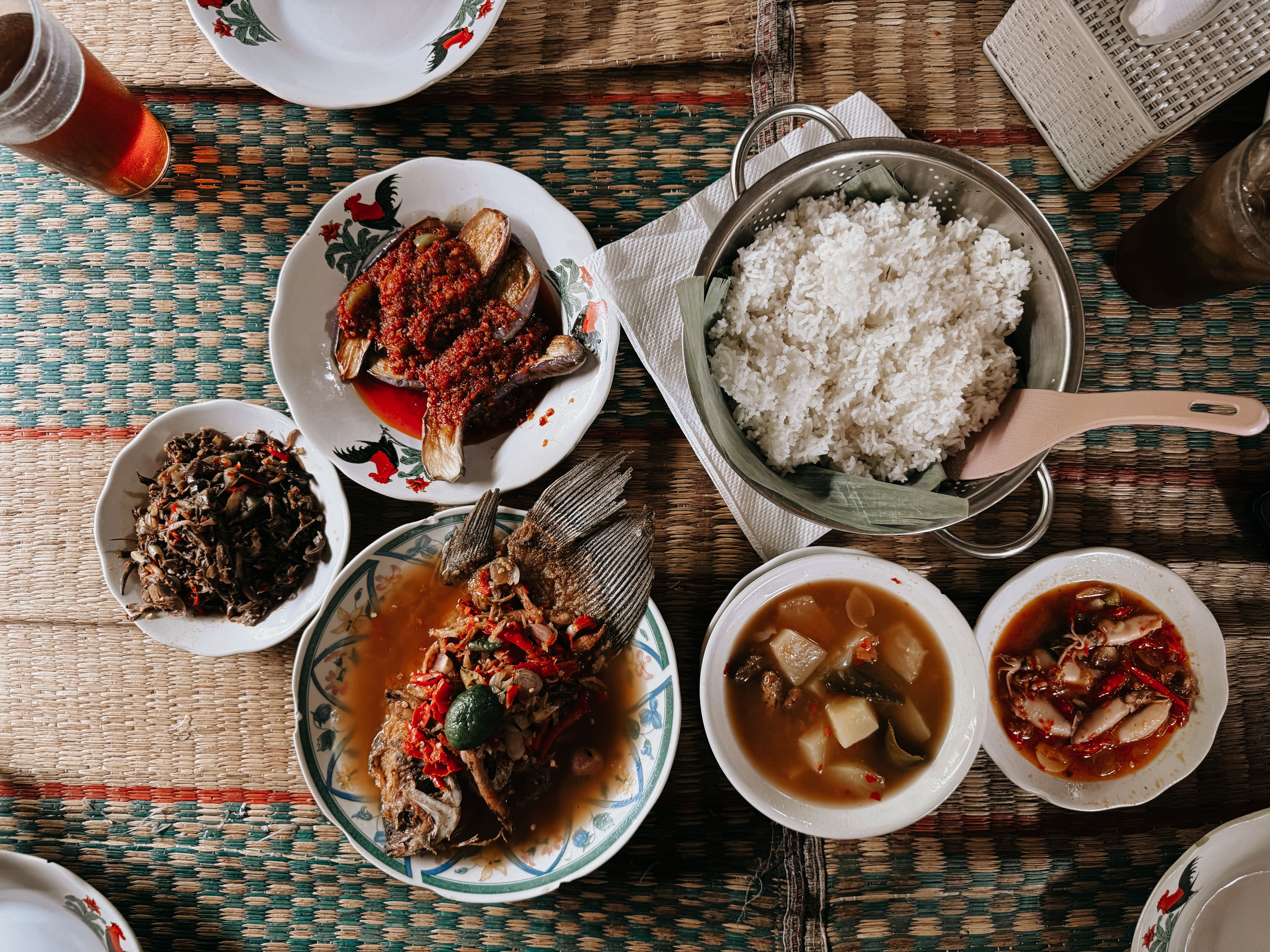
That’s honestly the whole trick. Walk in, point at things, sit down, eat, pay, leave. The food will be better and cheaper than anywhere with a laminated English menu, and the person cooking it has probably been making that exact meal since before you knew Bali existed.
My favourite warung is a five-minute walk from my villa in Pererenan. It has four plastic tables, a television that’s always on, and a woman named Ibu Ketut who piles my plate so high I can never finish it. The whole thing costs me less than the tip I’d leave at a Seminyak restaurant. I go three or four times a week, and she now starts making my plate before I’ve finished parking my scooter.
You don’t need to speak Indonesian. You don’t need to know what anything is called. You just need to walk in and point. The food will do the rest.
If you’re planning your first trip, my What to Eat in Bali guide covers everything beyond warungs too.
FAQs
How do you order at a warung in Bali?
Walk up to the glass display cabinet, point at the dishes you want, and the cook will plate them for you. Say “nasi campur” for a mixed rice plate, or just point at individual items. No menu is needed. You eat first, then pay at the counter when you’re done.
How much does a warung meal cost in Bali?
A plate of nasi campur at a warung costs IDR 15,000 to 35,000 (roughly £0.75 to £1.75 or USD 1 to 2.20). Specialist dishes like babi guling run IDR 35,000 to 50,000. It’s by far the cheapest way to eat well in Bali.
Is it safe to eat at a warung in Bali?
Yes, with common sense. Choose busy warungs where the food turns over quickly: if locals are eating there at noon, it’s fresh. Stick with cooked dishes over raw salads for the first few days. The food sits at room temperature by design, not neglect. It’s how nasi campur is meant to be served.
What is nasi campur and how do you eat it?
Nasi campur means “mixed rice.” It’s a plate of steamed rice topped with three to five small portions of whatever the cook made that day, typically chicken or pork, tempe, vegetables, sambal, and sometimes egg or tofu. You eat it with a fork and spoon (not chopsticks), mixing as you go.
Do warungs in Bali take cards?
Almost never. Warungs are cash only. Bring IDR 10,000 and 20,000 notes. Handing over a large note for a cheap meal means the cook may not have change. There’s usually a minimart or ATM within walking distance to break larger bills.
What does pedas mean in a Bali warung?
Pedas (puh-DAS) means spicy. Say “tidak pedas” for not spicy, or “sedang” for medium. Most cooks will adjust to your preference. Sambal is often served on the side regardless, so you can control your own heat.
Should you tip at a warung in Bali?
Tipping isn’t expected or standard at warungs. If you eat at the same place regularly, leaving an extra IDR 5,000 to 10,000 occasionally is a kind gesture that’s appreciated. Don’t feel obligated on a single visit.
What time do warungs open and close in Bali?
Most warungs open early in the morning (7am or 8am) and close by 2pm or 3pm, once the day’s food has sold out. Lunchtime (11am to 1pm) is peak, with the best selection and the freshest food. Some tourist-area warungs stay open into the evening.
What’s the difference between a warung and a restaurant in Bali?
A warung is small, family-run, usually has no printed menu, and serves food from a glass display cabinet at set low prices. A restaurant has menus, table service, and significantly higher prices. The food at a good warung is often better than a mid-range tourist restaurant.
What are the best dishes to try at a Bali warung?
Start with nasi campur for the full experience. Then try babi guling (spit-roast pork, IDR 35,000–50,000), ayam betutu (slow-cooked spiced chicken, IDR 30,000–45,000), sate lilit (lemongrass satay, IDR 1,000–2,500 per skewer), and lawar (spiced vegetable and coconut mix, IDR 10,000–20,000).


