Bali's Hidden Viewpoints: Scenic Lookouts Off the Tourist Map
A first-person guide to seven hidden viewpoints across Bali: sunrise over Mount Agung, quiet rice terraces, sea cliffs, and highland lakes. With specific locations, entry fees, and the best times to visit in 2026.

I’d been in Bali for nearly a month before I saw a view that properly stopped me. Not the beach sunsets: those are lovely but they’re also on every travel poster in every agency window. I mean the sort of view where you pull over on a road you weren’t supposed to be on, and the valley drops away beneath you, and you just stand there for a while, not taking a photo, not doing anything, just looking.
That was on a back road above Sidemen. Rice terraces falling in steps towards a river I couldn’t see, Mount Agung filling half the sky behind them, and not a single other person around. I remember thinking: why did nobody mention this?
The truth is, the best viewpoints in Bali aren’t the ones in the guidebook. Tegallalang is beautiful, yes, but it’s also packed by 10am and lined with souvenir shops. The hidden viewpoints (the ones that make you pull your scooter over and forget about your schedule) are usually twenty minutes off a main road, in a direction nobody told you to go. This is a guide to those places.
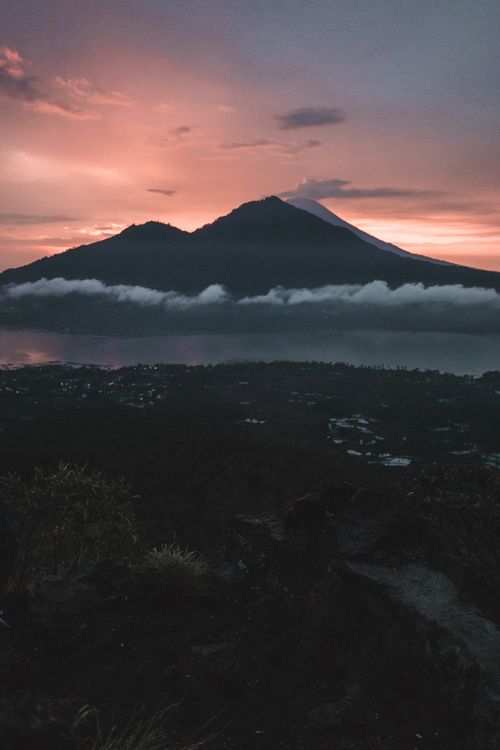
Why the Best Viewpoints in Bali Are the Ones You Have to Look For
Bali’s famous scenic spots (Tegallalang Rice Terrace, the Uluwatu Temple cliff, the Gates of Heaven at Lempuyang) are famous for a reason. They’re spectacular. But in 2026, they’re packed. At Tegallalang you’ll queue to take a photo on a swing that costs 150,000 IDR per go. At Lempuyang the line for the mirrored-floor shot can stretch to two hours. It’s a strange feeling, standing in a queue to experience wonder.
The viewpoints in this guide are different. Some are free. Most have no queue. A few don’t even have a name on Google Maps, so you’ll need coordinates or a local who knows the road. What they share is the thing that actually makes a viewpoint worth visiting: you can stand there, look out, and feel like you’re seeing something real rather than performing for a camera.
I’m not against the popular spots. I’ve been to Tegallalang and enjoyed it. But if you’ve only got a week in Bali and you spend half of it in queues, you’ll leave with photos and not much else. These are the places I’d send a friend to first.
Sunrise Viewpoints: Where to Watch Bali Wake Up
If you’re going to set an alarm for 4am, the view had better be worth it. These two are.
Bukit Cinta, Karangasem
Bukit Cinta sits in east Bali, about two hours by scooter from Canggu or ninety minutes from Ubud. The name means “Hill of Love”, and when you see the sunrise from here you’ll understand why people get sentimental about it. Mount Agung, 3,000 metres of active volcano, fills the horizon, with rice terraces cascading down the hillside in front of it. On a clear morning, the fields fill with low mist that burns off as the sun rises. It looks like a painting, except paintings don’t have that specific cool-air-on-your-face feeling at 6am.
There’s no official entry fee, though locals sometimes ask for 10,000 IDR for parking, which is fair. The upper viewpoint is the better one: search “Bukit Cinta Pangi” on Google Maps and you’ll find it. Get there before 6am during the dry season (April to October) for the best light. By 9am the clouds usually close in and the view disappears.
I went on a Tuesday morning in May and shared the viewpoint with four other people. That’s it. Try getting that at Tegallalang.
Pinggan Village, Kintamani
Pinggan is at 1,300 metres above sea level, and at dawn you’re literally above the clouds. The village sits on the rim of the Kintamani caldera, and from the viewpoint you look down over a valley filled with white mist, with the peaks of Mount Batur and Mount Abang poking through. It’s cold up there, so bring a jacket, because at that altitude you’re looking at around 17°C, which doesn’t sound bad until you’re standing still in the wind at 5:30am.
Entry is 50,000 IDR per person. The drive from Ubud takes about ninety minutes, but the roads are poor and poorly lit, so either leave very early or hire a driver who knows the route. The sunrise itself happens fast: the whole show is over in about fifteen minutes, so be ready with your camera before the light changes.
I wouldn’t drive it myself in the dark for the first time. A driver from Ubud costs around 400,000–500,000 IDR for a half-day trip, and that’s money well spent when you’re navigating unmarked mountain roads at 4am.
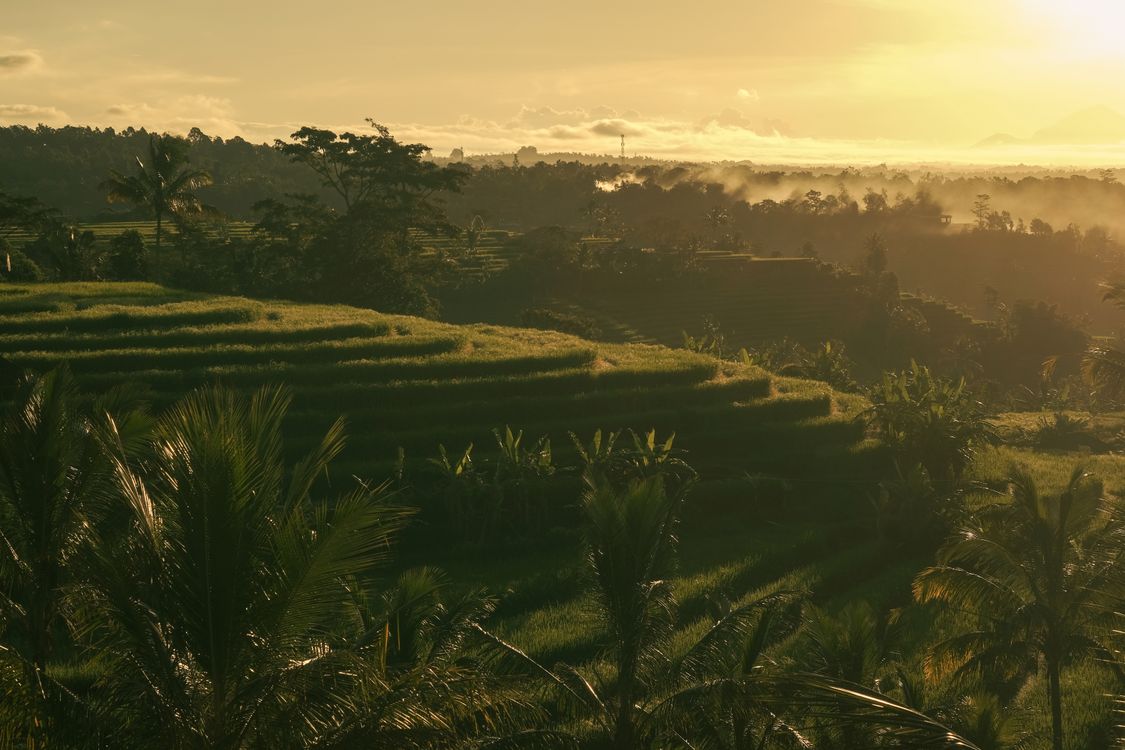
Rice Terraces and Mountain Valleys: The Best Viewpoints in Bali’s Interior
Bali’s rice terraces get all the attention, but the most photogenic views of them aren’t at the famous ones. They’re in the valleys where farming comes before tourism.
Sidemen Valley
Sidemen is the viewpoint I described in the opening, the one that stopped me on a back road. It’s in Karangasem, about ninety minutes from Ubud, and it feels like Bali did twenty years ago. The valley is a patchwork of rice terraces, river gorges, and small villages, with Mount Agung as the backdrop to everything. There’s no single “Sidemen Viewpoint” on a map. The entire valley is the viewpoint. You ride through it on a scooter, stopping wherever the view catches you.
There’s no entry fee to the valley itself. The Jembatan Kuning (a small yellow suspension bridge over the river) is one of the best spots to stop, with views down through jungle to the water. A scooter rental in Sidemen runs about 70,000 IDR a day. The whole area is still quiet enough that I was the only foreigner on the road for long stretches.
Jatiluwih Rice Terraces
If you want the classic Bali rice terrace photo but without the Tegallalang crowds, drive an hour west of Ubud to Jatiluwih. It’s a UNESCO World Heritage site covering over 600 hectares (roughly ten times the size of Tegallalang), and the walking trails run for up to four kilometres through paddies, irrigation channels, and small temples. Entry is 40,000 IDR per person.
Jatiluwih sits at around 700 metres elevation in the Tabanan regency, so it’s cooler than the coast and the light is different: softer, with more cloud shadow moving across the terraces. Go in the morning before the tour buses arrive, and you can walk for half an hour without passing another person. The terraces grow traditional red rice varieties you won’t see in the south.
Campuhan Ridge Walk, Ubud
This one’s not hidden at all (it’s a two-kilometre walk starting five minutes from central Ubud), but it belongs here because most people do it wrong. They go at midday, when it’s 33°C and the light is flat. Go at sunrise instead. The trail runs along a narrow ridge between two valleys, with palm trees and rice terraces falling away on both sides. At 6am you’ll have it nearly to yourself, and the morning light turns the grass golden.
It’s free, it starts near the Warwick Ibah Villas on Jalan Raya Campuhan, and it takes about forty-five minutes each way. The trail is paved, so you don’t need hiking boots. Officially it opens at 8am, but early risers routinely walk it from dawn.
Sunset and Sea Cliffs: Bali’s Coastal Viewpoints
The south of Bali has limestone cliffs that drop a hundred metres straight into the Indian Ocean. Most tourists see them from the Uluwatu Temple terrace, hemmed in by other visitors and macaque monkeys. The better options are close by and far less hectic.
Karang Boma Cliff, Uluwatu
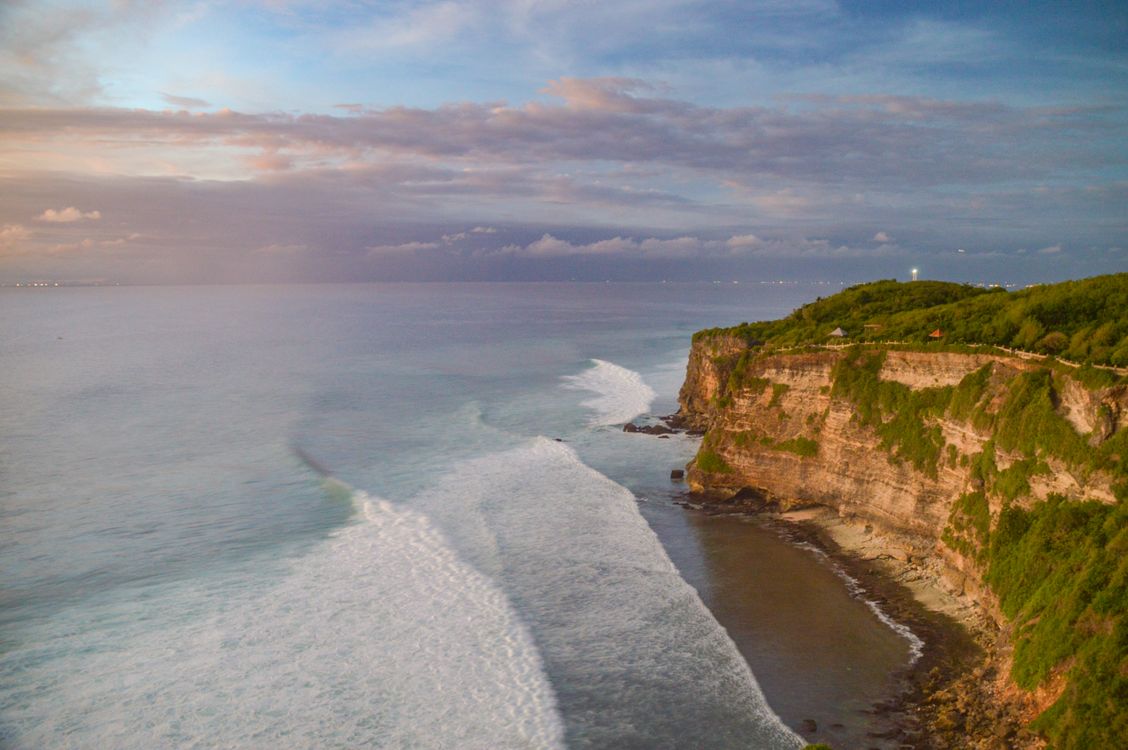
Karang Boma is a grassy clifftop about ten minutes from Uluwatu Temple, and it’s the best sunset viewpoint I’ve found on the Bukit Peninsula. The cliff drops roughly 100 metres to the ocean (turquoise shallows breaking into deep blue), and there are no barriers, which makes it both dramatic and genuinely vertiginous. A small rocky outcrop juts over the edge for photos, though I’ll admit I didn’t go near it.
Entry is 10,000 IDR, which includes parking. There are no official opening hours, but aim to arrive at least an hour before sunset (around 4:30 or 5pm) to get a good spot on the grass. A small coffee shop called Copy House sits near the cliff edge if you want a drink while you wait. The best months are February to May, when the rainy season has left everything green.
It does get busy at sunset, especially on weekends. But “busy” here means thirty people spread across a wide clifftop, not two hundred in a queue.
Twin Lakes from Wanagiri Ridge
Right up in the north of Bali, the road along the Wanagiri ridge looks down over an ancient volcanic caldera containing Lake Buyan and Lake Tamblingan, two crater lakes surrounded by dense rainforest with Mount Agung visible on clear days in the distance. The main viewpoint is free and sits along Jalan Raya Wanagiri. You just pull over and look.
The lakes cover about 440 acres between them, and the colour shifts from deep blue to emerald depending on the cloud cover. It’s a proper highland landscape: cool air, mist in the mornings, jungle sounds. For a quieter experience, skip Wanagiri Hidden Hills (which charges 100,000–150,000 IDR and is full of Instagram swing installations) and instead stop at GIRI LUWIH Agro Coffee Adventure, a coffee farm with the same panoramic view and none of the crowds. Entry is free; a coffee costs 40,000 IDR.
The drive from Ubud takes about two hours via Bedugul. The road is steep and twisting after the T-junction towards Munduk, so take it slowly on a scooter.
How to Plan a Bali Viewpoint Trip Without Missing the Light
Chasing viewpoints across Bali isn’t like sightseeing in a city. Distances are short on the map but long on the road (twenty kilometres can take over an hour on Bali’s narrow, winding routes), and the best light is gone by mid-morning.
Timing matters more than anything. Sunrise viewpoints need a 4–5am departure. Sunset spots need you there an hour before the light turns. Rice terraces look best in the two hours after dawn, when the light is low and warm. By noon the sun is directly overhead and everything looks flat.
Hire a driver for the remote ones. Bukit Cinta, Pinggan, and the Twin Lakes are all doable on a scooter, but the roads are steep, poorly marked, and sometimes unpaved. A private driver costs 500,000–700,000 IDR for a full day (roughly £21–£29), which gets you someone who knows the roads, can leave at 4am, and won’t get lost in the dark. For everything within Ubud or the Bukit Peninsula, a scooter at 70,000–80,000 IDR a day is fine.
Pack for the altitude. Pinggan and Wanagiri are both above 1,000 metres, and morning temperatures can drop to 15–17°C. Bring a light jacket. Lower viewpoints like Bukit Cinta and Karang Boma are warm, but the pre-dawn ride to get there is cold on a scooter.
Download offline maps. Mobile signal drops to nothing in the mountains, around the lakes, and on many back roads in eastern Bali. Save your route before you leave. I learned this the hard way on a wrong turn above Sidemen at 5:30am.
The dry season (April to October) gives the clearest views. The rainy season (November to March) can produce dramatic cloud formations, but it also means entire mornings where Mount Agung is completely invisible behind grey cloud. If you’ve only got one shot, go dry season.
These viewpoints aren’t on the tour-bus circuit, and that’s exactly why they’re worth the early alarm or the extra hour on a scooter. Bali’s landscape is one of the most dramatic on earth (volcanoes, jungle, rice terraces cut into mountainsides, cliffs falling into open ocean), and the best way to see it is from a spot where you’re not competing for elbow room.
Pick one. Set the alarm. Go.
If you’ve found a viewpoint in Bali that took your breath away, I’d love to hear about it. Reply to this post or message me on Instagram. The hidden ones are always the best finds.
FAQs
Q: What are the best viewpoints in Bali?
A: The best viewpoints depend on what you want to see. For sunrise, Bukit Cinta in Karangasem and Pinggan Village in Kintamani are hard to beat. For rice terraces, Sidemen Valley and Jatiluwih are more scenic and less crowded than Tegallalang. For sunset over the ocean, Karang Boma Cliff in Uluwatu is the standout. For lakes and highland jungle, the Wanagiri ridge above the Twin Lakes is spectacular.
Q: Is Bukit Cinta in Bali worth visiting?
A: Very much so, if you’re willing to get up early. The sunrise view of Mount Agung with rice terraces and morning mist in the foreground is one of the most striking in Bali. There’s no entry fee, very few tourists, and the drive from Ubud takes about ninety minutes. Go during the dry season (April to October) for the clearest views.
Q: How much does it cost to visit viewpoints in Bali?
A: Most hidden viewpoints are free or nearly free. Bukit Cinta has no official fee (10,000 IDR parking). Campuhan Ridge Walk is free. Karang Boma Cliff is 10,000 IDR. Jatiluwih Rice Terraces charges 40,000 IDR. Pinggan Village charges 50,000 IDR. The main cost is transport: a private driver for a full-day viewpoint trip runs 500,000–700,000 IDR (roughly £21–£29).
Q: What time should I arrive for sunrise viewpoints in Bali?
A: Sunrise in Bali is around 6:00–6:30am year-round. For the best light and to beat any crowds, arrive at least 30 minutes before sunrise, so by 5:30am. For viewpoints that require a long drive (Pinggan, Bukit Cinta), you’ll need to leave your accommodation by 4:00–4:30am.
Q: Is the Campuhan Ridge Walk in Ubud worth doing?
A: Yes, especially at sunrise. It’s a flat, paved two-kilometre walk along a ridge between two valleys, with views over palm trees and rice terraces. It’s free, it starts near central Ubud, and takes about forty-five minutes each way. Go early, as by midday it’s hot and busy.
Q: Are Bali’s hidden viewpoints safe to visit?
A: They’re generally safe, but use common sense. Karang Boma Cliff and some ridge viewpoints have no safety barriers, so stay back from edges, especially in wet or windy conditions. Mountain roads can be steep and poorly lit before dawn, so hire a driver if you’re not confident on a scooter. Bring a torch if you’re walking in the dark, and download offline maps since mobile signal is unreliable in remote areas.
Q: What is the best time of year to see viewpoints in Bali?
A: The dry season, April to October, gives the clearest skies and the best chance of seeing Mount Agung and other peaks without cloud cover. The rainy season (November to March) can produce dramatic mist and cloud effects, but there’s a higher risk of overcast mornings that block the view entirely.
Q: How do I get to Pinggan Village for sunrise?
A: Pinggan is in the Kintamani highlands, about ninety minutes from Ubud by car. The roads are steep, narrow, and poorly lit, so hiring a driver is strongly recommended for a first visit. Expect to pay 400,000–500,000 IDR for a half-day trip. Leave Ubud by 4:00–4:30am. You can also stay overnight at Pinggan Cliff or Pinggan Luxury Camp and walk to the viewpoint at dawn.
Q: Is Jatiluwih better than Tegallalang?
A: They’re different experiences. Tegallalang is closer to Ubud, more compact, and very photogenic, but crowded and commercialised, with swings, cafés, and souvenir stalls built into the terraces. Jatiluwih is ten times larger, UNESCO-listed, much quieter, and feels like a working agricultural landscape rather than a tourist attraction. If you want the more authentic experience, go to Jatiluwih. Entry is 40,000 IDR.
Q: Can I visit multiple viewpoints in one day in Bali?
A: You can, but be realistic about distances. A good combination is a sunrise viewpoint (Bukit Cinta or Pinggan) followed by a late-morning stop at a rice terrace (Sidemen or Jatiluwih). Or combine Campuhan Ridge Walk at dawn with Jatiluwih in the late morning. Don’t try to fit both north and east Bali into one day. The drives are too long and you’ll spend more time in the car than looking at anything.