The Best Temples in Bali: An Honest Guide to What's Worth Your Time in 2026
The temples I actually send friends to in Bali: with honest entry fees, dress-code reality, and the truth about that Gates of Heaven reflection photo.
The first time I went to Lempuyang for the famous photo, I queued for nearly three hours in the heat, watched a man hold a chipped square of mirror under his phone, and realised the “sacred lake” reflecting the gates was a piece of glass the size of a beermat. I laughed out loud. Then I went and found the temples that actually moved me, and that’s really what this list is about. After years of living here, I’ve worked out which of the best temples in Bali earn your morning, and which are mostly a backdrop for someone else’s holiday feed.
There are thousands of temples on this island: every family compound has one, every rice field has a little shrine catching offerings. You can’t see them all, and you shouldn’t try. What follows is the shortlist I give friends when they land: six temples, what they actually cost in 2026, the dress code nobody warns you about, and the honest verdict on each. Some are worth the early alarm. One or two I’d happily skip. I’ll tell you which, and why, because a guide that loves everything equally isn’t much use to anyone packing a real itinerary.
Tanah Lot at sunset: the postcard that mostly delivers
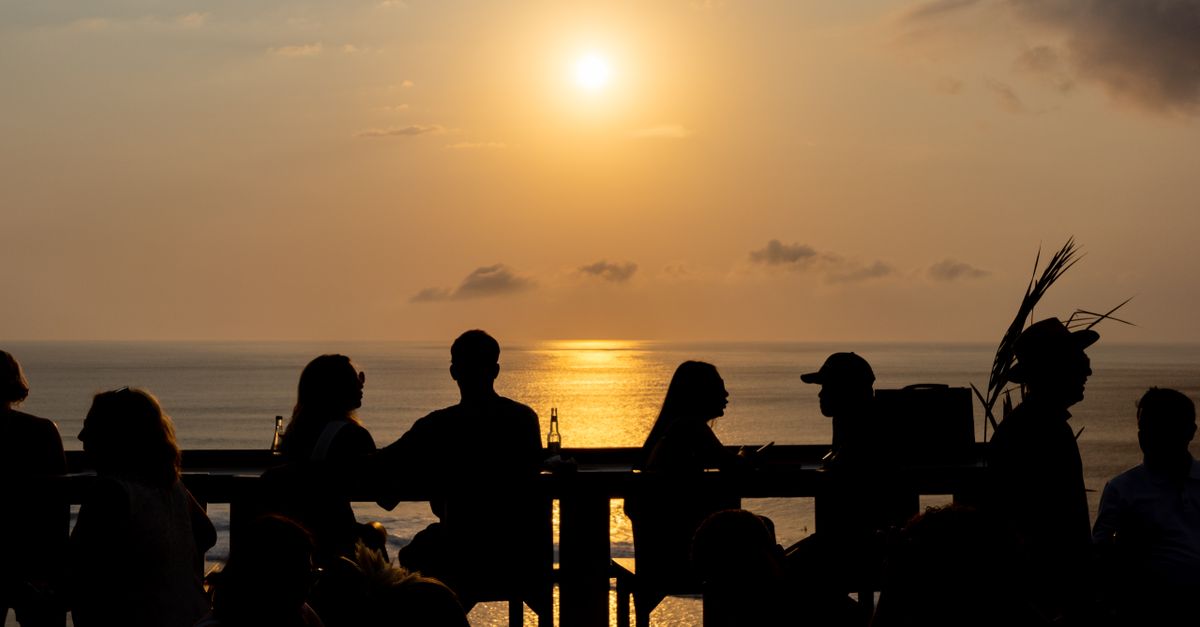
Pura Tanah Lot sits on a black rock just offshore, and at high tide it looks like it’s floating, which is exactly why it’s the most photographed sunset temple in Bali. I’ll be straight with you: the approach is a long gauntlet of stalls selling fridge magnets and Bintang singlets, and the crowds at golden hour are genuinely a lot. But the silhouette, when the sky goes orange behind that ragged little temple, still gets me every time.
Entry for foreigners is IDR 100,000 (children IDR 60,000) as of 2026, following the April 2026 price rise. You can’t actually go up into the temple itself (it’s reserved for worshippers), but at low tide you can walk across to the base of the rock, where a priest will dab holy water and rice on your forehead for a small donation. My advice: arrive by 16:30, buy a coconut, and stake out a spot on the clifftop to the left of the main viewpoint rather than directly in front. Fewer elbows, same sky. Skip the overpriced restaurants and eat in Canggu after.
Uluwatu temple and the Kecak fire dance
If you only do one temple-plus-performance evening, make it Uluwatu. The temple clings to a cliff a hundred metres above the Indian Ocean, and the open-air Kecak dance at sunset is the rare cultural show that genuinely earns its hype. Dozens of men chanting “cak-cak-cak” in firelight while the Ramayana plays out, ocean roaring below, it’s one of the most atmospheric things you can do among Bali’s Hindu temples.
Temple entry is around IDR 60,000; the Kecak ticket is separate at around IDR 150,000, with the first show starting near 18:00 and running about an hour. Book ahead in high season: seats sell out and the good ones (left side, facing the sunset) go first. You can sort entry, transport and the dance in one go here: book the Uluwatu temple and Kecak dance. One real warning: the resident macaques are professional thieves. They will take your sunglasses, your phone, your hat (anything loose) and a “rescuer” will then negotiate its return for snacks. Wear nothing you’d mourn, and keep your bag zipped and in front of you. Seats are unreserved and the good ones go well before the show, so it is worth reading my full guide to the Kecak fire dance at Uluwatu before you go.
Lempuyang and the Gates of Heaven mirror photo
Let’s talk about it, because it’s why most people come. The Gates of Heaven at Lempuyang temple (those two split stone gates framing Mount Agung) is the single most viral image in Bali. And the dreamy “reflection in a still lake” beneath it? It does not exist. The Gates of Heaven mirror photo is made by a temple staffer holding a small mirror under your phone lens. That’s the whole trick.
Knowing that didn’t ruin it for me, but it changes how you plan. Entry runs IDR 100,000–150,000, plus around IDR 50,000 for the shuttle up the mountain, and in 2026 the queue for the photo can be two to four hours. You get a number, you wait, you get maybe thirty seconds for your shots. Here’s my honest take: go for the temple, which is a genuinely sacred complex with seven sanctuaries climbing the mountainside, and treat the photo as a bonus. Arrive at opening (around 06:00) if the shot matters to you, or skip the queue entirely and just explore the quiet upper temples that almost nobody bothers to climb to.
Ulun Danu Beratan, the floating water temple
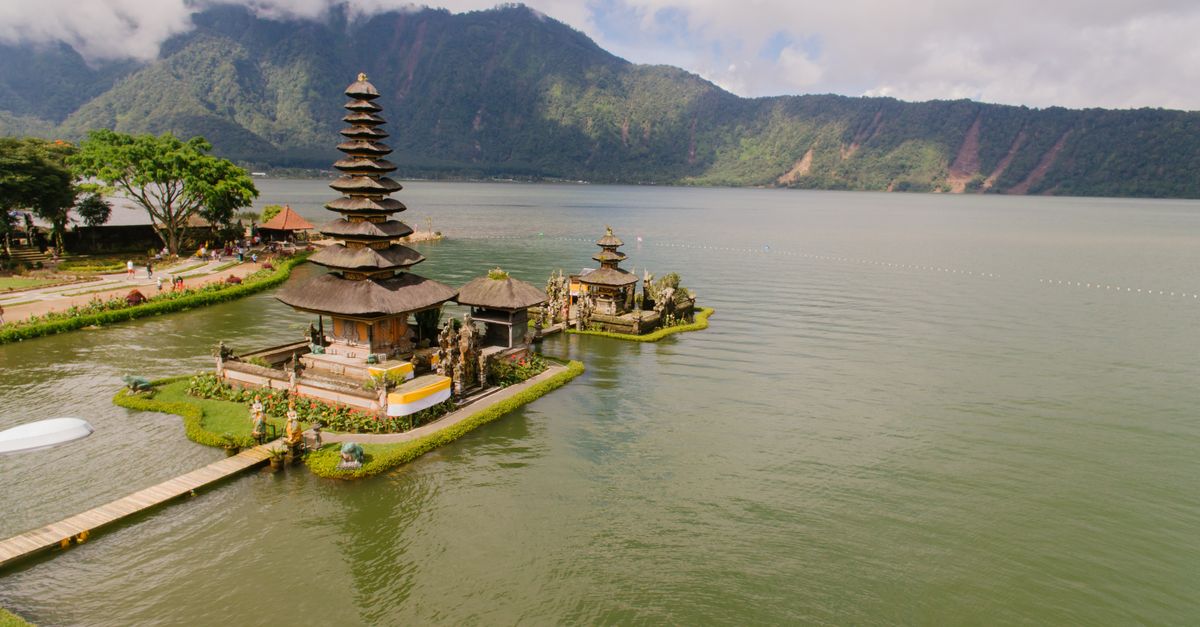
Up in the cool highlands at Bedugul, Pura Ulun Danu Beratan is the one on the old 50,000-rupiah note: a multi-tiered shrine that sits right at the edge of Lake Beratan and appears to float when the water is high. It’s the most serene of Bali’s water temples, partly because the mountain air is a blessed fifteen degrees cooler than the coast, and partly because the grounds are wide enough to absorb the crowds.
Entry was recently adjusted to around IDR 75,000 for adults (some days it’s a little less, always check at the gate), and it’s open daily 07:00–19:00. Go early: morning mist sitting on the lake behind the temple is the real reason to come, and by midday the light flattens and the tour buses arrive. It’s about 90 minutes from Seminyak, so I’d pair it with the nearby Handara Gate or the twin lakes viewpoint to make the drive worthwhile. Honestly, for the calm alone, this is my favourite floating temple in Bali. Hiring a driver for the day makes the highland loop painless: a private car and driver runs roughly IDR 600,000–750,000 for the day and means someone else handles the hairpins.
Besakih and Tirta Empul: the mother temple and the holy springs
These two are for travellers who want substance over scenery. Pura Besakih, on the slopes of Mount Agung, is the mother temple: the largest and holiest complex on the island, a sprawl of more than twenty temples stacked up the volcano. Entry is IDR 150,000, which now includes a mandatory local guide and your sarong; it’s open 07:00–18:00. The guide requirement annoys some people, but a good one turns a confusing maze into a real story, so I don’t begrudge it.
Tirta Empul, about 40 minutes away near Ubud, is where you can take part rather than just look. Balinese Hindus have come to its spring-fed pools for purification (melukat) for over a thousand years, moving along a row of water spouts. Entry is around IDR 50,000–75,000. You can bathe too: bring a change of clothes and a sarong for the water, follow the queue, and skip the two spouts reserved for funeral rites. Done respectfully, it’s the most moving temple experience I’ve had here. Go before 09:00, before the coaches.
What to wear and how to behave at a Bali temple
Here’s the bit that catches people out. Every temple requires a sarong and a sash tied at the waist, even if your legs are already covered. Shoulders must be covered too, so no singlets. Most temples rent a sarong for IDR 10,000–20,000 at the gate, but I keep my own in the car; it’s tidier and you’re not handed a damp communal one. That’s the core of Bali temple dress code, and it isn’t negotiable.
A few more things that matter. Don’t stand higher than a praying worshipper or a priest for a photo. Don’t point your feet at a shrine when sitting. Step around offerings on the ground rather than over them. And one many visitors don’t know: women who are menstruating are asked not to enter the inner courtyards: it relates to cuntaka, a Balinese concept of temporary spiritual imbalance, not impurity. You’ll see polite signs at the entrances. Honouring these isn’t fussy; it’s the difference between being a guest and being a nuisance. The Balinese are extraordinarily gracious about it, which is all the more reason to get it right.
These are working places of worship before they’re attractions, and treating them that way is what makes the visit worth anything at all. My one-sentence verdict: come for Uluwatu’s dance and Tirta Empul’s springs, go early everywhere, and let the Gates of Heaven be a fun footnote rather than the whole trip.
I’m always tweaking this shortlist: a temple I underrated, a fee that’s changed, a hidden one you found that I’ve never heard of. So reply and tell me what I’ve missed: my list is never finished, and the best tips I’ve ever got came from readers who’d just got back.
FAQs
What are the best temples to visit in Bali? Tanah Lot, Uluwatu, Lempuyang, Ulun Danu Beratan, Besakih and Tirta Empul are the standouts. Choose by what genuinely moves you rather than which gives the best photo.
How much does it cost to enter Bali’s temples? Roughly: Tanah Lot IDR 100,000; Uluwatu around IDR 60,000; Ulun Danu Beratan around IDR 75,000; Besakih IDR 150,000 (includes a mandatory guide); Tirta Empul IDR 50,000–75,000. Rates drift, so check at the gate.
What should I wear to a Bali temple? Cover your shoulders and knees, and wear a sarong and sash. Most temples rent a sarong for about IDR 10,000–20,000 if you haven’t brought one.
Is the Gates of Heaven reflection photo real? No. The “lake” reflecting the gates at Lempuyang is a piece of glass held under a phone camera. Expect a long queue for it, often two to four hours.
What time is the Kecak fire dance at Uluwatu? It starts at around 6pm to coincide with sunset, and tickets are about IDR 150,000. Arrive early to get a decent seat in the amphitheatre.
Can you visit Besakih without a guide? As of 2026 a local guide is mandatory and included in the IDR 150,000 ticket, along with a sarong. You can’t wander the mother temple unaccompanied.
What is Tirta Empul known for? Its holy spring-water purification ritual, melukat, which has been practised here for over a thousand years. Visitors can take part respectfully with a sarong and a small offering.
Do I need to book Bali temples in advance? Generally no, you pay at the gate. Lempuyang is the main exception, where arriving early in the morning is the only way to avoid the worst of the queue.
Can women visit temples during menstruation? Balinese custom (cuntaka) asks menstruating women not to enter the inner temple courtyards. It’s respected on a trust basis rather than policed.
Which Bali temple is best for sunset? Tanah Lot and Uluwatu, both dramatic sea temples facing west. Uluwatu has the added draw of the Kecak fire dance as the sun goes down.
Before you go: I wrote this in 2026 and double-checked every price, fee, opening time and rule I could, but Bali changes fast. Treat the figures here as a guide and confirm the latest details before you book or travel.
Some of the links in this article are affiliate links: if you book through them I may earn a small commission at no extra cost to you. I only ever recommend things I would happily send a friend to.