The Power of Silence: Vipassana Meditation Retreats in Bali
I booked my first silent retreat because of someone's Instagram story, having never meditated for longer than twelve minutes. What Vipassana actually involves, where to do it in Bali, what the research really shows, and who shouldn't go.

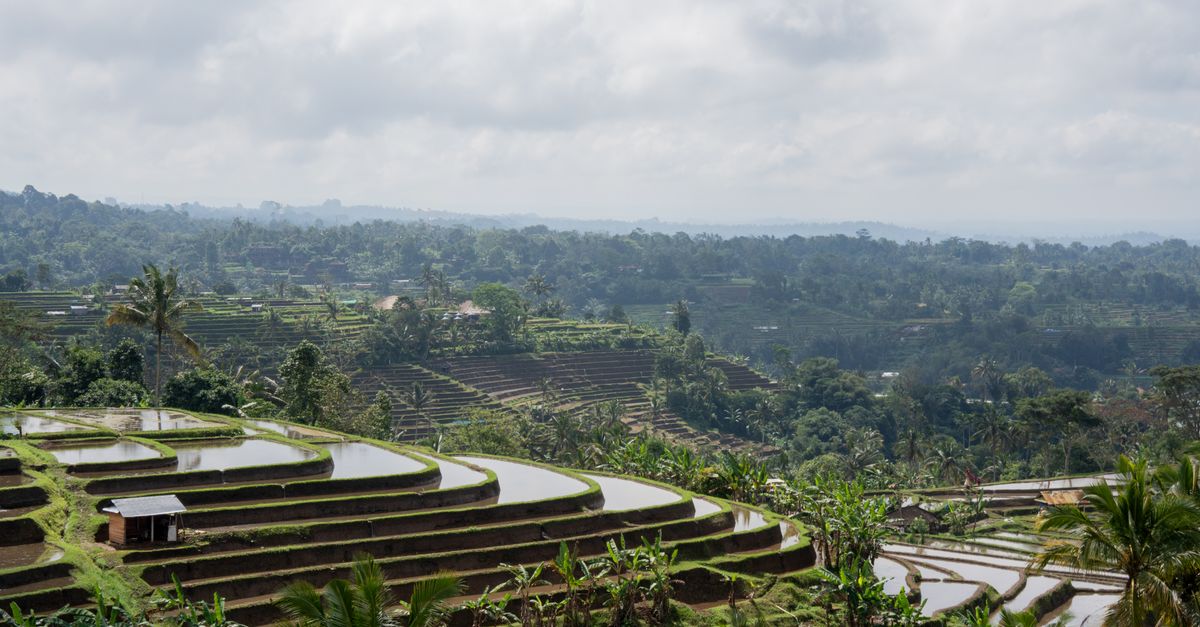
I booked my first silent retreat because of somebody’s Instagram story. That’s the whole origin story. A woman I’d met twice was three days into one somewhere near Ubud, posting a single photo of a rice field with no caption, and I felt something I can only describe as envy for her quietness.
At that point I had never meditated for longer than twelve minutes. I’d tried the apps. I’d fallen asleep. The idea that I might sit still and say nothing for several days seemed, honestly, absurd, and also like exactly the thing I needed, which is usually a sign.
If you’re considering a Vipassana meditation retreat in Bali, you’re probably somewhere in the same place: curious, slightly intimidated, and unsure whether the version being sold on social media bears any relationship to the real thing. It mostly doesn’t. There’s a genuine Vipassana centre on this island that costs nothing and asks a great deal of you, and there’s a much larger ecosystem of gentler silent retreats that are lovely and are not the same thing at all.
This is what each one actually involves, what it costs, what the research supports, and how to work out which, if any, is right for you.

What Vipassana Actually Is, and What It Isn’t
Vipassana means, roughly, seeing things as they really are. It’s one of India’s oldest meditation techniques, and the version taught across the world today comes through S.N. Goenka, in the tradition of Sayagyi U Ba Khin.
The technique itself is unglamorous. You spend the first days narrowing your attention to the breath at the entrance of the nostrils, and then, from the fourth day, you begin systematically scanning the sensations across the surface of the body, observing them without reacting, whether they’re pleasant, unpleasant, or nothing much at all. That’s it. No mantras, no visualisation, no crystals, no one telling you that you are a luminous being.
What it isn’t is a wellness holiday. This is the distinction that trips people up, because a lot of what gets marketed in Bali as “Vipassana” is a yoga retreat with some silent hours in it. Both can be worthwhile. They’re just different products. A true Vipassana course runs for ten days, holds noble silence throughout, charges nothing at all, and involves roughly ten hours of sitting a day.
There’s a useful test doing the rounds among retreat-goers, and it holds up: if it charges you a fee, or if it doesn’t hold noble silence, it isn’t a Vipassana course. It might still be exactly what you want. Just know which one you’ve booked.
Dhamma Geha: Bali’s Only True Vipassana Meditation Retreat
For years, anyone in Indonesia wanting a proper ten-day course went to Dhamma Java, the country’s first centre, in the hills near Bogor. Bali only had occasional non-centre courses at rented sites.
That changed in December 2021, when construction finished on Dhamma Geha in Susut, Bangli: proper rural countryside, surrounded by bamboo forest and farmland, up where the temperature sits mild to cool rather than coastal-sticky. The first courses ran in January 2022. The site has 52 single rooms for students and volunteer servers, accommodating 46 meditators, split into separate male and female compounds, with a large meditation hall, landscaped walking areas, and a kitchen staffed entirely by volunteers turning out simple vegetarian food.
What the ten days involve
The structure is identical everywhere in the world, which is part of the point:
- Arrival day. Registration runs from 2pm to 4pm, followed by orientation. You hand in your phone, wallet, books, notebook and any religious objects. Silence begins that evening.
- Days 1–3. Anapana: attention on the breath at the nostrils. Narrowing, and narrowing again.
- Day 4. Vipassana proper is introduced. You begin scanning bodily sensation.
- Days 5–9. Continued practice, roughly ten hours a day, broken by meals and rest, with a recorded evening discourse from Goenka.
- Day 10. Noble silence ends. You talk. It is genuinely disorienting.
- Day 11. The course closes by 7:30am and you go home.
There is no charge: not for the course, not for the food, not for the room. Everything is funded by donations from people who have completed a course themselves and want someone else to have the chance.
How to apply
Applications go through the centre’s website, and you’ll be asked to read the Code of Discipline before you submit. Because demand is high, notification can take up to two weeks, so this isn’t a thing you decide on Tuesday and do on Friday. Courses are given in English with recorded translations available in dozens of languages, so you’re not excluded if English isn’t your first.
The Gentler Alternatives: Silent Retreats That Aren’t Vipassana
Ten days of noble silence is not the right first step for most people, and there’s no virtue in going straight to the deep end.
Bali Silent Retreat, Tabanan
The best-known option sits near the village of Penatahan in Penebel, Tabanan Regency (about an hour north-west of Ubud, or two and a half hours north of the airport). It’s six hectares surrounded by the UNESCO-protected Jatiluwih rice terraces, jungle and mountains.
The rhythm is looser than a Vipassana course. You choose your own programme from a long list of daily and weekly classes, eat from three organic vegetarian buffets a day plus an all-day grazing table, and every guest is handed a blank notebook and a pen. Accommodation ranges from dormitory beds through single rooms to private bungalows, so rates vary considerably by room type. Check their accommodation page rather than trusting a figure you read somewhere, because these change.
One thing worth knowing, because it surprised me: it isn’t a total blackout. There’s a co-working space with a 360-degree view, free Wi-Fi, and a charging station, on the reasoning that plenty of guests are working remotely. If you want your phone physically confiscated, that’s Vipassana, not here. Also, don’t arrive after 4pm. The site gets too dark to navigate for your orientation.
Samyama and the shorter Ubud programmes
Closer to Ubud, Samyama runs structured silent programmes with actual teaching alongside the silence, including a five-day Spiritual Heart retreat. Elsewhere on the island you’ll find three to five day silent programmes from around USD 300 to 600, and week-long immersive retreats with meals and instruction included at roughly USD 400 to 1,200, with luxury options climbing to USD 1,500 to 3,000. Bali offers a lot of retreat for the money compared with Europe or the US, which is a large part of why the scene here is what it is.

What the First Three Days Actually Feel Like
Nobody warns you properly about day two.
Day one is fine. Day one is almost pleasant: a novelty, a break, the relief of not having to be charming at anybody. You notice how loud your own chewing is. You notice the geckos.
Then somewhere in the second day, the noise you’ve been layering over your own thoughts for about thirty years stops working, because you’ve removed all of it. No phone. No small talk. No podcast to put on while you wash up. And what surfaces isn’t profound spiritual insight: it’s a conversation you handled badly in 2019, and a decision you’ve been avoiding, and a low unfocused grief you couldn’t have named if someone had asked.
I cried on the second afternoon and I still can’t fully explain why. The woman on the cushion beside me was crying too, at a completely different moment, about something I will never know. Nobody spoke. Nobody was supposed to. There’s an odd tenderness in a room full of people all quietly having a hard time and leaving each other alone with it.
By the third day something loosens. Not enlightenment: just a settling, a sense that the mind has stopped thrashing and is willing to sit. Almost everyone I’ve spoken to describes the same arc, roughly the same shape, at roughly the same points. That predictability is oddly reassuring when you’re in the middle of it.
What the Research Says About Meditation Retreats
Here’s where I’d ask you to be a little sceptical of the wellness industry, mine included.
The most careful piece of evidence we have is a 2014 systematic review and meta-analysis published in JAMA Internal Medicine by Goyal and colleagues, who screened nearly 18,000 papers and included 47 trials covering 3,320 participants. What they found was real but modest: moderate evidence that mindfulness meditation programmes improve anxiety, depression and pain, with an effect size for anxiety of around 0.38 at eight weeks. They found only low-quality evidence of improvement in general stress and mental-health-related quality of life, and insufficient evidence of any effect on mood, attention, sleep, eating habits or weight.
They also found no evidence that meditation programmes worked better than active treatments such as medication or exercise.
I think that’s worth sitting with rather than glossing over. Meditation is not nothing, and it isn’t a miracle either. If you’ve seen a claim that a silent retreat slashes anxiety scores by two-thirds, treat it the way you’d treat any number circulating without a study attached to it.
And a genuine caution: ten days of unbroken silence with no phone, no reading and nobody to talk to is a significant psychological undertaking. If you’re currently in acute distress or an unstable period mentally, this is not the intervention to reach for first. Talk to someone who knows you well, and ideally to a professional, before you apply.
How to Prepare for a Silent Retreat in Bali
Practically, the preparation is short.
Start sitting now. Even ten minutes a day for the fortnight beforehand makes the first morning enormously less brutal. Cut your caffeine down in advance rather than on arrival, unless you’d like a headache on day one.
Pack modestly and comfortably: loose, covered clothing you can sit cross-legged in for hours. Bring a light layer; the meditation halls in Bangli and up near Batukaru get cooler than you’d expect for Bali. Sort your visa, your work handover and your family before you go, because the peace of mind matters more than the packing.
Then tell people. Not for accountability, but so that nobody panics when you don’t answer messages for a week and a half. Give someone the centre’s number for genuine emergencies.
And book the day after carefully. Don’t fly home the same afternoon, and don’t schedule a client call. Re-entry is real: colours look loud, cafés sound like a building site, and everyone talks extremely fast. Give yourself a day of nothing to land in.

Wrapping Up
A silent retreat isn’t going to fix your life, and anybody promising otherwise is selling something. What it does is remove the noise for long enough that you can hear what’s actually going on underneath it, which is uncomfortable, and useful, and not quite the serene experience the photographs suggest.
If you want the real thing, Dhamma Geha in Bangli costs nothing and asks everything. If you want somewhere gentler to find out whether silence suits you at all, a few days near Jatiluwih or Ubud will tell you a great deal for far less commitment.
I’d start small. Three days, somewhere structured, and see what surfaces. You can always go back for the ten.
If you’ve done a silent retreat (here or anywhere), I’d love to know what the second day did to you. Reply and tell me.
FAQs
What is Vipassana meditation?
Vipassana means seeing things as they really are, and it’s one of India’s oldest meditation techniques. In the tradition taught by S.N. Goenka, you spend the first days observing the breath at the nostrils, then move to systematically scanning bodily sensations without reacting to them. There are no mantras, visualisations or objects of worship.
Is there a real Vipassana centre in Bali?
Yes. Dhamma Geha is in Susut, Bangli, in rural countryside surrounded by bamboo forest and farmland. Construction finished in December 2021 and courses have run since January 2022. It has 52 single rooms and accommodates 46 meditators across separate male and female compounds.
How much does a Vipassana retreat in Bali cost?
Nothing. Ten-day courses in the Goenka tradition charge no fee for tuition, food or accommodation. They run entirely on donations from former students who have completed a course and want to fund a place for someone else. Other silent retreats in Bali do charge: typically USD 300 to 600 for three to five days.
How long is a Vipassana course?
Ten full days, plus an arrival afternoon and a departure morning. Registration is from 2pm to 4pm on day zero, the course runs for ten complete days, and it finishes by 7:30am on the eleventh day. Shorter one to three day courses exist but are only open to students who have already completed a ten-day course.
What is the daily schedule on a Vipassana retreat?
Expect around ten hours of seated meditation a day, broken by meals and rest periods, with a recorded evening discourse. Noble silence is held from the first evening until the tenth day: no speaking, no eye contact, no gestures, and no phones, books or writing materials.
What is the difference between Bali Silent Retreat and Vipassana?
Bali Silent Retreat in Tabanan is a paid nature sanctuary where you choose your own programme from daily classes, and it has free Wi-Fi and a co-working space. A Vipassana course is free, fixed, ten days long, and hands your phone in on arrival. Both involve silence; only one is Vipassana.
Where is Bali Silent Retreat and how do I get there?
It sits near Penatahan village in Penebel, Tabanan Regency (roughly an hour north-west of Ubud or two and a half hours north of Denpasar airport by car). Route via Tabanan General Hospital and Espa Hot Springs rather than the back roads, and don’t arrive after 4pm, as the site becomes too dark for orientation.
Does meditation actually reduce anxiety?
The evidence supports a modest benefit rather than a dramatic one. A 2014 meta-analysis in JAMA Internal Medicine covering 47 trials and 3,320 participants found moderate evidence that mindfulness meditation improves anxiety, depression and pain, with an anxiety effect size of about 0.38 at eight weeks, and no evidence it outperforms active treatments like medication.
Is a silent retreat safe for everyone?
Not necessarily. Ten days without speech, phones, reading or writing is psychologically demanding, and difficult material often surfaces. If you’re in acute distress or an unstable period mentally, speak to a professional who knows your history before applying, and consider a shorter, more supported retreat instead.
How should I prepare for my first silent retreat in Bali?
Start meditating for ten minutes a day a fortnight beforehand, reduce your caffeine intake gradually before you arrive, and pack loose clothing you can sit in plus a light layer for cooler upland halls. Tell people you’ll be uncontactable, and leave the day after the retreat completely free for re-entry.