Ubud Rice Terraces Beyond Tegallalang: Quieter Views & Where Locals Actually Go
Skip the Tegallalang queues. Here are the quiet Ubud rice terraces I actually walk, the free Kajeng and Sok Wayah paths, yoga among the paddies, and Jatiluwih.
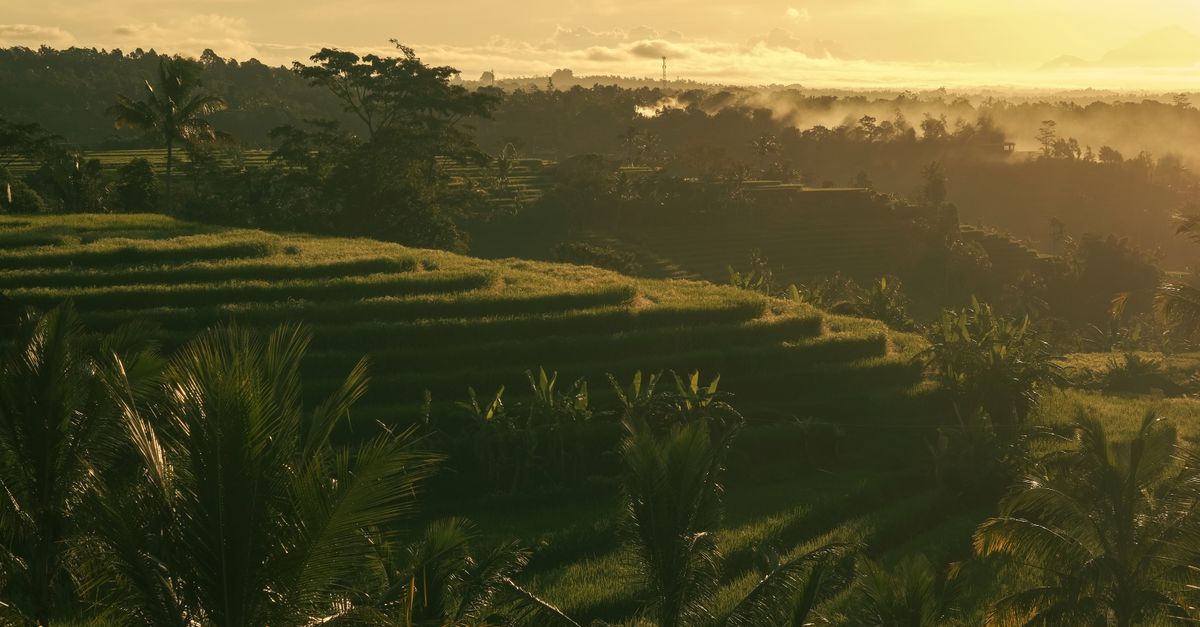
The best rice-terrace morning I’ve had in Bali cost me nothing and involved no entrance gate at all. I was staying near the centre of Ubud, woke before six, and walked ten minutes up a lane behind the palace onto a path called Kajeng. Mist sat in the paddies, a farmer was already out adjusting the water, and for the best part of an hour I had the whole green amphitheatre almost to myself. No coach park. No queue of tripods. Just the sound of frogs and someone’s rooster.
And yet everyone I met later that trip had done the same thing: driven half an hour north, paid at three booths, and shuffled through Tegallalang shoulder to shoulder. If you’ve searched for the quieter Ubud rice terraces beyond Tegallalang, the ones locals actually walk, the ones you can practise yoga in or read a book beside, this is the guide I wish I’d had. I’ll take you through the free walks a short stroll from town, the yoga spots tucked into the paddies, and the bigger day-trip terraces worth the drive. Honest opinions, real prices, and where I’d genuinely send a friend.
Why Tegallalang isn’t the answer (and what to look for instead)
Let me be fair to Tegallalang first: those terraces are genuinely beautiful, and at dawn they still earn their fame. The problem isn’t the landscape, it’s the volume. Sitting about 9 km north of Ubud, roughly a 20-minute drive, Tegallalang has become the default stop on every northbound day tour. You pay a main entry of around IDR 25,000, then meet a string of “donation” booths asking IDR 10,000–20,000 each to cross privately farmed patches, and by mid-morning the narrow steps are a slow-moving crowd with selfie sticks.
So what should you actually look for when you want quieter rice terraces near Ubud? Three things, in my experience. First, walkability from the centre, the closer a paddy is to town, the more likely you can reach it on foot at dawn before anyone’s driving anywhere. Second, whether it’s working farmland rather than a staged attraction; a rope-and-donation-box every fifty metres is a tell. Third, timing over place, almost any rice field in the Ubud area is peaceful at 6.30am and heaving by eleven. Get those right and you don’t need the famous name. You need the quiet one down the lane, which is exactly where we’re headed next.
The Kajeng rice field walk: ten minutes from Ubud, and free
If you only do one thing from this guide, make it the Kajeng walk. The trailhead sits behind Jalan Kajeng, a short street running north from near Ubud Palace and the art market, so from most central accommodation you’re on the path within ten to fifteen minutes on foot, no scooter, no driver, no faff. There’s no entrance fee; it’s a working lane through the paddies, and a small donation to a farmer or at a little warung is a kind gesture rather than a toll.
The walk itself is flat and gentle, a there-and-back of maybe 30 to 45 minutes if you keep to the main path, longer if you dawdle, which you will. You pass family-run warungs, a few private villas, and open paddies where people are genuinely working the land rather than posing for you. It feels intimate and local in a way the famous Campuhan Ridge Walk, the other well-known free stroll in Ubud, simply doesn’t any more; Campuhan’s two-kilometre ridge is lovely but now lined with cafés, souvenir stalls and a steady stream of visitors.
Go at first light, around 6 to 8am. That’s when the mist still hangs, the air is cool enough to enjoy, the light is soft and gold, and the farmers are out, which is when these fields feel most alive. Bring a little cash for a coconut on the way back and you’ve had one of the best free mornings Ubud offers.
Subak Sok Wayah and the Sari Organik path: paddies, warungs and calm
A short walk on the other side of town gets you the second of my favourite Ubud walking trails. The Subak Sok Wayah path, often signposted for Sari Organik, begins off Jalan Raya Ubud near the Campuhan aqueduct, down a narrow lane just before the bridge. It’s about a ten-minute walk in and, like Kajeng, it’s flat, beginner-friendly and free. “Subak”, by the way, is the thousand-year-old Balinese cooperative irrigation system that channels water field to field; walking these paths you’re moving through living agricultural engineering, not a theme park.
The path threads between open paddies with a handful of thatched warungs perched among them, so it doubles as a gentle café stroll, a proper “Ubud rice paddy café” morning if you want breakfast with a 360-degree green view. I’ll add one honest caveat: café ownership out here changes, and the long-standing Sari Organik restaurant has at times been reported closed or in flux, so don’t hike out purely for one specific spot, check it’s trading, or simply enjoy whichever warung is open on the day. The walk stands on its own regardless.
What I love most is how quickly the town noise falls away. Ten minutes from the traffic on the main road and you’re among dragonflies, herons and the occasional farmer with a strimmer. Come early or in the late afternoon for the softest light. And if the idea of moving slowly through paddies appeals, the next section is for you, because this exact lane is also where Ubud’s rice-field yoga lives.
Yoga among the rice fields: the Ubud retreat scene locals rate
One of the fastest-rising things people search for is “ubud bali yoga retreat rice fields”, and it’s a real, findable experience, not just marketing. Ubud built its reputation as Bali’s wellness capital precisely because you can roll out a mat with nothing but paddies and jungle in front of you. The trick is knowing which studios genuinely sit in the fields rather than on a busy street.
My top pick sits on the very path we just walked: Ubud Yoga House, on Jalan Subak Sok Wayah, is reachable on foot or by scooter only, a 10 to 15-minute walk from the main road, with open-air studios overlooking the rice terraces and, if you stay for an evening class, actual fireflies on the path home. It runs daily drop-in classes for all levels alongside teacher training. A little further out, Bali Firefly is about seven minutes from central Ubud with paddy views stretching towards Mount Agung, and eco-retreat venues like Basundari tuck yoga shalas, saunas and cold plunges into the fields for small groups.
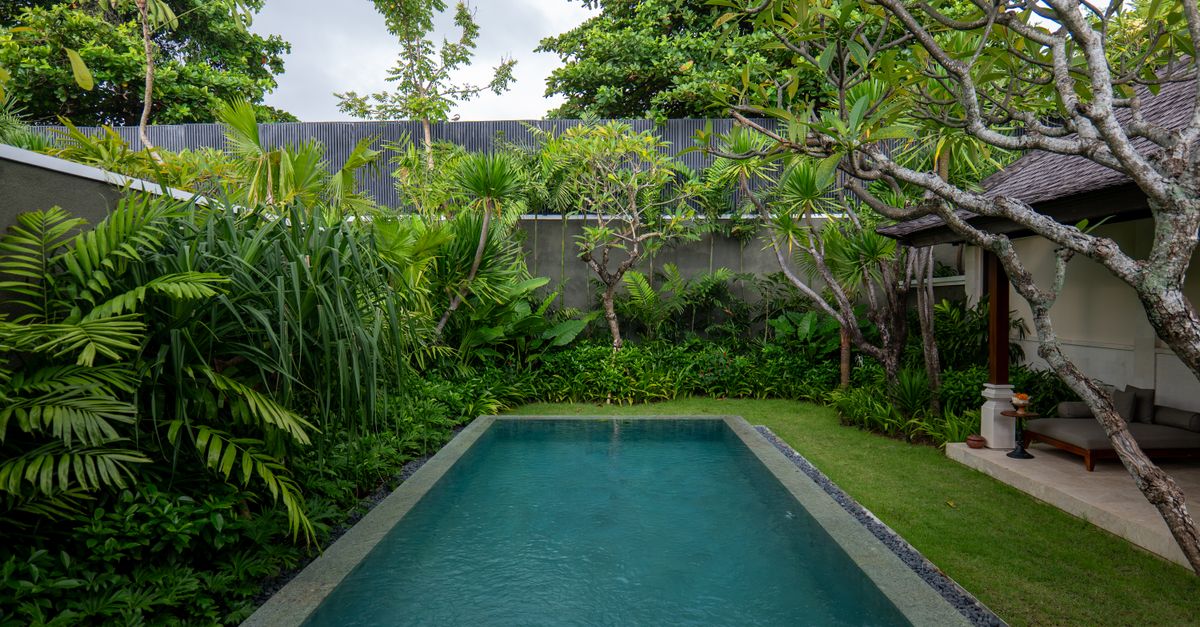
For comparison, the Pererenan area over near Canggu has its own studio scene, places like Serenity and The Path, but that’s coastal-village yoga rather than the rice-terrace immersion Ubud does best. If paddy-side practice is what you’re after, Ubud wins. And if you’d like to stay right among the fields rather than commute in, it’s worth booking a rice-view stay early, I usually start with a paddy-view villa search around Ubud and filter for the greener northern edges of town.
Worth the drive: Jatiluwih and the genuinely off-track paddies
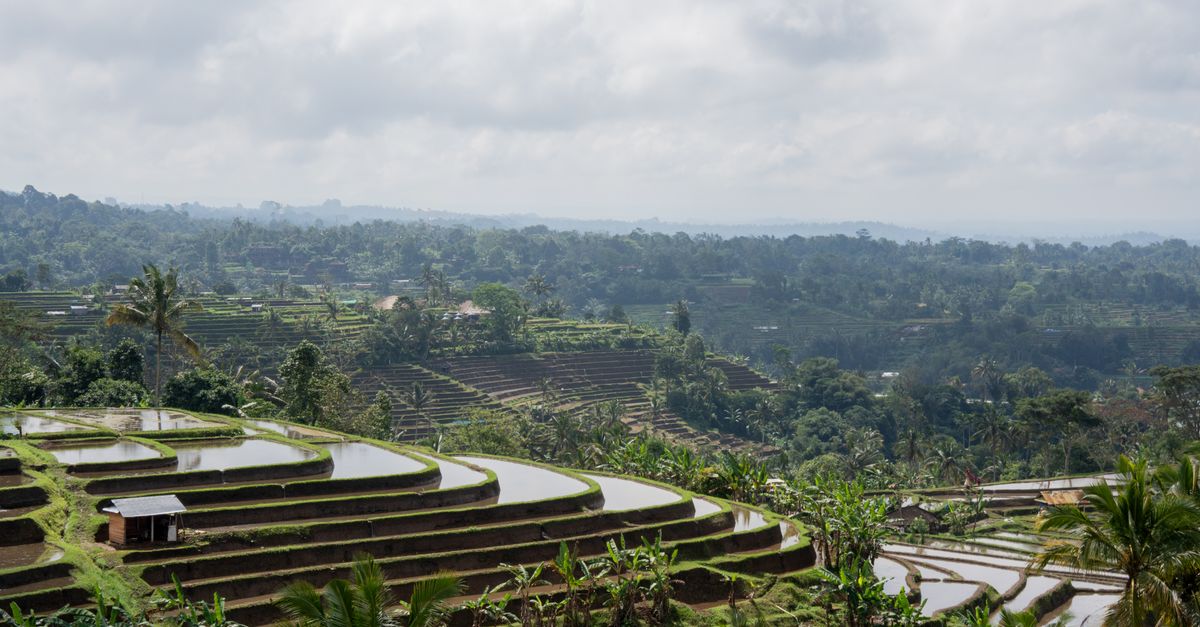
Sometimes you want scale, and for that you leave the Ubud lanes. Jatiluwih, out towards Mount Batukaru in the west, is the terrace that actually carries UNESCO World Heritage status, the listed subak landscape that people wrongly attribute to Tegallalang. It’s a bigger commitment: roughly a 90-minute to two-hour drive northwest of Ubud, around 35 km through the Bedugul hills. Entry for adults runs somewhere in the region of IDR 50,000–75,000 depending on the source and season (children pay less), and there are marked walking trails from about 1.5 up to 5.5 km through genuinely working fields.
Because of that distance and fee, Jatiluwih stays blissfully quiet compared with Tegallalang. Aim to arrive by around 9am for cooler air, kinder light and thinner crowds, and give yourself a couple of hours to walk a loop. Closer to Ubud, the paddies around Pejeng and Petulu, east and just north of town respectively, give you that sculpted-hillside feeling with a fraction of the visitors and no ticket booths, though paths are informal, so a bit of asking-around locally helps.
If you’d rather not tackle Bali’s winding roads yourself, chaining these together with a driver is the sane option; a private Ubud highlights day tour can fold Jatiluwih or the quieter Ubud-edge terraces into a wider loop and save you the navigation. Whichever way you go, treat these as half-day outings, not quick photo stops, the reward is space, and space takes time.
How to actually enjoy them: timing, seasons and paddy manners
Here’s the single most useful thing I can tell you, and it’s free: timing beats location. Almost every rice field around Ubud, famous or not, is peaceful and gorgeous between roughly 6.30 and 8.30 in the morning, and hot, harsh and busy by late morning. Late afternoon, from about 4 to 6pm, is the second-best window. Midday is the one to skip; the light is flat and the valleys bake.
Season matters too. The paddies look their greenest and most postcard-like in March–April and September–October. During the rainy season, roughly November to March, the terraces fill with water and turn mirror-like, arguably more striking, though muddier underfoot. Whatever the month, wear proper shoes or grippy sandals: those bunds and steps get genuinely slippery after rain, and I’ve watched more than one person go down in flip-flops.
Finally, a word on manners, because these are people’s livelihoods and not a backdrop. Stay on the paths, don’t tramp into a planted paddy for a photo, and never pose in a field where someone’s actively working, wait, smile, ask. Carry small notes for the odd donation box and buy a drink at a warung along the way; that little bit of money keeps these walks open and welcoming. Do all that and you’ll leave with the quiet, generous version of Bali that keeps people coming back.
Conclusion
You don’t need the famous terrace. You need the quiet lane, the early alarm and a bit of local knowledge, and now you have all three. Start with the Kajeng and Subak Sok Wayah walks a few minutes from central Ubud, roll out a mat at a paddy-side studio if the mood takes you, and save Jatiluwih for a proper day out when you want scale without the scrum. Go at dawn, tread lightly, and let the place be what it is: working farmland that happens to be breathtaking.
If you’re piecing together your Ubud days, I’ve written honest guides to plenty of the other stops nearby, have a wander through them. And if you find a quiet corner of paddy I’ve missed, come back and tell me; I’m always updating this from the road.
FAQs
What are the quietest rice terraces near Ubud?
The Kajeng rice field walk and the Subak Sok Wayah (Sari Organik) path are the quietest and closest, both a 10 to 15-minute walk from central Ubud and free. For bigger, quiet scenery, Jatiluwih to the west is far less crowded than Tegallalang.
Are the Ubud rice terraces free to visit?
The in-town walks, Kajeng and Subak Sok Wayah, are free, though a small donation to a farmer or warung is customary. Tegallalang charges around IDR 25,000 plus donation booths, and Jatiluwih charges roughly IDR 50,000–75,000 for adults.
How do I get to the Kajeng rice field walk?
It’s an easy walk. Head to Jalan Kajeng, the lane running north near Ubud Palace and the art market, and follow it out of town onto the paddy path, about 10 to 15 minutes on foot from the centre, no transport needed.
Is Tegallalang worth visiting at all?
Yes, but only at dawn. Arrive by around 7am, before the tour buses at 10am, and it’s still lovely. Any later and you’re queuing on narrow steps in the heat, which is exactly why the quieter walks in this guide exist.
Can I do yoga in the rice fields around Ubud?
Absolutely, it’s one of Ubud’s signatures. Ubud Yoga House on Jalan Subak Sok Wayah has open-air studios over the paddies (walk or scooter access only), and spots like Bali Firefly and Basundari offer rice-field classes and retreats a few minutes from town.
What about Pererenan for rice fields and cafés?
Pererenan, near Canggu, has a lively café and yoga scene but it’s coastal-village rather than terraced-paddy country. For true rice-terrace immersion, walks, retreats and paddy-side warungs, Ubud is the better base.
When is the best time of day to see the rice terraces?
Early morning, roughly 6.30 to 8.30am, for soft light, cool air, mist and thin crowds. Late afternoon, around 4 to 6pm, is the next best. Avoid the harsh, busy midday window entirely.
When are the paddies greenest?
They look their lushest in March–April and September–October. In the rainy season (about November to March) the terraces fill with water and turn mirror-like, striking in a different way, but muddier to walk.
How far is Jatiluwih from Ubud and is it worth it?
About 90 minutes to two hours northwest, roughly 35 km. It’s the UNESCO-listed terrace and far quieter than Tegallalang, so yes, for scale and calm it’s worth the drive if you make a half-day of it.
Do I need a guide or a driver for these terraces?
Not for the Kajeng or Sok Wayah walks, they’re self-guided and simple. For Jatiluwih or the informal Pejeng and Petulu paddies, a driver or a private day tour saves you the winding roads and lets you combine several stops.
Before you go - I wrote this in 2026 and double-checked every fee, distance and opening detail I could, but Bali changes fast, cafés close, fees creep up and paths shift with the seasons. Treat the figures here as a guide and confirm the latest locally before you travel.
Some of the links in this article are affiliate links: if you book through them I may earn a small commission at no extra cost to you. I only ever recommend things I’d happily send a friend to.