Renting a Scooter in Bali: How to Do It Safely (and Legally) in 2026
My honest, first-hand guide to renting a scooter in Bali in 2026: the licence rules, the police crackdown, real prices and how to stay safe.
The first time I got pulled over in Canggu, it was 8am and I was on my way to a yoga class I’d already paid for. An officer in a brown uniform waved me into a lay-by near the Berawa shortcut, asked for my helmet (on my head, thankfully) and my International Driving Permit, and I had it, the little grey booklet, tucked in the seat compartment under the bike. He nodded, smiled, waved me on. Two riders behind me weren’t so lucky.
That’s the reality of renting a scooter in Bali in 2026. It’s still the cheapest, freest, most joyful way to get around the island: nothing beats the warm air and the rice fields opening up either side of you. But the days of hiring a bike with a passport photo and a wink are over. There’s a real crackdown on, the rules are being enforced properly for the first time in years, and the gap between doing it right and doing it wrong is the difference between a glorious morning and a roadside fine.
So here’s everything I’ve learned from years of riding here: the paperwork, the prices, the police, and the bits nobody tells you until it’s too late.
The licence and International Driving Permit rules you actually need
Let me be blunt about the thing most people get wrong. To legally ride a scooter in Bali, you need two documents working together: a motorcycle licence from your home country, and an International Driving Permit (IDP) that carries a motorcycle endorsement.
A car licence on its own does not cover you. Neither does an IDP issued against a car-only licence: when your IDP is issued, it only fills in the vehicle categories your home licence already permits. So if you’ve never passed a motorbike test back home, your IDP won’t magically grant you a bike category here.
For UK readers, the IDP you want is the 1968 Vienna Convention version, which is the one Indonesia recognises. It costs £5.50: take your photocard licence, a passport photo and your passport. Post Offices stopped issuing IDPs in April 2024, so you now get one over the counter at a participating PayPoint shop (there are thousands across the UK); always check the current issuing arrangements before you go. It’s valid for three years (or until your licence expires). Crucially, you cannot buy one once you’ve landed in Bali, so this is a before-you-fly job. I keep a phone photo as backup, but carry the physical booklet. Officers here rarely accept a screenshot.
The 2026 police crackdown: what’s really happening on the roads
For years, enforcement in Bali was patchy to the point of being a running joke. That changed. The island-wide operation targeting foreign drivers began on 29 July 2025 and has carried straight through into 2026, and it’s not theatre: friends of mine have been ticketed.
Checkpoints cluster where the tourists are: Kuta, Seminyak, and especially Canggu, where I’ve seen officers set up near the main junctions at the school-run hours. They’re checking three things: your helmet, the bike’s registration papers (the STNK, which your rental company should give you), and your IDP.
If you can’t produce them, you’ll be issued a surat tilang: a formal traffic ticket. A real one is paid to the state by bank transfer or local digital payment, not as a fistful of cash to the officer at the kerb. If someone insists on roadside cash, that’s a negotiation, not a legal fine, and you’re within your rights to ask for the official ticket instead. Worst case, police can impound the scooter until you sort the paperwork and pay up, which means an afternoon of phone calls to your rental shop and a much bigger bill.
What it costs: daily, weekly and monthly rental prices
The good news after all that: scooters are still wonderfully cheap. A standard automatic (a Honda Scoopy, a Vario, a Fazzio) rents for somewhere around IDR 70,000 to 150,000 a day (roughly £3.50–£7.50), and the daily rate drops fast the longer you commit.
Take it by the month and you’re typically looking at IDR 1.5–2.2 million (about £75–£110), which is what most longer-stay people pay. I rent monthly when I’m here for a stretch and it works out to a couple of quid a day. Bigger or newer bikes (a 150cc PCX, an ADV) cost more and, honestly, are more bike than you need for pottering between cafés and the beach.
A few things shift the price more than the district does: whether delivery is included, the model year, and the support you get if it breaks down. If you’d rather have a vetted bike dropped at your villa with the papers sorted, booking a rental through Klook takes the guesswork out, handy for your first few days before you find a local shop you trust. Always check the brakes, lights and tyres yourself, and photograph every existing scratch before you ride off. Rental shops will absolutely charge you for damage that was already there.
Helmets, road rules and riding safely in the chaos
Here’s the rule I’d tattoo on every new arrival: wear the helmet, always, even for the two-minute ride to the shop. Riding without one now draws a fine of around IDR 250,000, and far more importantly, it’s the single thing most likely to save your life. The cheap open-face lid that comes with your bike is fine for the law; I bought my own full-face for about IDR 350,000 and never looked back.
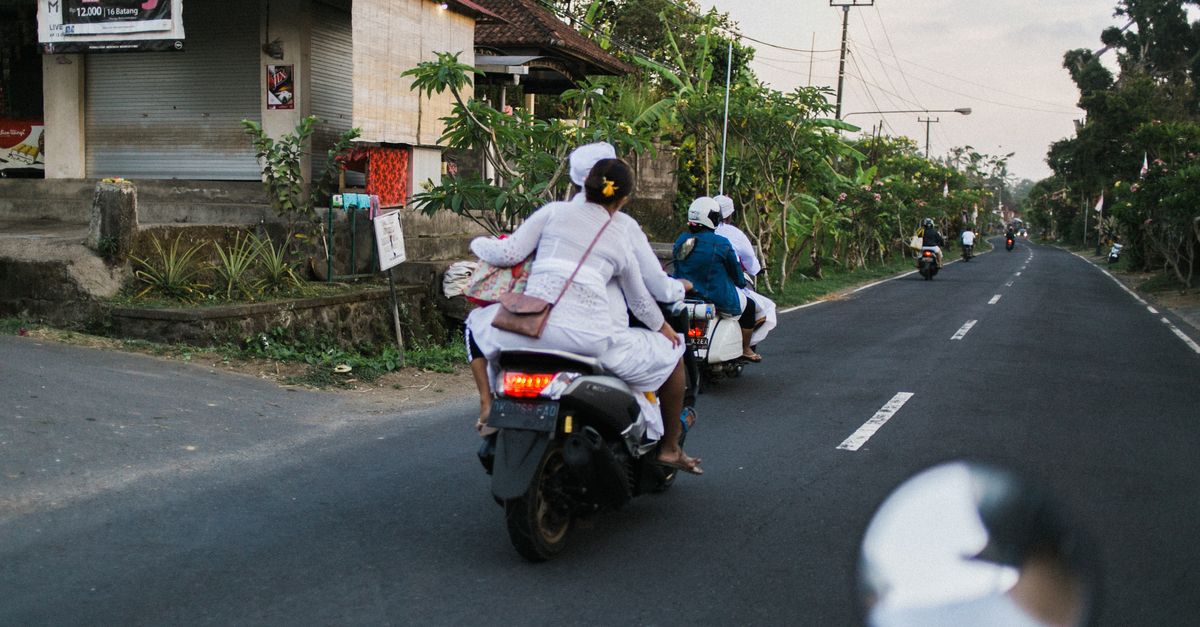
Traffic in Bali flows by feel, not by rulebook. The urban speed limit is 50 km/h and you’ll rarely need more, since the roads are too busy and the potholes too sudden. Use your horn as a friendly “I’m here”, not an insult. Expect dogs, chickens, oncoming bikes overtaking into your lane, and the occasional ceremony procession that brings everything to a respectful standstill. Pull over and wait, because those processions are part of Balinese Hindu life, not a delay to be annoyed at.
Petrol is everywhere: green Pertamina stations, or the roadside stalls selling it by the litre in old vodka bottles. And please don’t ride in flip-flops with sunburnt shoulders and a backpack swinging: that’s the silhouette of every cautionary tale I’ve heard.
Is it safe, and when to skip the scooter altogether
Honest answer: riding a scooter in Bali carries real risk, and I won’t pretend otherwise. The accident rate among tourists is high, and a graze on these roads at speed isn’t a graze. Bali scooter insurance is the part everyone skips: most rental agreements don’t include medical cover, and a standard travel-insurance policy will often void your claim if you were riding without the correct licence and IDP. So get the documents right partly so your insurance actually stands up.
If you’ve never ridden a motorbike before, Bali is not the place to learn during rush hour in Seminyak. Practise on a quiet back lane in Ubud or out east first, go slowly, and build up.
And on the days when it’s pouring (rainy season runs roughly November to March) or you’ve got luggage, or you simply fancy a drink with dinner, just don’t ride. Hiring a private car with a driver for the day is cheap, comfortable and removes every ounce of the risk. I do it constantly and feel no shame about it.
Getting around when two wheels isn’t the answer
A scooter shouldn’t be your only plan. For airport runs, group days out, or anywhere you’d be white-knuckling it on a bike, a car-and-driver is the move: they know the shortcuts, handle the traffic, and you arrive relaxed.
Day to day, the Gojek and Grab apps cover most of South Bali for short hops, both bikes and cars, with the fare fixed before you tap. Out in Ubud and the quieter regencies, app coverage thins and a pre-booked driver wins. Mixing it up (scooter for the freedom, driver for the long hauls and the wet days) is how most long-stayers actually live here, and it’s how I’ve done it for years.
Before you go: I wrote this in 2026 and double-checked every price, fee, opening time and rule I could, but Bali changes fast. Treat the figures here as a guide and confirm the latest details before you book or travel.
Some of the links in this article are affiliate links: if you book through them I may earn a small commission at no extra cost to you. I only ever recommend things I would happily send a friend to.
Visa, tax and entry rules change and everyone’s circumstances differ: always confirm the current requirements with official Indonesian sources, or a qualified professional, before acting on anything here.
FAQs
Do I really need an International Driving Permit to rent a scooter in Bali? Yes: legally you need an IDP with a motorcycle endorsement plus your home motorcycle licence. Many rental shops will still hand you a bike without checking, but that’s their risk being passed to you. If you’re stopped without the IDP you’ll be fined, and an accident could void your travel insurance entirely. Get the 1968 Vienna Convention version before you fly.
Can I rent a scooter in Bali with just a car licence? No, not legally. A car licence, and a car-only IDP, does not cover motorcycles in Indonesia. Your IDP only carries the vehicle categories your home licence already permits, so if you’ve never passed a bike test, you won’t be covered. Plenty of tourists ride anyway, but they’re uninsured and exposed to fines if checked.
How much does it cost to rent a scooter in Bali in 2026? A standard automatic scooter costs roughly IDR 70,000–150,000 a day, or about IDR 1.5–2.2 million a month. Weekly and monthly rates are far cheaper per day than daily hire. Newer or bigger bikes cost more, and delivery or breakdown support can nudge the price up.
Is the police crackdown on tourists still happening? Yes. The operation targeting foreign drivers began on 29 July 2025 and has continued into 2026. Checkpoints are most common in Kuta, Seminyak and Canggu, where officers check helmets, registration papers and IDPs. It’s genuine enforcement now, not an occasional show.
What happens if I get stopped without the right documents? You’ll be issued a surat tilang, a formal traffic ticket, and have to pay a fine. A legitimate fine is paid to the state by bank transfer or digital payment, not as roadside cash to the officer. In some cases police can impound the scooter until the paperwork and fine are settled.
Is it safe to ride a scooter in Bali? It carries real risk: the tourist accident rate is high and the roads are unforgiving. That said, riding slowly, wearing a proper helmet and sticking to quieter routes makes a big difference. If you’ve never ridden before, don’t learn in heavy traffic; practise somewhere calm first.
Do I need to wear a helmet? Always: by law and for your safety. Riding without one now draws a fine of around IDR 250,000, and a helmet is the single most important thing protecting you. The basic lid that comes with the bike satisfies the law, but a full-face helmet of your own is a worthwhile buy.
What is the STNK and do I need it? The STNK is the scooter’s vehicle registration document, and yes, you must carry it. Your rental company should provide it with the bike, so ask for it before you ride off. Police check for it at roadblocks, and without it the bike can be impounded.
Can I use Gojek or Grab instead of renting? Absolutely. Gojek and Grab cover most of South Bali for both bike and car rides, with the fare fixed in the app before you go. Coverage thins out in Ubud and the quieter regencies, where a pre-booked driver is more reliable. Many people skip the scooter entirely and never miss it.
Should I rent a scooter for my whole Bali trip? Not necessarily. A scooter is brilliant for short hops, beach runs and the freedom of it, but for airport transfers, long drives, rainy days or evenings out, a private car with a driver is safer and barely more expensive. Mixing both is how most long-stay residents actually get around.