Nusa Lembongan and Nusa Ceningan 2026: The Slower Island Escape Everyone Skips on the Way to Penida
Everyone races past Lembongan and Ceningan to get to Penida. Here's why I keep stopping, fast boats, the Yellow Bridge, Devil's Tear and a slower kind of island day.
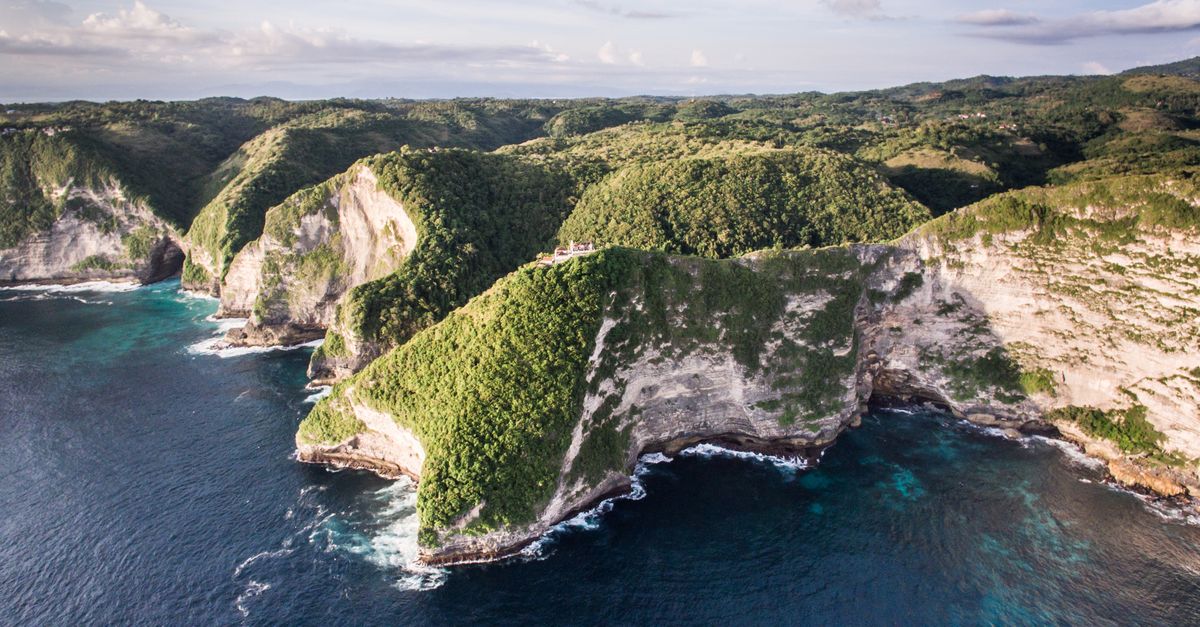
The fast boat from Sanur empties out at Jungut Batu and almost everyone turns right, towards the bigger boats heading to Penida. I usually turn left. That single decision, to actually stay on Nusa Lembongan and Nusa Ceningan rather than treat them as a stepping stone, is the best travel habit I’ve picked up in years of coming back to Bali. These two little islands sit just off Bali’s south-east coast, joined to each other by a wobbly yellow footbridge, and most people skip them entirely on the dash to Kelingking Beach. Their loss, honestly.
What you get instead is a slower rhythm. No traffic to speak of, a couple of beaches you can have half to yourself by mid-afternoon, and a scooter loop you can finish before lunch. The crossing from Sanur takes about 30 minutes and costs around IDR 115,000 one way, cheaper than a decent dinner in Seminyak. I’ve watched the sun drop into the spray at Devil’s Tear, jumped (badly) off a cliff on Ceningan, and snorkelled with manta rays the size of dining tables, all within a couple of days. Here’s how I’d spend them, and why I think you should stop here too.
Getting there: the Sanur fast boat to Nusa Lembongan
Everything starts at Sanur. Since the smart new harbour terminal opened, the whole business of getting on a boat has become far less chaotic than it used to be, you actually queue, there’s shade, and the departures are posted. The Sanur to Nusa Lembongan fast boat takes roughly 30 minutes across the channel, and there are something like 16 sailings a day, so you’re rarely waiting long. One-way fares start at about IDR 115,000 (around USD 13–22 depending on the company and season), and a return almost always works out cheaper than two singles.
A few honest notes. The channel between Bali and the Nusa islands can get genuinely choppy, I’ve had crossings where the bow slapped down hard enough to make the whole boat gasp. If you’re prone to seasickness, sit towards the back and centre, and don’t load up on a greasy breakfast first. Boats land on the beach at Jungut Batu or Mushroom Bay, which means a wet-feet wade through the shallows; wear something you don’t mind soaking and keep electronics zipped up high.
You can pre-book online or just rock up and buy at the harbour, though in July and August I’d book ahead. If you want it sorted before you fly, the Sanur fast-boat transfer is the simplest way to lock in a seat. Once you step off onto the sand, you’ve left the scooter-swarm of mainland Bali behind, and that’s rather the whole point.
Crossing the Yellow Bridge and getting around by scooter
The single most photographed thing on these islands is a footbridge. The Yellow Bridge, locals call it the Love Bridge, strings across the narrow channel between Nusa Lembongan and Nusa Ceningan, and it carries pedestrians and motorbikes only. No cars. There’s a real plan to build a wider bridge for four-wheeled vehicles, with construction slated to begin in 2026, so the rickety yellow one you cross now may not be the last word, but for the moment it’s the only land link between the two islands, and crossing it on a scooter with the wind off the water is a small joy.
Getting around is almost all done on two wheels. A scooter costs roughly IDR 75,000 a day including a tank of fuel, and you can sort one in minutes near the harbour. I’d just flag the obvious: Lembongan’s main roads are decent, but Ceningan’s are genuinely rough in places, steep, broken, and not where you want to be learning to ride. If you’ve never handled a scooter, hire a local driver or hop on one of the open-air shuttle trucks instead. There’s no shame in it, and a broken collarbone ruins a holiday faster than anything. Bali’s urban speed limit is 50 km/h, but honestly you’ll rarely have cause to go anywhere near it here.
If you’d rather arrange wheels in advance, a scooter rental saves the haggle on arrival. Petrol stops are scarce, so top up when you see one.
Devil’s Tear, Dream Beach and the south-west coast
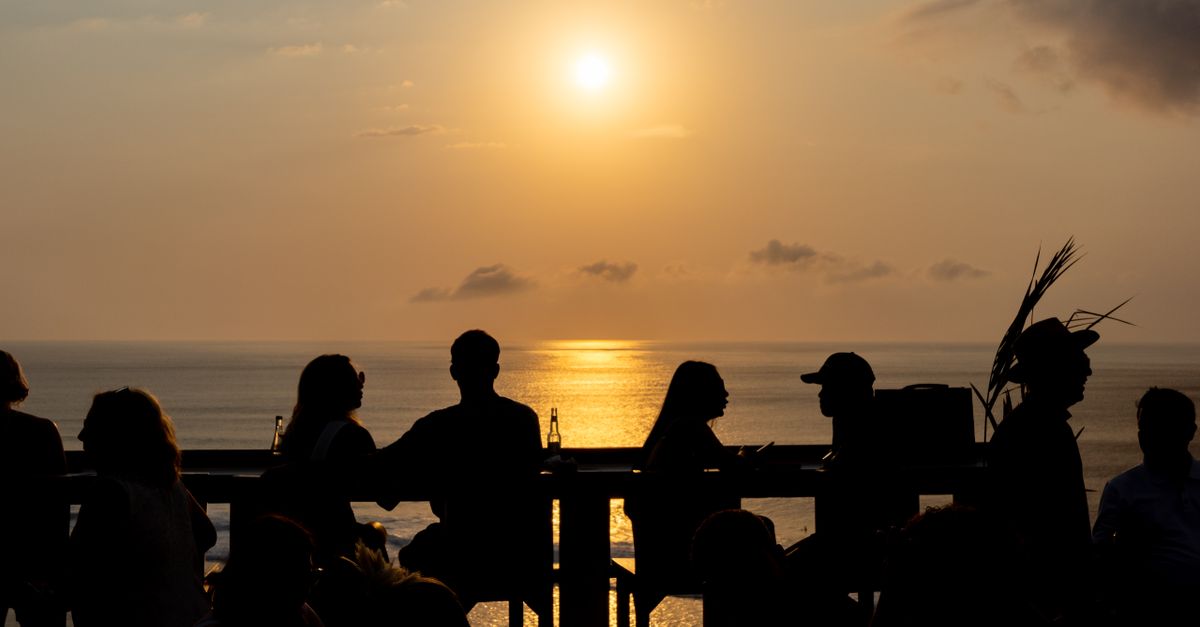
Lembongan’s south-west corner is where the island shows off. Devil’s Tear is a jagged stretch of black rock where the swell funnels into a blowhole and explodes upward, on a big-surf day the spray goes properly high, and the boom of it carries. There’s usually a small entry or parking fee of around IDR 25,000, which on most days also covers your scooter parking. Stay well back from the wet rock; people have been swept off here, and no photo is worth it. Come for sunset and you’ll see why I keep returning, the spray catches the gold and the whole headland lights up.
A short walk away is Dream Beach, a pocket of white sand below the cliffs with a single cliffside pool to flop into afterwards. The current here is strong and there’s often a dumping shorebreak, so it’s more of a sunbathe-and-paddle beach than a proper swim, read the water before you commit. Just round from it, Sandy Bay does sundowners well.
This whole stretch is walkable in an afternoon, but a scooter lets you string Devil’s Tear, Dream Beach and Mahana Point together without rushing. I usually do it in reverse, ending at the Tear as the light goes, with a cold Bintang and absolutely nowhere to be.
Snorkelling Mangrove Point and Manta Point
The water is the real reason to linger. Boat snorkelling trips run out to a handful of named spots, and the two I’d never skip are Mangrove Point and Manta Point. Mangrove Point, off Lembongan’s north-west tip near the mangrove forest, has healthy coral and clouds of fish in shallow, mostly gentle water, it’s the gentle one, good for nervous swimmers and kids. Manta Point, round on the Penida side, is the headliner: manta rays gliding underneath you, three to five metres wing-tip to wing-tip, utterly unbothered by the gawping humans above.
Two things matter. First, the season, the dry months, roughly April to October, give the clearest water and calmest seas, which is exactly when these islands are at their best. Second, the swell. Manta Point sits on an exposed coast and the boat ride out can be rough; if the captain says it’s a no-go, believe him. A typical half-day trip stitches together Manta Point, Mangrove and a stop like Crystal Bay, and you’ll want to be a reasonably confident swimmer for the manta site.
If you’d rather have it organised end to end, a guided snorkelling day covers the boat, gear and the run between sites. Bring your own mask if you can, the rental ones leak. And give the mantas space; you’re a visitor in their lounge.
The blue lagoon cliff jump and secret points on Nusa Ceningan
Cross the Yellow Bridge and Ceningan tips you straight into its headline thrill: the blue lagoon. It’s a slot of impossibly turquoise water hemmed by cliffs, and the draw is the jump, platforms from roughly 5 up to 12 metres into deep water. I’ll be straight with you: it’s brilliant and it’s conditions-dependent. On a calm slack tide it’s exhilarating; on a big swell the water surges against the rock and it’s genuinely dangerous, so watch a few locals go first and don’t be too proud to back out. Nearby Mahana Point has its own jumps off a cliffside bar, platforms at roughly 5 and 10 metres, with a small charge per jump, and the same rules apply.
Beyond the adrenaline, Ceningan is where I do my best nothing. The “secret point” on the south coast is a clifftop viewpoint over churning blue with barely a soul about, and the island’s seaweed farms, squares of green in the shallows at low tide, are a window into how people here actually made a living long before tourism. The roads are rough, as I said, so take it slow.
Things to do on Nusa Ceningan are deliberately few, and that’s the appeal. A jump, a viewpoint, a warung lunch, a slow ride back across the bridge as the day cools. You won’t fill an itinerary. You’ll fill an afternoon, properly.
Nusa Lembongan vs Nusa Penida: why I stop short
Here’s the honest comparison. Nusa Penida is the dramatic one, Kelingking, Diamond Beach, the photos that broke Instagram. It’s also bigger, busier, and its roads can be a white-knuckle slog. Nusa Lembongan and Nusa Ceningan are smaller, gentler and far easier to potter about on foot or scooter, which makes them the better bet for a relaxed two or three nights rather than a frantic day trip.
You don’t have to choose, mind. The islands are close enough that you can base yourself on Lembongan and take a boat across to see Penida’s big sights, then come back to somewhere quiet to sleep. That’s exactly what I do, Penida for the spectacle, Lembongan and Ceningan for the actual holiday. A day trip from Bali can technically tick off all three, but you’ll spend it rushing, and rushing is the one thing these slow islands punish.
So if your plan currently reads “fast boat, straight to Penida,” consider turning left at Jungut Batu instead. Stay a night. The mantas, the bridge and the sunset at Devil’s Tear will still be there in the morning, and you’ll have them with a coffee instead of a queue.
A slower way to see the Nusa islands
If you take one thing from all this: Nusa Lembongan and Nusa Ceningan aren’t the waiting room before Penida, they’re the trip, if you let them be. Catch the morning fast boat from Sanur, hire a scooter, cross the Yellow Bridge, throw yourself off something on Ceningan, snorkel with a manta, and end the day watching the swell explode at Devil’s Tear. Two or three unhurried nights and you’ll wonder why everyone else was in such a rush.
I’m always tweaking this loop, a new warung here, a better-timed tide there. So tell me: have you stayed on Lembongan or Ceningan, or did you blast straight through to Penida and wish you hadn’t? Reply and let me know your favourite slow corner, my list of these islands is never finished, and I’d love to add yours.
FAQs
How do you get to Nusa Lembongan? Fast boats run from Sanur in about 30 minutes. Tickets are roughly IDR 115,000–250,000 (around £13–22) each way, depending on the operator.
Is Nusa Lembongan worth visiting? Yes, it’s calmer and slower than Nusa Penida, with great snorkelling, easy scooter exploring and a genuinely relaxed island feel.
How do you get between Lembongan and Ceningan? Cross the bright Yellow Bridge, which links the two islands. It takes scooters and pedestrians only, not cars.
What’s the best way to get around the Nusa islands? A scooter (around IDR 75,000 a day) is easiest, the islands are small and the roads quiet, though some stretches are rough, so ride carefully.
Can you snorkel with manta rays from Lembongan? Yes. Boat trips visit Manta Point and Mangrove Point, where you can snorkel with manta rays (3–5m across), best in the dry season for visibility.
What is the blue lagoon cliff jump? At Mahana Point on Ceningan there are roughly 5m and 10m platforms to jump from into a blue lagoon, with a small charge per jump.
How many days do you need for Nusa Lembongan and Ceningan? Two to three nights is ideal, enough to snorkel, cross to Ceningan, and enjoy the slower pace without rushing.
Is Lembongan better than Nusa Penida? Lembongan is quieter and easier to get around; Penida has the famous big-name viewpoints but is busier and rougher. Many people prefer to base on Lembongan.
When is the best time to visit the Nusa islands? The dry season, roughly April to October, gives the calmest crossings and the clearest water for snorkelling.
How much is Devil’s Tear to visit? There’s a small entry and parking fee of around IDR 25,000. Go near sunset for the most dramatic spray off the cliffs.
Before you go - I wrote this in 2026 and double-checked every price, fee, opening time and rule I could, but Bali changes fast. Treat the figures here as a guide and confirm the latest details before you book or travel.
Some of the links in this article are affiliate links: if you book through them I may earn a small commission at no extra cost to you. I only ever recommend things I would happily send a friend to.