Setting Up a Home Office in Your Bali Villa or Apartment
Two years on, here's the villa home office that actually works: internet, furniture, power backup and when to give up and go to a coworking space.

Eleven minutes into a call with a client I’d spent four months chasing, my screen froze. Then the router lights went orange. Then nothing. I sat there for about ninety seconds hoping it would fix itself, which it did not, and then I put a laptop under one arm, got on a scooter in the shorts I’d been wearing since Tuesday, and rode to the nearest café with a reputation for decent wifi. I rejoined the call twenty-two minutes late.
That was my third week here. Two years on, my home office Bali villa setup is boring in the best possible way: it works, every day, and I don’t think about it. Getting there cost me two house moves, one useless router, a chair that gave me back pain for six weeks, and a lot of small lessons that nobody puts in the “living the dream in Bali” content.
Here’s the thing though. Almost everything that goes wrong is predictable, and most of it is decided before you sign a lease rather than after. This is what I’d tell you over a coffee if you were about to do what I did.

What Nobody Tells You About a Home Office in a Bali Villa
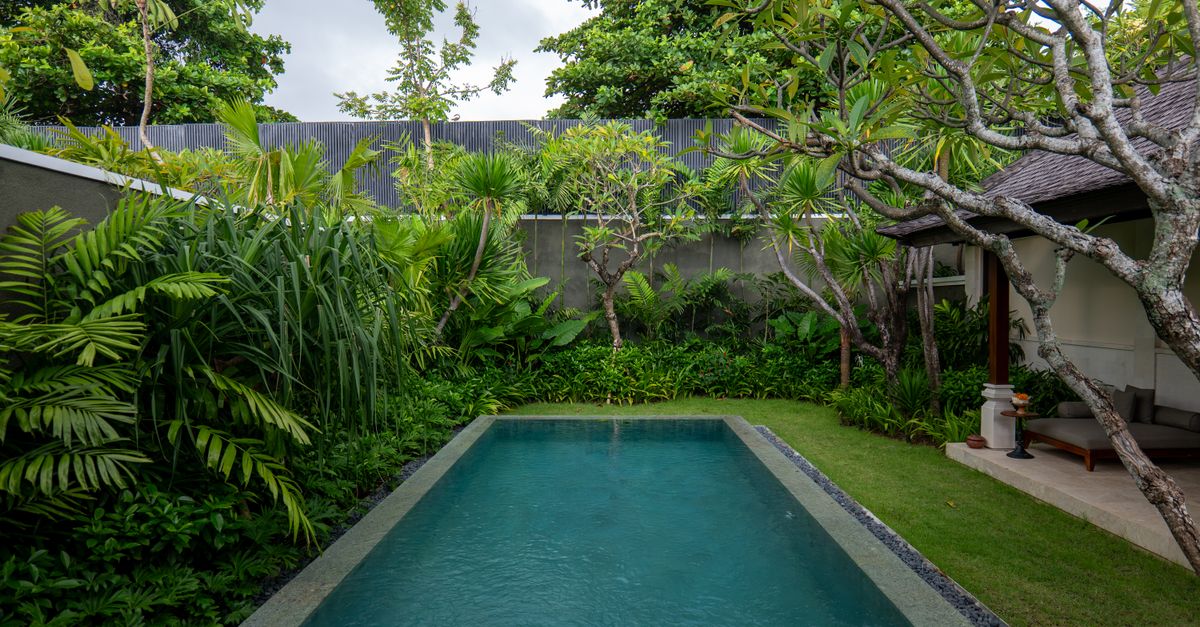
The listing photos always show the same thing: an open-sided living space, a rice field, a laptop propped on a rattan table with nobody sitting at it. There is a reason nobody is sitting at it. That table is at the wrong height, the glare off the paddy at 10am makes the screen unreadable, and by midday the open side of the villa is letting in thirty-one degrees of wet heat.
Villas here are designed for holidays. Airflow, indoor-outdoor living, big communal spaces. All lovely, and all mildly hostile to eight hours of concentrated work. Almost none of them come with a desk. The ones that advertise a “workspace” usually mean a dining table.
The other thing that catches people out is that the wifi described in the listing may not be a fixed line at all. I have viewed villas where the “high-speed internet” was a 4G dongle sitting on a windowsill, which is genuinely fine for scrolling and genuinely useless for a video call with eight people on it.
So the mental shift is this: you are not renting a home office. You are renting a room that you will turn into one. Budget for that (money, and about a week of faff) and the rest gets much easier.
Internet Is the Whole Game: Choosing a Bali Villa With a Connection That Holds
If you get one thing right when setting up a home office in your Bali villa, make it this. Everything else can be fixed in an afternoon. Internet cannot.
The questions to ask before you sign
Ask these at the viewing, in this order, and don’t accept a shrug for an answer:
- Is there a fixed fibre line, or is this mobile data? A dongle or a mobile router is not a work connection. Ask to see the box.
- Which provider? Biznet, IndiHome (now sold under the Telkomsel brand) and Iconnet are the ones people rely on here. Availability is street by street, so the answer matters.
- Can I run a speed test right now? Do it on the day, at the spot where you’d actually sit. Not by the router.
- What’s the upload speed? Everyone quotes download. Your calls and your file transfers run on upload.
- Is the internet included in the rent or billed separately? Both are common, and it changes your monthly number by a few hundred thousand rupiah.
- What happened last time it went down, and how long did it take? The answer tells you more about the landlord than about the line.
- Ask a neighbour. Two minutes, and the most honest answer you’ll get all day.
Biznet, IndiHome, and what you’ll actually pay
If you’re installing a line yourself, fibre from Biznet or IndiHome typically runs IDR 400,000 to 700,000 a month for 50 to 100 Mbps. IndiHome’s 2026 packages start around IDR 230,000 for 50 Mbps and climb to about IDR 325,000 for 150 Mbps, and it has the widest geographic reach on the island (roughly two-thirds of Indonesia’s fixed broadband market), so it’s often the only option once you get away from the main expat corridors. Installation is the catch: waits can stretch to two weeks, and there’s an 11% VAT plus an installation fee on top of the headline price.
Whatever you end up with, have a second route online. A Telkomsel SIM with 50 GB of high-speed data costs about IDR 150,000 and lives in a spare phone on my desk. It has rescued three calls this year.
The Desk, the Chair, and Where to Buy Them
Buy the chair first. I say that as someone who did it the other way round and spent six weeks with a lower back that felt about seventy years old, because I was working from a rattan dining chair with no lumbar support and a cushion I’d folded in half.
IKEA has a store in Bali, in the Mal Bali Galeria complex at Kuta, right by the Simpang Siur intersection, easy enough to reach from Denpasar, Sanur, Seminyak or Canggu. They do delivery and Click & Collect, which saves you working out how to get a desk home on a scooter. That’s the fastest route to a proper adjustable chair and a flat-topped desk at a predictable price.
The other route, and the one I’d take again, is having something made. Bali has an enormous furniture trade, and a local carpenter will build you a desk in solid teak or mahogany, to your exact height, for a price that would embarrass a flat-pack retailer at home. Mine took nine days. Take a drawing and the height measurement (73cm to 75cm suits most people at a standard chair) and be specific about the finish, because unfinished wood and Bali’s humidity do not get along.
Beyond that, the list is short. An external monitor changes your working life more than anything else on this page. A separate keyboard so the laptop can go up on a stand at eye level. A desk lamp, because tropical dusk arrives at about half six all year and it arrives fast. And position the desk so the window is to your side rather than behind you or in front of you: backlit means the camera shows a silhouette, and facing the glare means squinting all day.

Power Cuts, Humidity, and the Kit That Saves You
Bali doesn’t generate most of its own electricity. It comes across from Java through four undersea cables carrying around 270 MW, and when something upstream fails, the whole island can go dark at once. That is not hypothetical. On 2 May 2025 a fault on a 150 kV overhead line in East Java took out the link, protective systems disconnected all four cables, and roughly 940,000 customers lost power for up to twelve hours.
Island-wide events like that are rare. Short local cuts are not, particularly in the rainy season from November to March, when an afternoon storm will take the power out for an hour or two and take the internet with it.
The kit that handles this is unglamorous and cheap. A small UPS under the desk keeps the router and modem alive through a short cut, which means that when the lights go off your call doesn’t. A charged power bank keeps the laptop going. Between them, most outages become an inconvenience rather than a lost afternoon.
Humidity is the slower problem. It sits between 70% and 90% here, and it gets into everything: laptop ports corrode, external drives fail, camera lenses fog. Silica gel packets in a drawer with your electronics genuinely help, and they’re the sort of thing you’d never think to buy until something dies. Run the air conditioning in the room for an hour a day even if you don’t need it for temperature, purely as a dehumidifier. And keep your laptop off the floor, off soft furnishings, and on something with airflow underneath.
When to Leave the Villa: Bali’s Coworking Spaces
Some days you shouldn’t be at home. The power is out, or the neighbour’s building work started at seven, or you’ve simply not spoken to another human since Sunday.
Day passes are the low-commitment option. Around Canggu and Ubud they generally land between IDR 150,000 and 200,000; Outpost in Ubud is about IDR 248,000, and Livit Hub over in Sanur is one of the cheaper ones at around IDR 140,000. For something free, ZIN@Work on Jl. Nelayan No. 78F in Canggu lets you work there on a café purchase, and it’s a genuinely nice building, designed by Balinese architects, open to the greenery.
If you’re going more than twice a week, a membership stops making sense to avoid. Dojo in Canggu is around IDR 1,800,000 a month for unlimited access, and Outpost Ubud is about IDR 2,000,000 with community events and yoga folded in.
What I’d actually recommend is the hybrid. Villa for the deep work, two coworking days a week for calls, company, and the thing nobody mentions: a backup location you already know the wifi password for. That’s the arrangement I’ve settled into, and it costs under a million rupiah a month.
Making a Bali Villa Home Office Work Long Term
The setup is the easy bit. Staying productive in it is the part that takes longer to learn.
Bali runs on WITA, which is UTC+8. If your clients are in the UK, that’s seven hours ahead in summer and eight in winter, so a 9am London meeting lands at 4pm or 5pm here. That’s survivable and honestly quite pleasant: mornings are yours. US East Coast is the brutal one, and if that’s your client base you need to decide up front whether you’re taking calls at 10pm or telling people you won’t.
Have a shutdown. When the office is a corner of the house you’re also living in, the day doesn’t end on its own: it just trails off around eleven with you half-answering emails on a sofa. Mine is physical: laptop closed, put in a drawer, out of the room. Silly, and it works.
One more thing on leases, because it affects everything above. Most landlords here want two months up front (one deposit, one rent) on a six or twelve-month term, and month-to-month flexibility can add around 20% to the rate. That means the internet question you asked at the viewing is a question you’re stuck with the answer to for at least half a year. Ask it properly.

Wrapping Up
The version of this that works isn’t the one in the listing photos. It’s a chair you chose deliberately, a fibre line you asked seven questions about, a UPS you’ll forget you own until the afternoon it saves a call, and a drawer of silica gel packets. None of it is expensive. All of it is the difference between remote work here feeling sustainable and feeling like a permanent low-grade emergency.
Two years in, I still get the rice field. I just get it out of the corner of my eye, from a desk at the right height, on a connection that holds.
If you’re about to view villas, take the seven questions with you: screenshot them if it helps. And if you’ve got a fix I’ve missed, or a coworking space you swear by, reply and tell me. I’m always adjusting this setup.
FAQs
What internet speed do I need to work remotely from a Bali villa?
For video calls and normal remote work, a fibre connection of 50 Mbps or more is comfortable. What matters more than the headline download figure is the upload speed and the stability of the line, so run a speed test at the desk position during the viewing rather than trusting the listing.
How much does internet cost in a Bali villa?
Fibre from Biznet or IndiHome typically costs IDR 400,000 to 700,000 per month for 50 to 100 Mbps. IndiHome’s 2026 packages start around IDR 230,000 for 50 Mbps and IDR 325,000 for 150 Mbps. Add 11% VAT and an installation fee, and expect to wait up to two weeks for installation.
Is Biznet or IndiHome better in Bali?
It depends entirely on your street: availability is the deciding factor, not the brand. IndiHome has by far the wider reach across the island, so it’s often the only option outside the main expat areas. Ask your landlord which providers are actually connected at that address before you sign.
Do I need a backup internet connection in Bali?
Yes. A Telkomsel SIM with 50 GB of data costs around IDR 150,000 and lets you tether from your phone when the villa line drops. Storms, construction work and a downed pole can all take a fixed line out for anything from an hour to several days.
How often does the power go out in Bali?
Short local cuts of an hour or two are common, especially in the rainy season from November to March. Island-wide failures are rare: the most serious recent one was on 2 May 2025, when a fault on a 150 kV line in East Java cut the Java–Bali undersea link and left around 940,000 customers without power for up to twelve hours.
What is the best power backup for working from home in Bali?
A small UPS under the desk keeps your router and modem running through a short outage, so your connection survives even when the lights don’t. Pair it with a charged power bank for the laptop. Together they cost very little and turn most cuts into a minor inconvenience.
Where can I buy office furniture in Bali?
IKEA Bali is in the Mal Bali Galeria complex at Kuta, by the Simpang Siur intersection, with delivery and Click & Collect. Alternatively, have a desk made by a local carpenter in teak or mahogany to your own measurements, and it’s often cheaper than flat-pack and built to the right height.
How do I protect my laptop from humidity in Bali?
Bali’s humidity runs between 70% and 90%, which corrodes ports and kills external drives over time. Keep silica gel packets in the drawer with your electronics, run the air conditioning for an hour a day as a dehumidifier, and store the laptop raised off soft surfaces so air can move underneath it.
How much does coworking cost in Bali?
Day passes generally run IDR 150,000 to 200,000: Outpost in Ubud is around IDR 248,000 and Livit Hub in Sanur around IDR 140,000. Monthly memberships are roughly IDR 1,800,000 at Dojo in Canggu and IDR 2,000,000 at Outpost Ubud. ZIN@Work in Canggu is free with a café purchase.
What time zone is Bali for remote work?
Bali runs on WITA, UTC+8. That puts it seven hours ahead of the UK in summer and eight in winter, so a 9am London meeting falls at 4pm or 5pm your time. US East Coast overlap is much harder and usually means late-evening calls.