The Real Cost of Living in Bali as a Digital Nomad: A 2026 Area-by-Area Breakdown
I blew through double my budget in my first month in Canggu. Here's the area-by-area breakdown of what you'll actually spend in 2026, from $1,000 to $5,000 a month.

I’ll never forget staring at my bank app after my first full month in Canggu. I’d budgeted what I thought was a generous £1,200, and somehow I’d blown through nearly double that. Smoothie bowls at £8 a pop, a villa I’d chosen on vibes alone, and a coworking membership I barely used because the café down the road had better Wi-Fi. Every single one a rookie mistake.
The cost of living in Bali for digital nomads can be properly low, but only if you know where to look and what to dodge. The island isn’t the £500-a-month paradise that 2019 TikTok promised. It is, though, still far cheaper than London or Sydney or San Francisco, provided you make a few smart calls early on. This guide breaks down what you’ll actually spend in 2026, area by area, line by line. No vague “it depends.” I’ve lived through the budget spreadsheets so you don’t have to learn it all the hard way.
What does the cost of living in Bali actually look like in 2026?
The short answer, before we get into the detail: your monthly spend will land somewhere between $1,000 and $5,000. The difference comes down to three choices: where you live, how you eat, and whether you can resist the beach clubs.
Three budget tiers at a glance
| Budget Nomad | Comfortable Mid-Range | Premium Lifestyle | |
|---|---|---|---|
| Accommodation | $300–600 | $800–1,500 | $2,000–3,500+ |
| Food | $200–350 | $400–600 | $700–1,000 |
| Transport | $60–100 | $100–180 | $250–500 |
| Coworking / Internet | $80–150 | $180–300 | $250–400 |
| Visa & Insurance | $80–120 | $100–160 | $150–250 |
| Entertainment & Wellness | $100–200 | $250–400 | $500–1,000 |
| Monthly Total | $1,000–1,500 | $1,800–2,500 | $3,000–5,000+ |
Costs have crept up since the post-Covid nomad wave. Rental prices in Canggu have roughly doubled since 2020, and popular cafés now charge near-European prices for avocado toast. Step even slightly off the main drag, though, and the island is still very good value for what you get. It’s about knowing which areas give you the lifestyle without the markup.
Accommodation: where you live changes everything
This is your single biggest monthly expense, and the area you choose will shape your budget more than anything else. I’ve watched friends spend $400 a month in Ubud and live like royalty, while others burn through $2,500 in Berawa and still feel like they’re compromising. Geography is everything.
Canggu and Berawa
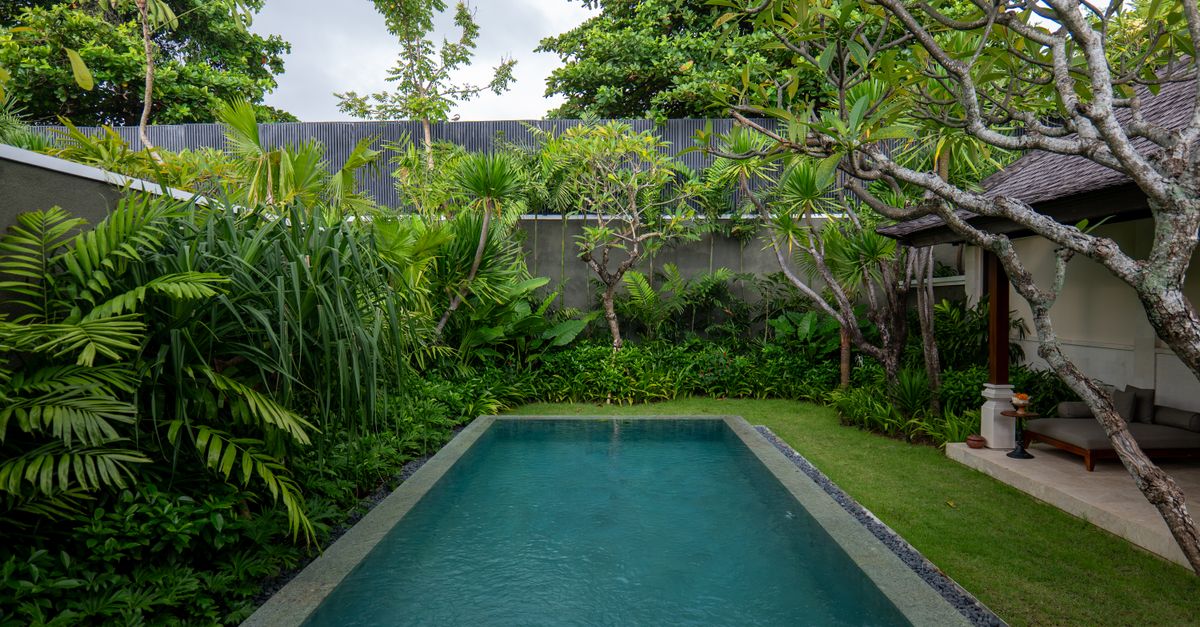
Canggu is still the default nomad hub, and you pay for that. A basic studio or room runs $400–700 a month. A one-bedroom villa with a pool (the Bali dream everyone’s after) is $800–1,200. In Berawa and Batu Bolong, the trendier sub-areas, add another 20–30% on top. If you’re watching your budget, look at Pererenan, just ten minutes north. Similar feel, quieter streets, and one-bedroom villas from $500–800 a month. I spent three months there in early 2025 and wished I’d found it sooner.
Ubud: centre vs the outskirts
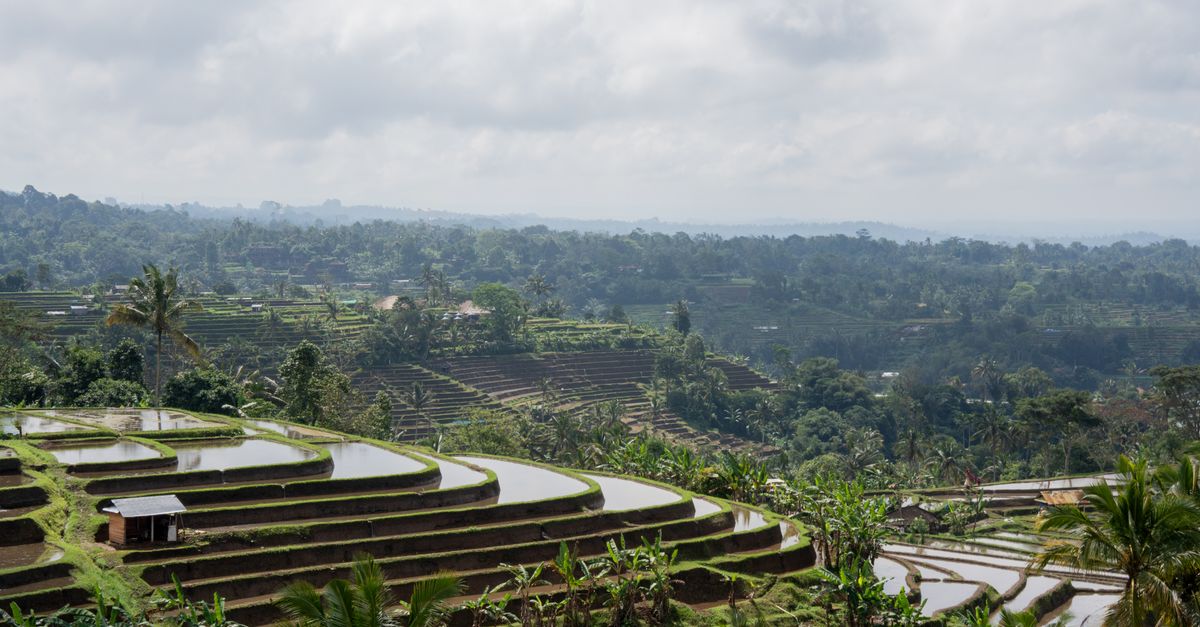
Ubud is where your money goes furthest, especially if you don’t mind a short scooter ride from the centre. Studios near the Monkey Forest start at $400–600, but head twenty minutes out, towards Tegallalang or Penestanan, and you’ll find gorgeous one-bedroom places surrounded by rice paddies for $300–500. The trade-off is real: fewer cafés within walking distance, and the roads get properly rough in the wet season. If you don’t need nightlife and you like quiet mornings, Ubud outskirts are probably the best value on the whole island. A comfortable solo budget of $950–1,350 a month is doable here.
Seminyak, Uluwatu, Sanur and Pererenan
Seminyak is pricey: studios from $500–800, and anything with a pool and decent design pushes past $1,000 fast. It suits shorter stays or people whose income covers it comfortably. Uluwatu is surprisingly reasonable for budget accommodation ($300–600 for a basic place), but everything is spread out, so you’ll spend more on transport and your social life takes more planning. Sanur is the quiet achiever: family-friendly, calm, a proper beach, and budget rooms from $300–500 a month. It doesn’t have Canggu’s energy, but that’s exactly the point for a lot of people.
Food and groceries: from warungs to smoothie bowls
Eating local vs eating Western
This is where your budget either holds together or quietly falls apart. A full meal at a warung (the local family-run eateries that line almost every street) costs IDR 25,000–50,000 (roughly $1.50–3). Nasi goreng, nasi campur, mie goreng, a fresh juice, all for less than a London meal deal. Eat at warungs for most of your meals and your food bill sits at $200–350 a month.
The Western café circuit is another story. A smoothie bowl runs $6–10. Avocado toast with a flat white: $8–12. A decent dinner at a restaurant in Canggu or Seminyak: $15–35 a head. Eat Western every meal and you’re looking at $500–800 a month. That’s still cheaper than eating out in most European cities, but a long way from the “Bali is so cheap” story.
What I do, and what most long-term nomads settle into, is a mix. Warungs for lunch, something simple at home in the evening, a nice dinner out a couple of times a week. That puts you at roughly $400–600 a month and you won’t feel like you’re missing out.
Groceries and cooking at home
Local produce from the markets is cheap. Fresh fruit, vegetables, rice, eggs, tofu and tempeh for $80–150 a month. Supermarkets like Pepito and Bintang are reliable for basics, at $150–250. It’s the imported goods that catch people out: that block of cheddar, the oat milk, the peanut butter you can’t live without. Those add $200–400 to your monthly shop if you’re not careful. I’ve learned to love local substitutes. Tempeh grows on you, I promise.
Getting around Bali without burning through your budget
Scooter rental and fuel
You need a scooter if you’re staying more than a couple of weeks. Monthly rentals for an automatic Honda Scoopy or Vario run $50–80 through a local rental shop. Ask your villa or coworking space for a name rather than booking through a tourist agency. Some people pay up to $120 for a newer model or NMAX, but it’s rarely worth the extra unless you’re doing long daily rides.
Petrol is subsidised. Pertalite, the standard fuel, costs IDR 10,000 per litre (about $0.62), and a full tank costs roughly $3–4. Unless you’re commuting between Ubud and Canggu daily, budget $15–25 a month for fuel. Helmets are usually included with the rental, but check the quality. A proper full-face helmet is worth buying yourself for $30–50.
Grab, Gojek and the occasional driver
If scooters aren’t your thing (and honestly, Bali traffic can be terrifying), Grab and Gojek are reliable and cheap. Short rides run $1–3. Canggu to Seminyak is $3–5. Getting to Ubud from the south costs $10–15. Airport transfers are $8–20, depending on surge pricing and how well you negotiate. For day trips, a driver for the full day typically costs $35–50. It’s one of the best ways to see the island.
Coworking, internet and the costs nobody mentions up front
Coworking spaces worth your money
Bali’s coworking scene is hard to beat in Southeast Asia. The big names are Dojo Bali in Canggu ($15/day, $180–250/month), Outpost in Canggu and Ubud ($20/day, $200–300/month), and Hubud in Ubud ($18/day, $200–280/month). All three have fast internet, community events, and air conditioning that actually works. Tropical Nomad in Canggu is a good budget option at $12/day or $150–200 monthly.
Here’s what most guides leave out, though: half the nomads I know rarely use their coworking membership. They work from cafés, spending $3–8 a day on drinks and food, and get perfectly fine Wi-Fi. If you can rotate between two or three good spots, you can skip the coworking fee and budget $100–150 a month for your café “office rent” instead.
Internet, utilities and that electricity bill surprise
A local SIM card with unlimited data from Telkomsel or XL costs $15–25 a month, and it’s your best backup for those days the villa Wi-Fi gives up. Some villas now offer Starlink for roughly $50 a month extra, with properly reliable speeds.
Utilities catch a lot of newcomers off guard. Electricity in Bali runs on a pre-paid token system. You top up as you go, and the cost depends on how much air conditioning you use. Fans only: $30–60 a month. Regular AC: $80–180. Water is cheap ($5–15), and weekly cleaning is standard in most villas at $80–150 a month. Factor all of these into your accommodation budget, because they’re rarely included in the quoted rent.
Visas, health insurance and the admin side of nomad life
Which visa and what it’ll cost you
Most digital nomads start with the Visa on Arrival (VoA): 500,000 IDR (~$32) at the airport, valid for 30 days, extendable once for another 30 at the same cost. Simple, cheap, no advance paperwork.
For a longer stay, the B211A social/cultural visa gives you 60 days, extendable up to 180 days total with four 30-day extensions. Budget $150–300 through an agent, who handles the sponsor letter and all the paperwork. It’s the workhorse visa for nomads doing three to six months.
Planning to stay a full year? The E33G Digital Nomad Visa costs $350–500 in government fees, lasts up to 12 months, and you can renew it for another 12. The catch: you need to prove income of at least $2,000 per month (or $24,000 annually) and carry health insurance that covers Indonesia. Processing takes 5–15 business days.
And don’t forget the tourist tax: 150,000 IDR (~$10) per entry into Bali, payable online or at the airport.
Health insurance: don’t skip this one
I can’t say this strongly enough: do not come to Bali without health insurance. A GP visit costs $20–50, which is fine, but an emergency room visit runs $100–500+, and a hospital stay is $100–300 per night. Medical evacuation without cover can hit $50,000 or more.
SafetyWing is the go-to for budget-conscious nomads at around $45 a month. World Nomads runs $60–100 monthly for broader cover. If you’re on a KITAS (longer-term stay permit), you can access BPJS, Indonesia’s national health system, for about $15 a month, though the coverage is basic and hospital experiences vary a lot.
Bringing it all together
So what’s the honest answer? You can live well in Bali for $1,200–1,500 a month if you pick a quieter area, eat mostly local, and keep the lifestyle spending in check. The sweet spot for most nomads (a decent villa, a mix of local and Western food, a coworking space, and enough left over for surf lessons and Saturday night drinks) sits at around $1,800–2,200.
Could you spend more? Of course. There’s no ceiling in places like Seminyak and Berawa. But the magic of Bali isn’t in the luxury villas. It’s in the $2 nasi campur at a roadside warung, the sunrise surf at Batu Bolong, the coworking friends who become real mates. None of that costs anything.
If you’re seriously thinking about the move, start with a one-month trial. Book a simple room in Canggu or Ubud, give yourself a daily budget, and see how it feels. You’ll know within a fortnight whether this island is your kind of place.
Got questions I haven’t covered? Hit reply. I read every one. And if you’re planning your move, subscribe to Destined for Bali. I’ve got a full visa breakdown and a Bali starter toolkit coming next.
FAQs
1. How much does it cost to live in Bali as a digital nomad in 2026?
Most digital nomads spend between $1,000 and $2,500 a month in 2026. In Ubud or Pererenan you can manage on $1,000–1,500. A mid-range lifestyle in Canggu with coworking and regular dining out runs $1,800–2,500.
2. What is the cheapest area in Bali for digital nomads?
The outskirts of Ubud, places like Tegallalang and Penestanan, are the most affordable, with total monthly costs from $950–1,350. Pererenan and Sanur are also good value compared to Canggu and Seminyak.
3. How much does rent cost in Canggu in 2026?
A basic studio runs $400–700. A one-bedroom villa with a pool is $800–1,200. Berawa and Batu Bolong cost 20–30% more. Signing a lease of six months or longer usually brings the price down.
4. Can you live in Bali on $1,000 a month?
Yes, but you’ll need to be careful. Budget accommodation outside the tourist hubs ($300–500), mostly warung meals ($200–350), a scooter instead of taxis ($60–80), and not much nightlife. It works in Ubud outskirts, Sanur or Pererenan, less so in Canggu or Seminyak.
5. What visa do digital nomads use in Bali?
Most use either the Visa on Arrival (30 days, extendable to 60, ~$32) or the B211A social visa (60 days, extendable to 180, $150–300 via an agent). For a year or longer, the E33G Digital Nomad Visa costs $350–500 and requires proof of $2,000/month income.
6. How much does food cost in Bali per month?
A warung meal costs $1.50–3. Eating mostly at warungs, you’ll spend $200–350 a month. Mixing local and Western food brings it to $400–600. Western-style dining every day pushes costs to $600–900 or more.
7. Do I need a scooter in Bali?
For stays longer than a couple of weeks, yes. Monthly rental is $50–80 and fuel runs $15–25 a month. Without one you’ll depend on Grab and Gojek, which are cheap for the odd trip but add up if you’re using them daily.
8. How much does coworking cost in Bali?
Day passes at places like Dojo Bali and Outpost are $12–20. Monthly memberships run $150–300. A lot of nomads skip coworking and work from cafés instead, spending $3–8 a day on drinks and food for decent Wi-Fi.
9. Is Bali still affordable in 2026?
It’s still much cheaper than most Western cities, but it’s not the ultra-budget spot it was five years ago. Prices in Canggu and Seminyak have gone up noticeably. The best value now is in Ubud outskirts, Pererenan, Sanur and Uluwatu.
10. What health insurance do digital nomads use in Bali?
SafetyWing (~$45/month) is the most popular budget choice. World Nomads ($60–100/month) covers more. Long-term KITAS holders can use BPJS, Indonesia’s national health system, for about $15/month, though it’s basic. Don’t come to Bali without insurance. Emergency care and medical evacuation are expensive.