Exploring Bali's Traditional Villages: Encounters with Local Life
Visit Bali's traditional villages: Penglipuran, Tenganan, Trunyan and three hidden gems. Entry fees, cultural tips, and how to visit respectfully in 2026.

The first time I walked into a traditional Balinese village, a proper one and not a hotel’s cultural evening, I didn’t know where to look. Stone gateways lined up with mathematical precision down a central path swept clean enough to eat off. Offerings sat at every threshold: tiny palm-leaf trays of marigolds, rice, incense, and the occasional biscuit. The air smelled like frangipani and woodsmoke. An elderly woman sat weaving on her porch, looked up, smiled, and went straight back to her work as if foreign visitors were no more interesting than the chickens scratching past her feet.
That was Penglipuran, about ninety minutes north of the tourist coast, and it changed how I thought about Bali. Because the Bali most visitors see (the beach clubs, the smoothie bowls, the infinity pools) is real, but it’s a very thin layer on top of something much older and much more interesting. The traditional villages of Bali are where that older world still runs, day in, day out, mostly unbothered by whether anyone comes to photograph it.
If you want to experience Bali’s traditional villages properly, rather than ticking off a stop on a day-tour itinerary, here’s where to go and how to do it without being a nuisance.

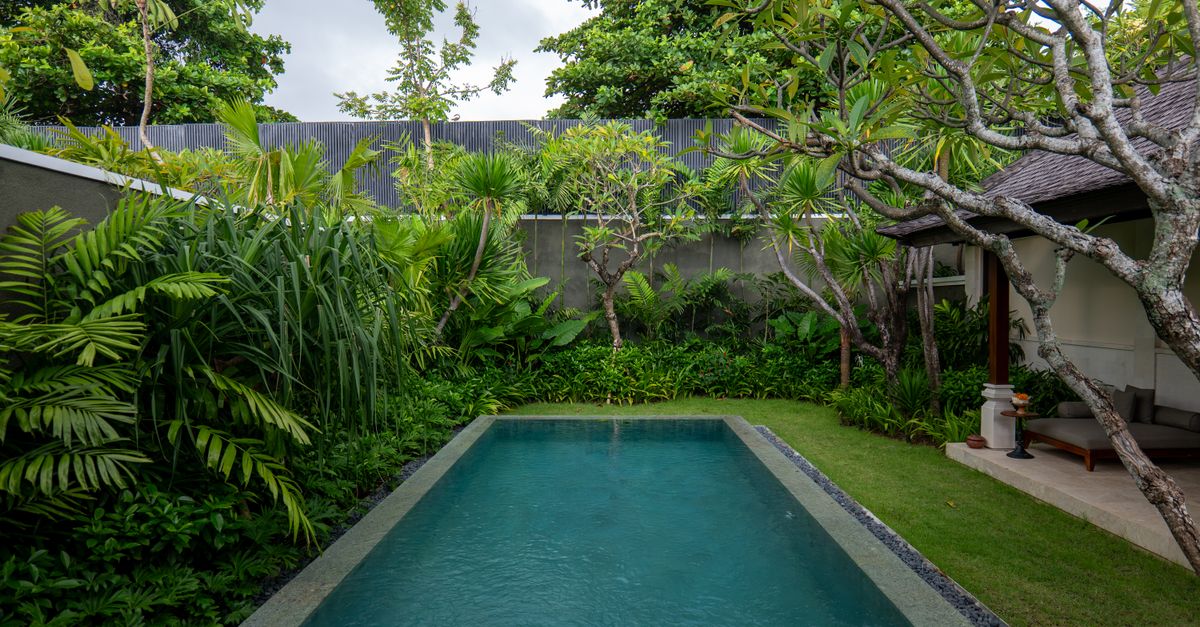
Bali’s spiritual architecture is woven into everyday village life, not just in tourist temples. Photo: Pexels
Penglipuran: the traditional Bali village that runs on symmetry
Penglipuran is the one most people visit first, and for good reason. It’s the easiest to reach, the most photogenic, and, surprisingly, the most carefully maintained traditional village in Bali. It sits in Bangli Regency, up in the highlands at around 600–700 metres elevation, which means the air is noticeably cooler than the coast.
The layout is what hits you. Every family compound faces the central walkway through identical stone gateways called angkul-angkul. Behind each gate sits the same arrangement: a bale (open-air pavilion), a paon (kitchen), and a sanggah (family shrine). The village follows what’s called the Tri Mandala concept: three zones dividing sacred space, living space, and the cemetery, which reflects Tri Hita Karana, the Balinese philosophy of maintaining harmony between humans and God, humans and each other, and humans and nature.
No motorised vehicles are allowed on the main path. You hear birdsong, conversation, the occasional sweep of a broom. At the far end, a 45-hectare bamboo forest opens up with walking trails. There’s a small café in the bamboo grove, where you can get loloh cemcem, a herbal drink made from cemcem leaves. It tastes a bit like sour lemon water and is apparently good for everything.
Getting there: About 45 minutes from Ubud, or 2–2.5 hours from Seminyak/Canggu. Entry is IDR 50,000 for foreign adults, IDR 30,000 for children. Hours are 8am–6:30pm daily. Parking is IDR 2,000 for scooters, IDR 5,000 for cars. Go early, before 9am, or after 4pm to avoid the tour-bus crush that arrives mid-morning. And bring cash; most vendors don’t take cards.
Tenganan: Bali’s oldest village and the geringsing tradition
If Penglipuran is polished and accessible, Tenganan is raw and ancient. This is one of the last Bali Aga communities, the original inhabitants of Bali who predate the Majapahit Hindu migration from Java. The village sits in East Bali’s Karangasem Regency, about ten minutes from the coastal town of Candidasa and roughly 1.5 hours from Ubud.
The thing that hits you about Tenganan is how little has changed. The linear village layout hasn’t changed in centuries. The customs haven’t been watered down for visitors. And the village is home to a textile tradition found nowhere else on earth: geringsing, a double ikat weaving technique where both the warp and the weft threads are tied and dyed before weaving begins. A single geringsing cloth can take years to finish. You can watch weavers working on their porches, and the patience involved is staggering. The fabrics are considered sacred, and buying one directly from a weaver costs a great deal, but even watching the process is worth the trip.
Tenganan is also known for Perang Pandan, a ceremonial combat where young men fight using bundles of thorny pandan leaves. It’s seasonal (usually June or July), so you’d need to time your visit, but it’s one of the most extraordinary things I’ve seen in Bali: fierce, ritualistic, and followed by communal feasting.
Getting there: 1.5 hours from Ubud, 2–2.5 hours from the south coast. Entry is by donation, and IDR 50,000 to IDR 100,000 is standard. Hours are roughly 7am–6pm daily. At the village edge, there’s a Trigona Bee Farm selling honey products and handmade rattan crafts. Combine Tenganan with a visit to Candidasa or the Tirta Gangga water palace for a full day in East Bali.

The detail in Balinese stone carving reflects centuries of artistic tradition passed down within village communities. Photo: Pexels
Trunyan: a burial tradition unlike anything else in Bali
Trunyan is not for everyone, and I mean that as practical advice rather than a warning. This Bali Aga village sits on the shore of Lake Batur in the Kintamani highlands, and it’s known for one thing: its open-air burial ground, where the dead are not cremated (as in mainstream Balinese Hinduism) but placed in bamboo frames beneath a giant Taru Menyan tree. The tree is said to neutralise the smell of decomposition, and it actually does, which is the part I still can’t quite get my head around.
You reach the cemetery by boat from Kedisan dock. The ride across Lake Batur takes about 30 minutes, and the scenery (the lake, Mount Batur looming behind you, the quiet) is worth the trip on its own. At the cemetery, you’ll see skulls and bones arranged on stone platforms, sometimes with personal belongings still placed beside them. It’s confronting. But it’s also respectful in a way that takes a minute to understand: this tradition is centuries old and carries real spiritual meaning for the community.
A word of honesty, though: the boat operators at Kedisan have a reputation. Prices have risen steeply. Recent visitors report being charged IDR 650,000 to IDR 1,200,000 for a return boat trip, and there’s no competition to keep rates fair. The village entry fee itself is only IDR 10,000. If you can share a boat with other visitors, do. It brings the per-person cost down considerably.
Getting there: Kedisan is about 1.5–2 hours from Ubud or 2.5 hours from the south coast. Plan 30–60 minutes at the cemetery itself. Don’t take any bones or artefacts. Local belief holds that doing so brings serious misfortune, and aside from that, it’s just wrong.
Beyond the famous three: traditional villages most visitors never find
The Penglipuran–Tenganan–Trunyan circuit is well-known, but Bali has dozens of traditional villages that rarely see foreign visitors. These are quieter, rougher around the edges, and in some ways more honest about what daily village life actually looks like.
Sidemen sits in the Sidemen Valley in East Bali, surrounded by rice terraces and looking up at Mount Agung. It’s a working agricultural village where daily life revolves around farming, weaving, and community ceremonies. There’s no entry fee, no ticket booth, no souvenir gauntlet. You just walk in, follow the rice-field paths, and watch life happen. I spent a morning here watching a family prepare offerings for a temple ceremony, trays of fruit and flowers stacked impossibly high, carried on women’s heads, and nobody asked me to pay, buy anything, or leave.
Bayung Gede is near Kintamani, between the mountains and the lake. Like Trunyan, it’s a Bali Aga community with unique burial customs that differ from mainstream Balinese cremation. It gets almost no tourists, which means the visit feels less like an attraction and more like being genuinely welcomed into someone’s home village. Ask at a local warung for directions, since there’s no Google Maps pin that’ll take you straight to the right spot.
Tigawasa, up in the Buleleng Regency in the north, is known for traditional bamboo weaving: families have been making baskets, containers, and household items from bamboo for generations. The village is remote, the roads are narrow, and you’ll probably be the only visitor that day. Bring a scooter and a sense of adventure.
How to visit Bali’s traditional villages respectfully
These are not museums. People live here, raise children, pray, argue, cook dinner. The respect you’d show walking into someone’s home applies here, with a few specific additions.
What to wear: Cover your shoulders and knees. A sarong is ideal. Many villages will offer or rent one at the entrance, but carrying your own shows forethought. Avoid swimwear, crop tops, or anything you’d wear to a beach bar. Temple areas within villages have stricter requirements: full sarong and sash, which are almost always available to borrow at the entrance.
What to say: “Om Swastyastu” is the Balinese greeting and it goes a very long way. A smile and this phrase will open doors that staying silent won’t. If you want to photograph someone, ask first: point at your camera and raise your eyebrows, and you’ll get a yes or a polite shake of the head.
What not to do: Don’t step on offerings. The small canang sari trays placed on the ground are active religious objects, not decorations. Don’t enter a temple or shrine unless invited. Don’t touch sacred objects. And don’t haggle aggressively with village artisans: the geringsing weavers in Tenganan, for instance, are selling years of their labour, and the price they ask is the price.
Supporting the community: Buy directly from village artisans rather than from shops in Ubud or Seminyak that resell the same items at a markup. Eat at a village warung rather than bringing your own food. And if a village runs on a donation system, give generously: IDR 50,000–100,000 per person is reasonable and goes directly to community maintenance and education.

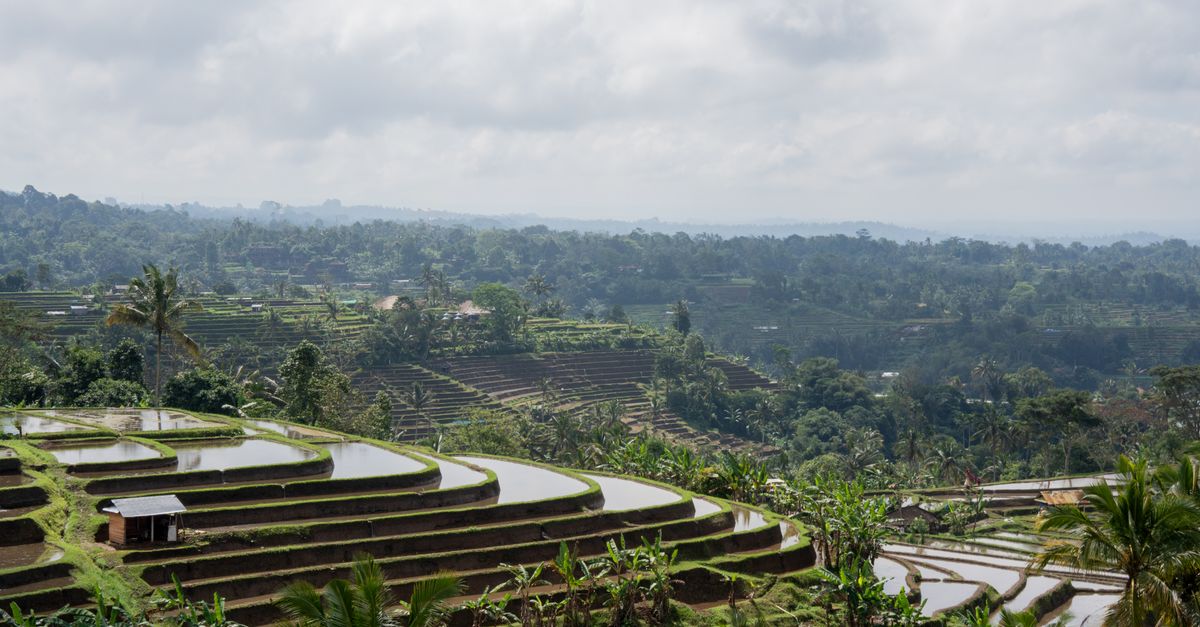
The rice terraces surrounding traditional villages like Sidemen remain largely unchanged, and largely unvisited. Photo: Pexels
These villages aren’t going anywhere, but they are changing
Bali’s traditional villages have survived centuries of outside influence (traders, colonisers, mass tourism) by being quietly stubborn about their own way of doing things. But they’re not frozen in time. Young people leave for the cities. Ceremonies adapt. Some villages court tourism actively; others resist it.
What you can do, as a visitor, is show up with genuine curiosity rather than a content calendar. Spend half a day instead of forty-five minutes. Sit down, eat something, buy a weaving, learn one Balinese word. The village will give you back more than a photo if you let it.
I’d love to hear which village stopped you in your tracks. Reply to this post or send me a note at destinedforbali@substack.com.
FAQs
Which traditional villages in Bali are worth visiting?
The most accessible are Penglipuran (near Bangli), Tenganan (near Candidasa in East Bali), and Trunyan (on Lake Batur). For quieter, less-visited options, try Sidemen in the Sidemen Valley, Bayung Gede near Kintamani, or Tigawasa in North Bali.
How much does it cost to enter Penglipuran village?
Entry is IDR 50,000 for foreign adults and IDR 30,000 for children. Parking costs IDR 2,000 for scooters and IDR 5,000 for cars. The village is open from 8am to 6:30pm daily.
What is a Bali Aga village?
Bali Aga communities are descendants of Bali’s original inhabitants, who predate the Majapahit Hindu migration from Java. They maintain pre-Hindu customs, unique architecture, and distinct cultural practices. Tenganan and Trunyan are the most well-known Bali Aga villages.
What is geringsing weaving in Tenganan?
Geringsing is a double ikat technique where both the warp and weft threads are tied and dyed before weaving begins. It’s practised only in Tenganan and is one of the rarest textile traditions in the world. A single cloth can take several years to complete and is considered sacred.
Is it safe to visit Trunyan cemetery in Bali?
The cemetery itself is safe to visit. The main concern is the boat operators at Kedisan dock, who are known for steep and sometimes aggressive pricing: expect to pay IDR 650,000 to IDR 1,200,000 for a return boat. Try to share a boat with other visitors to reduce the per-person cost.
What should I wear when visiting traditional villages in Bali?
Cover your shoulders and knees. A sarong is ideal, carried on your own or borrowed at the village entrance. Temple areas within villages require a full sarong and sash. Avoid swimwear, revealing clothing, or anything overly casual.
How do I greet people in a Balinese village?
Say “Om Swastyastu,” the Balinese Hindu greeting. It’s respectful, widely appreciated, and will make your visit noticeably warmer. If you want to photograph someone, gesture towards your camera and ask permission first.
Can I visit Bali’s traditional villages without a tour guide?
Yes. Penglipuran and Tenganan are straightforward to visit independently: hire a scooter or a car and driver. Trunyan requires a boat, which you arrange at Kedisan dock. For lesser-known villages like Bayung Gede or Tigawasa, a scooter is the most practical option, though roads may be narrow.
What are canang sari offerings in Bali?
Canang sari are small palm-leaf trays filled with flowers, rice, incense, and sometimes sweets, placed on the ground as daily offerings to the gods. They are active religious objects: never step on them, move them, or treat them as decoration.
What is the best time of year to visit Bali’s traditional villages?
The dry season (April–October) is most comfortable for exploring on foot, with less mud on village paths. Visit in June or July to catch Tenganan’s Perang Pandan ceremony. Galungan, a major Balinese festival that occurs every 210 days, is an extraordinary time to see villages at their most vibrant, with elaborate penjor decorations lining every road. Check a Balinese calendar for dates, as it follows a different cycle.