Bali's Tourism Villages: Community-Led Travel That Actually Gives Back (2026)
A community-led guide to Bali's tourism villages, Penglipuran, Tenganan, Jatiluwih, Celuk and Pemuteran, with an honest take and how to visit respectfully.
In one village in Bali, your money isn’t money. At the gate you swap your rupiah for little numbered bamboo tokens, and those are what you spend inside, a small, deliberate act that keeps every purchase circulating within the community rather than leaking out to some distant operator. The first time I did it, I stood there turning a bamboo coin over in my hand, thinking: this is what tourism could be everywhere.
That village is Penglipuran, and it’s one of a growing network of Bali tourism villages, desa wisata, that have become one of the most talked-about travel trends for 2026. As the island leans into community-led, sustainable, culturally rich travel, these villages offer something the beach clubs never will: a genuine window into how Balinese people actually live.
But I want to be honest with you, not just enthusiastic, because not every village experience is equal and some feel more staged than others. So here’s my real guide to Bali tourism villages, what a desa wisata actually is, the ones worth your time, an honest word on the crowds, and how to visit in a way that genuinely helps rather than intrudes.
What a Desa Wisata Actually Is
A desa wisata, or tourism village, is a living Balinese community that has chosen to welcome visitors in a structured, community-managed way, sharing its culture, crafts, architecture and daily life while keeping the economic benefit local. The key phrase is community-led: the village runs it, and the village benefits.
This is the heart of why they matter. Bali is consciously redefining the visitor experience through its growing network of these villages, offering authentic, community-led encounters that go far beyond the well-known beaches and resorts. Looking ahead through 2026, they’re set to play an even more central role, with new villages being developed and existing ones growing in prominence.
What you get as a visitor is the chance to connect with local communities, learn about their way of life, and explore lesser-known landscapes, with sustainable practices at the core. What the village gets is income that supports preserving the very culture you came to see. When it works well, it’s one of the most genuinely reciprocal forms of travel there is. The trick is knowing which villages do it well, and how to show up as a good guest.
Penglipuran, the Award-Winning Showcase (and an Honest Word on Crowds)
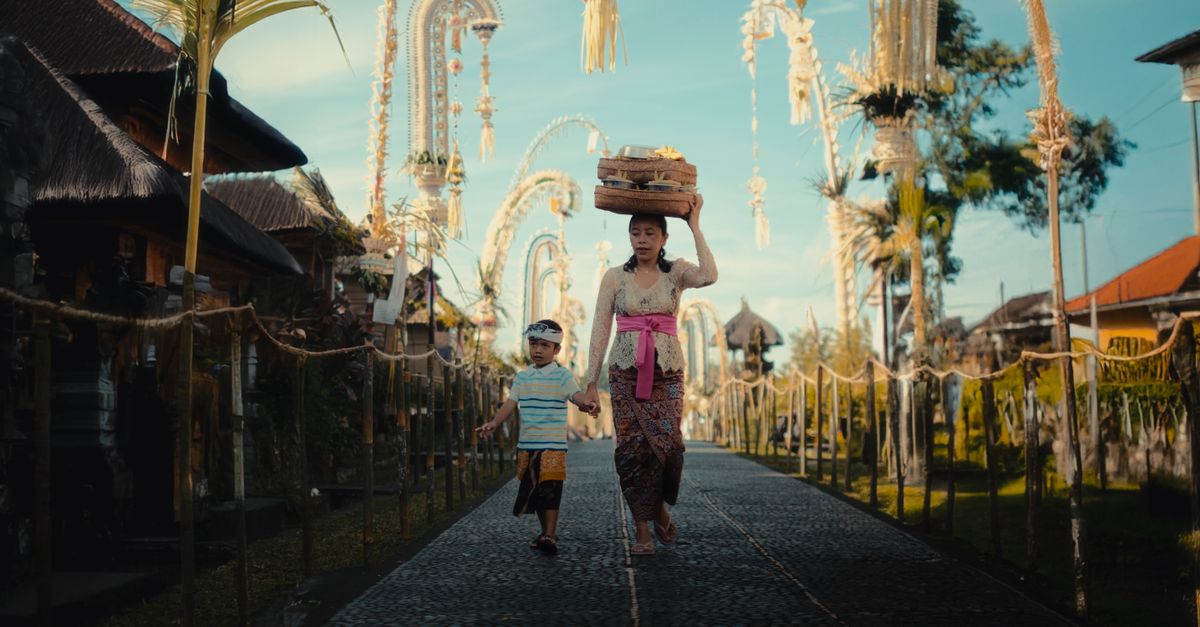
Penglipuran, in the Bangli regency, is the famous one, and deservedly so. It has won UN Tourism’s (the UNWTO’s) Best Tourism Village award multiple times and is known as one of the cleanest villages in the world. Motor vehicles aren’t allowed in the main village area, so you stroll a pristine central pathway lined with near-identical traditional gates, the angkul-angkul, backed by around 45 hectares of protective bamboo forest.
Culturally it’s fascinating. Penglipuran is a Bali Aga village, meaning it preserves pre-Hindu traditions and layouts dating back centuries. There’s no caste system; everyone’s house looks the same; the whole place is laid out according to sacred spatial concepts of balance and harmony. And yes, this is the village with the bamboo-token currency system that so charmed me. Entry, as of July 2026, is a modest Rp 50,000 or so for foreign visitors, always worth confirming at the counter, as fees do creep up.
Now the honest bit. Penglipuran is popular, and at busy times it can feel more like a polished attraction than a sleepy village, tour buses, a paid car park, every house along the main path selling souvenirs. Some visitors come away feeling it’s a touch staged. My take: go early, go with curiosity rather than expecting an “undiscovered” secret, walk all the way down to the bamboo forest where it quietens, and you’ll appreciate it for the remarkable thing it is.
Tenganan, Ancient Traditions and the Famous Textiles
If Penglipuran is the polished showcase, Tenganan Pegringsingan in Karangasem is the deeper, rawer experience. It’s one of Bali’s oldest and most important Bali Aga villages, and it remains firmly rooted in ancient customs that predate the island’s Hindu majority.
Tenganan is most famous for its rare geringsing double-ikat textiles, an extraordinarily painstaking weaving technique found in very few places on earth, where both the warp and weft threads are dyed before weaving. A single cloth can take years to make. The village is also known for ceremonial traditions like the Pandan Leaf War, a ritual that reflects the pre-Hindu beliefs still guiding daily life and social structure here.
What I love about Tenganan is that it feels less arranged for tourists and more like you’re being allowed a glimpse of something genuinely ongoing. Buying a piece of geringsing directly here, if your budget stretches to it, as the real thing isn’t cheap, supports a craft tradition hanging on against the odds. It rewards the visitor willing to slow down and actually talk to the weavers.
Beyond the Famous Two, Jatiluwih, Celuk and Pemuteran
The tourism-village network is far wider than Penglipuran and Tenganan, and some of the others suit particular interests beautifully.
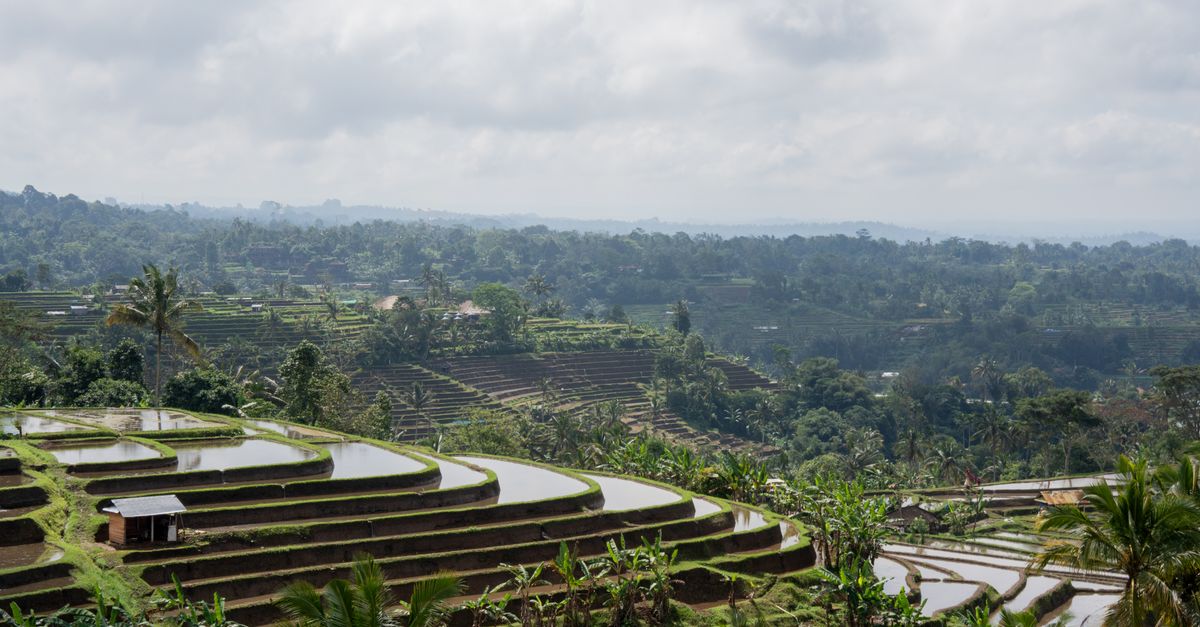
Jatiluwih, in Tabanan, sits within UNESCO-listed rice terraces and showcases the traditional Balinese Subak irrigation system, a centuries-old, cooperative water-sharing method that’s a UNESCO cultural treasure in its own right. You can do immersive rice-farming experiences here, and the views are staggering (entry for foreign visitors is around Rp 50,000 as of 2026). Celuk, near Ubud, is the village to visit for silver and gold craftsmanship, where artisans inherit metalworking skills within their families and produce jewellery rich with symbolic meaning. And Pemuteran, up on the north-west coast, is a coastal community celebrated for its community-led coral reef restoration and sustainable marine tourism, a different but equally inspiring model of a village protecting its own environment.
There’s also Trunyan, on the shore of Lake Batur, known for its ancient and unusual funeral customs that offer a window into Bali’s early animist practices. Between them, these villages let you build a trip around whatever pulls you, textiles, farming, craft, marine conservation or deep tradition.
How to Visit a Tourism Village Respectfully
These are people’s homes, not a theme park, so how you show up matters enormously. A few principles I hold to.
Dress modestly, covered shoulders and knees, especially as many villages have temples and active ceremonial life. Always ask before photographing people or entering a private courtyard; a smile and a gesture go a long way, and most people are gracious if you ask first. Buy something directly from village artisans rather than haggling hard over a few thousand rupiah, this is the whole point of community-led tourism, and that money stays local. Keep your voice down and your pace slow. And if you visit during a ceremony, watch quietly from the edges and never put yourself between worshippers and a shrine.
Most of these villages sit well apart, Penglipuran up in Bangli, Tenganan out east in Karangasem, Jatiluwih over in Tabanan, so trying to reach them by public transport is a false economy. I’d hire a driver for the day; a private car charter with a local driver lets you pair a famous village with a quieter one at your own pace, and a good driver often doubles as an informal guide. Better still, consider a licensed local guide within the village itself. A good guide turns a pretty walk into a genuine understanding of what you’re seeing, and it channels more income to the community. Respect, curiosity and a bit of humility are all it really takes to be welcome.
Is a Bali Tourism Village Actually Worth It?
Honest answer: yes, if you go in with the right expectations. If you’re hoping to stumble on an untouched secret with no other tourists, you may be disappointed, the famous villages are well visited, and parts of them are set up for that. But if you go wanting to understand how Balinese communities preserve their culture, support that effort directly with your spending, and see a side of the island beyond the beaches, a tourism village is one of the most rewarding things you can do here.
My advice is to pick one or two that match your interests rather than racing through several, and to pair a famous one (Penglipuran for the showcase) with a quieter one (Tenganan or a northern Bali Aga village for the depth). Go early, go slow, spend locally, and treat it as a privilege rather than a checklist. Do that, and you’ll come away with the kind of memory no beach club can offer, and you’ll have left something good behind.
Conclusion
Bali’s tourism villages, Penglipuran, Tenganan, Jatiluwih, Celuk, Pemuteran, are community-led travel at its best: a genuine encounter with Balinese culture that puts money straight back into the people preserving it. Go with respect and realistic expectations, spend directly with the community, and choose the villages that match what you’re curious about.
If you’ve visited a desa wisata that moved you, or you’re deciding which to choose, reply and tell me; these are some of my favourite conversations to have. And read my Bali etiquette guide before you go, so you arrive knowing how to be the kind of guest these communities are glad they welcomed.
FAQs
1. What is a Bali tourism village (desa wisata)?
A desa wisata is a living Balinese community that welcomes visitors in a structured, community-managed way, sharing its culture, crafts and daily life while keeping the economic benefit local. It’s a community-led alternative to resort tourism.
2. What is Penglipuran Village known for?
Penglipuran, in Bangli, is known as one of the cleanest villages in the world and has won UN Tourism’s Best Tourism Village award multiple times. It’s a Bali Aga village with car-free streets, identical traditional gates and a bamboo-token currency system.
3. Is Penglipuran Village worth visiting?
Yes, if you go with realistic expectations. It’s a remarkable, award-winning example of sustainable village tourism, though it’s popular and can feel like a polished attraction at busy times. Go early and walk down to the quieter bamboo forest.
4. How much is the entrance fee for Penglipuran Village?
As of 2026 it’s roughly Rp 50,000 for a foreign adult (about Rp 30,000 for a child), paid by cash or QRIS at the counter, cards aren’t accepted. Fees change, so always confirm the current price on arrival.
5. What is Tenganan Village famous for?
Tenganan Pegringsingan is one of Bali’s oldest Bali Aga villages, famous for its rare geringsing double-ikat textiles and ceremonial traditions like the Pandan Leaf War. It feels less staged and more deeply traditional than the better-known villages.
6. What is a Bali Aga village?
A Bali Aga village is one of Bali’s original communities that preserves pre-Hindu traditions, layouts and social structures dating back centuries. Penglipuran and Tenganan are two of the most famous examples.
7. Which Bali tourism village is best for rice terraces?
Jatiluwih in Tabanan sits within UNESCO-listed rice terraces and showcases the traditional Subak irrigation system. You can do immersive rice-farming experiences there, and the views are spectacular.
8. Where can I buy authentic Balinese silver?
Celuk village near Ubud is renowned for its silver and gold craftsmanship, where artisans inherit metalworking skills within their families. Buying directly from village artisans supports the craft and keeps income local.
9. How do I visit a Balinese village respectfully?
Dress modestly, ask before photographing people or entering courtyards, buy directly from local artisans, keep quiet and slow, and never come between worshippers and a shrine during ceremonies. Consider going with a licensed local guide.
10. Are Bali tourism villages sustainable?
Yes, sustainability and community benefit are central to the desa wisata model. Villages like Pemuteran even run community-led coral reef restoration, and Penglipuran’s systems keep tourism income circulating locally while preserving heritage.
Before you go - I wrote this in 2026 and double-checked every price, fee, opening time and rule I could, but Bali changes fast. Treat the figures here as a guide and confirm the latest details before you book or travel.
Some of the links in this article are affiliate links: if you book through them I may earn a small commission at no extra cost to you. I only ever recommend things I would happily send a friend to.