Bali on a Budget: How to Have a Cheap Holiday in Paradise
Real 2026 numbers for a cheap Bali holiday: guesthouse rates, warung meals, scooter hire and temple fees, with a daily budget band in IDR and GBP from years living here.

The cheapest meal I’ve eaten in Bali this year cost me IDR 18,000 (about 76p). It was nasi campur from a warung near my place in Penestanan: a heap of rice, long beans in coconut, a boiled egg, a spoonful of fiery sambal, and the warung auntie waving away my attempt to round up. That single plate is the whole argument for doing Bali on a budget. You can spend a fortune here if you insist on cliff-edge beach clubs and imported wine (plenty do), but you absolutely don’t have to.
I’ve lived on and off in Bali for years now, and I’ve watched friends arrive convinced “paradise” meant blowing their savings. It doesn’t. With a bit of planning you can have a genuinely lovely cheap Bali holiday (temples, rice fields, scooter rides, the lot) for less than a long weekend costs back home in the UK. The trick is knowing what things actually cost in 2026, not what a glossy package brochure tells you.
So here’s the honest version: real rates for rooms, food, scooters, fees, and a daily budget band you can plan around. Numbers in rupiah and pounds, checked this month, with the bits nobody mentions.
Cheap accommodation in Bali: kos, guesthouses and homestays
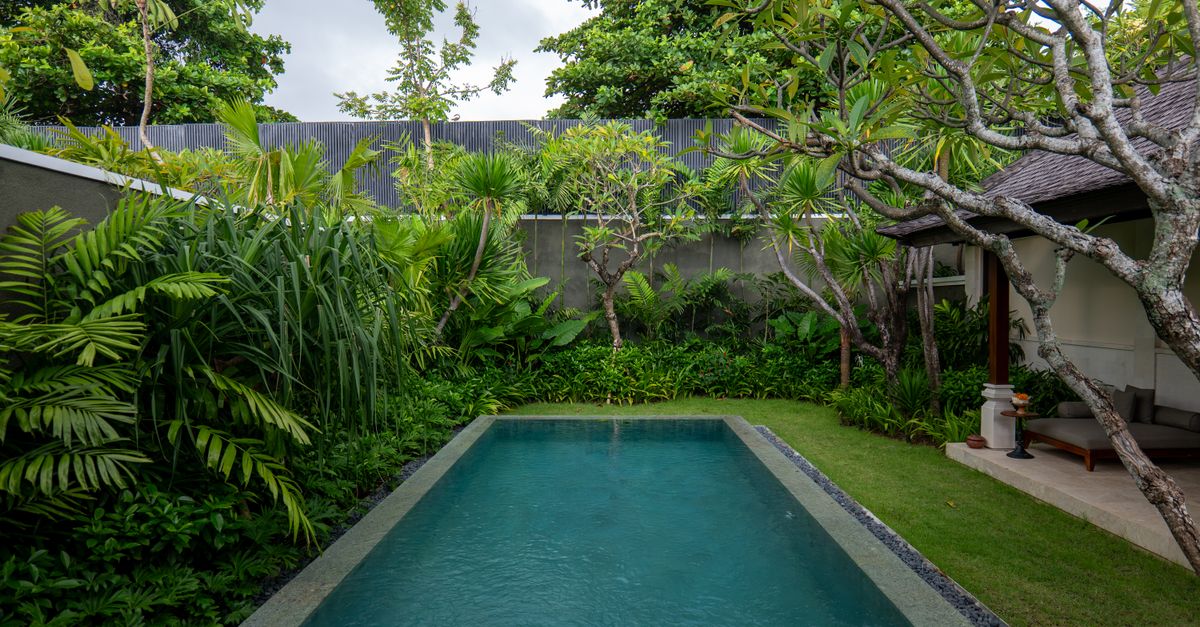
Forget the infinity-pool villas for a second: the backbone of budget Bali is the guesthouse and the kos. A kos is a simple long-stay room, often a fan and a cold-water bathroom, rented by locals and increasingly by travellers who stay a while. A homestay (you’ll see “homestay” or “losmen” on the sign) is a family-run guesthouse, usually with breakfast thrown in.
Expect to pay around IDR 250,000 a night (about £11) for a clean fan room in a homestay in Ubud or inland Canggu, breakfast included. Air-con bumps it to roughly IDR 350,000–450,000. A dorm bed in a social hostel sits near IDR 150,000–200,000. My rule: book the first two nights online, then walk the lanes: the best-value homestays in Ubud’s Penestanan and Nyuh Kuning aren’t on the booking apps at all, and turning up in person often shaves a third off the rate, especially if you’ll stay a week.
Stay slightly back from the beach. A room five minutes’ walk from the sand can cost half what the seafront charges, and you’re closer to the warungs anyway. And do haggle gently for weekly stays: it’s expected, and a smile goes further than a hard bargain.
What food really costs: warungs, markets and the budget per day
This is where Bali rewards you. Eat where the Balinese eat (at a warung, the small family kitchens on every street) and you’ll spend almost nothing. Warung dishes run IDR 15,000–35,000 (roughly 65p–£1.50), and a proper plate of nasi campur is IDR 25,000–45,000. A big Bintang is about IDR 30,000; a fresh coconut maybe IDR 20,000.
The catch is the cafés. Bali’s smoothie-bowl culture is real and it’s lovely, but a bowl-plus-coffee at one of the Instagram cafés in Canggu will set you back IDR 120,000–180,000 (£5–£8). That’s more than a whole day of warung eating. I treat those as a once-every-few-days treat, not a daily habit.
Buy fruit at the morning market, carry a refillable water bottle (most homestays have a free refill galon), and you’ll keep your food spend to around IDR 100,000–150,000 a day without trying. That’s the single biggest lever on doing Bali on a budget per day: where you choose to eat decides almost everything. For a full breakdown of what food actually costs here, from warung plates to weekly grocery runs, see my Bali food costs guide.
Getting around cheaply: scooter rental and transport tips
Nothing frees you up, or saves you more, than your own scooter. Daily hire is IDR 60,000–90,000 (£3–£4), dropping to around IDR 1,000,000–1,200,000 a month for a Scoopy or Vario if you stay a while. Petrol is cheap: about IDR 12,000 a litre at the green Pertamina stations, and a tankful goes a long way. You can sort hire through your homestay or book ahead with a service like a local scooter rental if you’d rather have it waiting.
Two honest warnings. First, you legally need an International Driving Permit with a motorcycle category plus your home licence: police checkpoints do happen, and “I didn’t know” costs more than the IDP would have. Sort it before you fly; it’s a few quid at the Post Office. Second, Bali traffic is chaotic and the roads are slick in the wet: the urban speed limit is 50 km/h for a reason. If you’re not a confident rider, don’t learn here.
Not on two wheels? Use the Grab and Gojek apps for cheap bike-taxis and cars: a 15-minute ride is often under IDR 30,000. For day trips, sharing a private driver works out cheap split between a few of you. Avoid the unmetered “transport boss?” touts; the apps are a fraction of the price.
Cheap things to do: temples, rice fields and the tourist levy
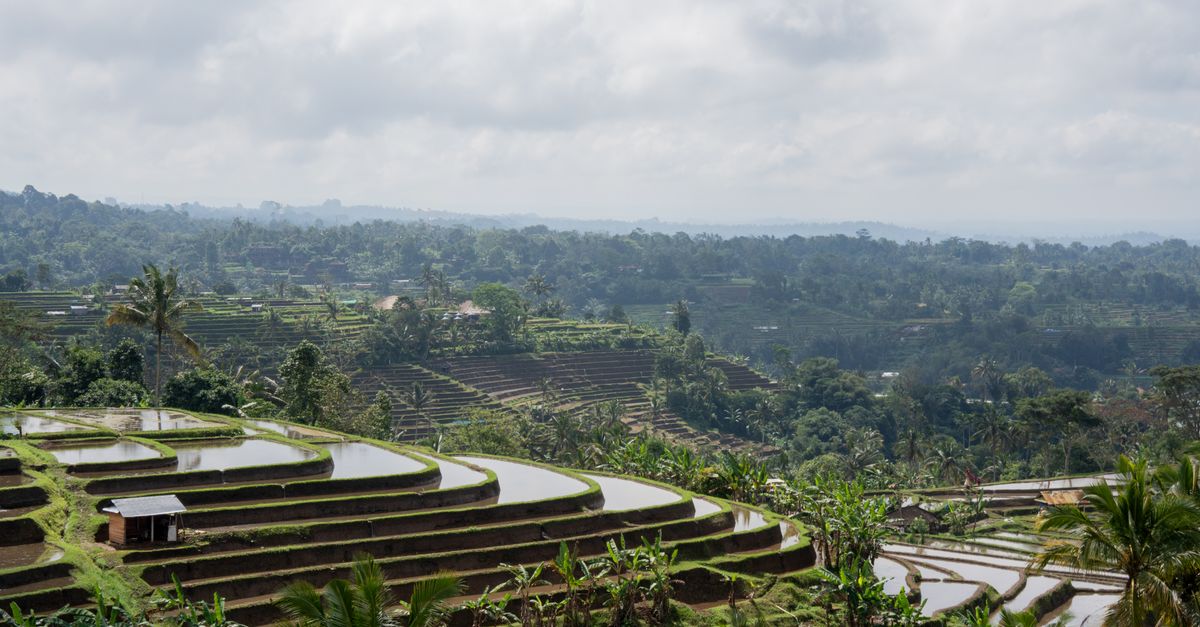
Here’s the lovely truth: much of what makes Bali special is nearly free. A sunrise walk through the Campuhan Ridge in Ubud costs nothing. The rice terraces at Tegallalang ask only an IDR 15,000–20,000 donation at the booth. Sitting through a village temple ceremony, sarong on, respectfully at the back, is priceless and free.
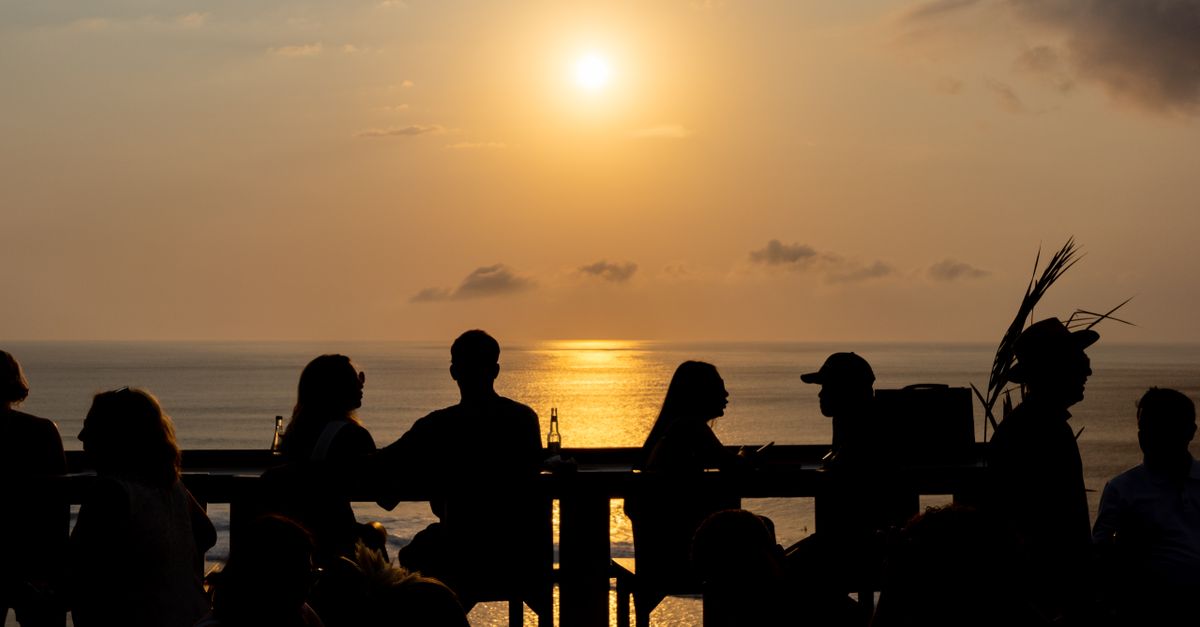
Where you do pay, it’s modest by UK standards. Tanah Lot is IDR 75,000, Tirta Empul IDR 75,000 for its holy-spring purification, and Uluwatu IDR 150,000, the dearest, but the cliff-top sunset and Kecak fire dance earn it. The Sacred Monkey Forest in Ubud is a fun, cheap couple of hours (mind your sunglasses, the macaques are quick). If you’ll splurge on one paid thing, make it a Mount Batur sunrise trek: watching the sun come up over the caldera is the memory people fly home with.
Don’t forget the IDR 150,000 Bali Tourist Levy: one payment per person via the official Love Bali site before you arrive. It’s not optional, it funds cultural and environmental work, and paying online saves a queue at the airport. Here’s everything about the Bali tourist levy, who pays, how much, and exactly how to do it.
A realistic daily budget for Bali in 2026
So, the number you came for. (Want a figure tailored to your own trip? Our free Bali trip cost calculator builds a total, per-person and per-day estimate in seconds.) A frugal-but-comfortable traveller (homestay, warung meals, own scooter, a temple or walk most days) can do Bali for IDR 450,000–700,000 a day, which is roughly £19–£30. That’s everything on the ground covered.
Spend more freely (air-con room, a café breakfast, the odd paid attraction and a beer or three) and you’re at IDR 1.1m–2.1m a day (£47–£90), which is squarely mid-range and still cheaper than most European city breaks. Only if you’re chasing beach clubs and villas does it climb past that.
For a fortnight, budget travellers land around £270–£420 land-only; mid-range £660–£1,260. Add your flights and that one-off levy, keep a cash buffer for the inevitable temple-fee-and-coconut days, and you’ve got a holiday in paradise that doesn’t haunt your bank statement.
Doing Bali on a budget isn’t about going without: it’s about eating where locals eat, sleeping a lane back from the beach, and letting the free stuff be the highlight.
If you’ve got a brilliant warung, a IDR 150,000 homestay or a free viewpoint I’ve missed, reply and tell me: my list of cheap Bali gems is never finished, and the best ones always come from readers who’ve just got back.
Before you go: I wrote this in 2026 and double-checked every price, fee, opening time and rule I could, but Bali changes fast. Treat the figures here as a guide and confirm the latest details before you book or travel.
Some of the links in this article are affiliate links: if you book through them I may earn a small commission at no extra cost to you. I only ever recommend things I would happily send a friend to.
FAQs
How much money do I need per day in Bali? A budget traveller needs roughly IDR 450,000–700,000 a day (about £19–£30). That covers a homestay room, warung meals, scooter petrol and the odd temple fee. Push to IDR 1.1m–2.1m for mid-range comfort with air-con, cafés and paid activities. Beach clubs and villas are what blow budgets, not Bali itself.
Is Bali cheap for British tourists in 2026? Yes. With the pound near IDR 23,500, your money stretches a long way. A warung meal is under £1.50 and a fan guesthouse around £11 a night. Flights and that one-off tourist levy are your bigger costs; daily living is genuinely cheap if you eat and sleep like a local rather than at the tourist hotspots.
What is the Bali tourist tax and do I have to pay it? The Bali Tourist Levy is IDR 150,000 (about £6.40) per person, paid once per entry. It’s mandatory for all foreign visitors, including children, with no exemptions for ordinary tourists. Pay it before you fly via the official Love Bali platform to skip the airport queue, and save a screenshot of your QR voucher in case the signal drops.
How much is a meal at a warung in Bali? A warung dish costs IDR 15,000–35,000, roughly 65p to £1.50. A full plate of nasi campur (rice with veg, egg and a little meat) runs IDR 25,000–45,000. Warungs are the family-run kitchens locals eat at, and they’re the single biggest reason a cheap Bali holiday is so achievable.
How much does it cost to rent a scooter in Bali? Daily scooter hire is IDR 60,000–90,000 (£3–£4), dropping to around IDR 1.1 million a month for a Scoopy or Vario. Petrol is about IDR 12,000 a litre. You’ll need an International Driving Permit with a motorcycle category plus your home licence: police do check, and the fine costs far more than sorting the IDP at home.
Where is the cheapest place to stay in Bali? Inland and slightly back from the beach is always cheapest. Ubud, Penestanan, Nyuh Kuning and the quieter edges of Canggu have homestays from around IDR 250,000 a night with breakfast. A room five minutes from the sand can cost half the seafront rate. Walking the lanes in person often beats the booking apps for weekly deals.
Do I need to tip in Bali? Tipping isn’t obligatory but it’s appreciated, especially for drivers and at smaller warungs. Many mid-range restaurants already add a service charge of around 5–10%. For a private driver on a day trip, IDR 50,000–100,000 is a kind gesture. Always carry small notes: change for big bills can be scarce at family-run places.
Is it rude to haggle in Bali? Gentle bargaining is normal and expected at markets and for things like weekly room rates or scooter hire. It’s not expected in warungs, shops with marked prices, or supermarkets. Keep it warm and smiling: a friendly back-and-forth is part of the culture, but grinding someone down hard over a few thousand rupiah is poor form.
When is the cheapest time to visit Bali? The wet season, roughly November to March, brings lower room rates and fewer crowds. Rain tends to come in short heavy bursts rather than all day, so it’s far from a washout. Avoid the July–August and Christmas–New Year peaks if you want the best accommodation deals and a quieter, cheaper trip.
Can I do Bali on £1,000 for two weeks? Comfortably, land-only. At a budget daily band of £19–£30, two weeks runs roughly £270–£420 before flights. Even adding scooter hire, the IDR 150,000 levy, a few temple fees and a Mount Batur trek, you’ll have plenty of that £1,000 left. Flights from the UK are the part that pushes the total up, not life on the ground.