
Cooking Classes in Bali: Learning Traditional Balinese Cuisine
Grinding base genep by hand in a village kitchen north of Ubud taught me more about Bali than a week of temples. Here's what a cooking class really involves.
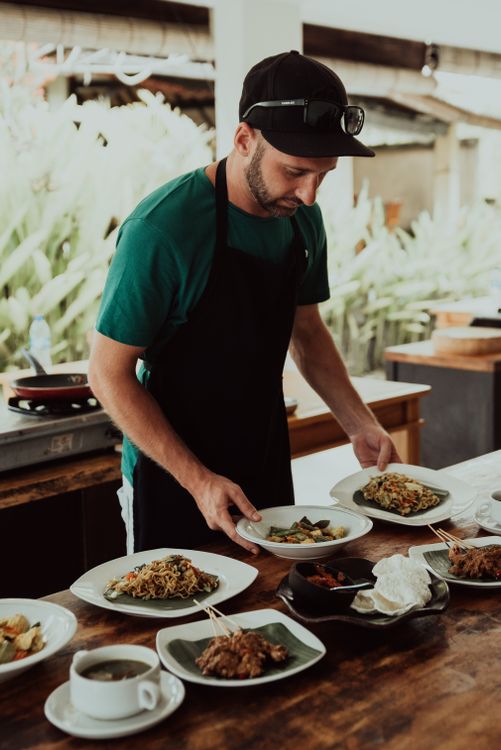
I still remember the moment I realised I’d been making nasi goreng wrong for years. I was standing in a smoky outdoor kitchen in Laplapan village, just north of Ubud, watching a Balinese grandmother, Ibu Mangku, pound a spice paste with a stone mortar the size of a football. She tasted the base genep, added a sliver of galangal, and nodded once. That single nod carried more cooking knowledge than anything I’d ever picked up from a recipe blog.
Bali cooking classes sound like a tourist activity. They turn out to be something else entirely. You learn to cook sate lilit and lawar, yes, but you also learn why the coconut is grated by hand, why the offerings on the kitchen shelf matter, and why the food tastes nothing like what you’ve been ordering at beach restaurants. If you’re planning a trip and wondering whether a traditional Balinese cuisine class is worth half a day of your holiday, I’d say it gave me more understanding of Bali than a week of temple-hopping.
This guide covers what you’ll actually learn to cook, how much classes cost in 2026, and which schools are worth booking, whether you want a village kitchen or a resort experience.
Why a Cooking Class Belongs on Your Bali Itinerary
Something most visitors don’t realise until they sit down at a warung: Balinese food and the Indonesian food served at tourist restaurants aren’t the same thing. Balinese cuisine is its own regional tradition, tied to Hindu ceremonies, village agriculture, and a spice palette that differs from Javanese or Sumatran cooking. A Bali cooking class is one of the few ways to cross that line between eating tourist food and understanding what Balinese families actually prepare at home.
It goes well beyond standing at a stove, too. Most classes begin with a visit to a traditional morning market, and these markets are nothing like the sanitised food halls you might be used to. You’ll see whole turmeric roots piled in baskets, shrimp paste wrapped in banana leaves, and stallholders who’ve been selling the same spices for decades. Your instructor points out ingredients you’ve never heard of: lesser galangal, torch ginger flower, salam leaf. And suddenly the flavours you tasted at dinner last night start to make sense.
What surprised me most was how physical the cooking is. Balinese kitchen work involves grinding, chopping, and pounding in a way that modern Western cooking simply doesn’t. There are no food processors. The base genep, the foundational spice paste used in almost everything, is made by hand, and the texture matters. Taste the difference between machine-blended and stone-ground, and you’ll understand why.
What You Actually Learn to Cook (and Why It Matters)
The dishes you make in a Bali cooking class vary by school, but a good traditional class covers the core of everyday Balinese eating. Expect to prepare between five and nine dishes in a single session.
Sate lilit is usually the centrepiece, and it’s nothing like the satay you get at a food court. Balinese sate lilit uses minced fish or chicken mixed with grated coconut, lime leaves, and lemongrass, then pressed around flat bamboo skewers and grilled over coconut husks. Getting the texture right, not too wet and not crumbling apart, takes practice, and your instructor will show you the hand technique.
Most classes also cover lawar, a ceremonial salad of finely chopped vegetables, coconut, and spices (the traditional version includes minced meat and blood, though most classes make the vegetarian version). You’ll likely make nasi goreng, but properly, with a fresh-ground bumbu rather than from a packet, plus at least one type of sambal, a clear soup like sayur urap, and often jaje Bali, a traditional coconut and palm sugar dessert wrapped in banana leaf.
The real education, though, is in the base genep and base rajang, the two foundational spice pastes that underpin almost all Balinese cooking. Learning these is like learning a mother sauce in French cuisine: once you can make them, you can cook dozens of different dishes at home. They use shallots, garlic, chilli, turmeric, ginger, galangal, candlenut, coriander seeds, pepper, shrimp paste, and palm sugar. The proportions are never precisely measured. It’s done by feel, by smell, by taste. That’s the bit you can’t learn from a cookbook.
The Best Bali Cooking Classes by Budget and Style
Prices for Bali cooking classes in 2026 range from around Rp 350,000 (roughly £18) at a village-based school to Rp 1,500,000 (around £75) at a high-end resort or specialist academy. What stands out at each level:
Village and family-run classes (Rp 350,000–500,000):
Paon Bali in Laplapan village, Ubud, charges Rp 350,000 per person and runs morning and afternoon sessions. It’s run from a family compound, and you cook over a wood fire. The class includes a short walk through the village and a demonstration of traditional coconut oil preparation. Subak Cooking Class in Tampaksiring, Gianyar, is the same price and includes a market visit, a trek through working rice fields, and nine Balinese recipes. Both are excellent value.
Mid-range established schools (Rp 400,000–650,000):
Casa Luna, on Jalan Bisma in Ubud, charges Rp 400,000–500,000 and was founded by Janet De Neefe, who’s been teaching Balinese cooking for over two decades. They run themed daily classes, including a twilight smoked duck session. Lobong Culinary Experience, north of Ubud on Jalan Raya Kedewatan, charges IDR 475,000 for a morning class with market visit (IDR 450,000 without). It’s a home-based experience with hotel transfers included. New Earth Cooking School in Tabanan focuses entirely on plant-based cuisine, with permaculture garden foraging, and charges Rp 500,000–650,000.
Luxury and resort classes (Rp 800,000+):
At Hotel Tugu Bali in Canggu, you cook with Ibu Soelastri using wood-fired stoves and antique earthenware for Rp 800,000 per person (three hours, minimum two people, book two days ahead). The Sokasi Cooking School at Four Seasons Sayan pairs a morning market tour with a cooking class overlooking the Ayung River valley. Senography at RIMBA by AYANA in Jimbaran charges IDR 1,050,000 and includes a tour of their organic gardens.
What to Expect on the Day: Markets, Machetes and Making Sambal
A typical Bali cooking class with a market visit runs five to six hours, usually starting between 7:30 and 8:30 in the morning. How the day unfolds varies by school, but it tends to follow the same pattern.
The market visit comes first, and it’s honestly one of the best parts. Your instructor walks you through a traditional Balinese market, explaining ingredients as they buy them. These aren’t tourist markets. They’re the real morning markets where local families shop before dawn. You’ll see things you’ve never encountered: long beans, snake fruit, fresh turmeric root still caked in earth, blocks of palm sugar, and fermented shrimp paste wrapped in leaves. Some schools, like Subak and Casa Luna, build in time for you to wander and buy your own spices to take home.
Back at the cooking school, you change into an apron (wear light, loose clothing, because it gets hot and there will be splashing), and the actual cooking begins. Classes typically teach five to nine dishes. You work through each one as a group, with your instructor demonstrating techniques before you try them yourself. The stone mortar work is the most physically demanding part: grinding the bumbu takes real effort, and your arms will know about it the next day.
Most classes serve everything you’ve cooked as a communal lunch at the end. You sit together, eat what you made, and the instructor answers questions. Several schools, including Subak and Bali Asli, also provide a printed recipe booklet or email the recipes to you afterwards, so you can have a go at the dishes at home. A word of warning: the spices you need are much easier to source in Bali than in the UK, so stock up at the market while you’re there.
Choosing the Right Bali Cooking Class for You
Not all classes suit everyone. A few ways to narrow it down.
If you’re vegan or plant-based, head straight to New Earth Cooking School in Tabanan or Moksa in Ubud (Rp 1,500,000, taught by Executive Chef Made Runatha). Moksa runs weekly plant-based classes with a focus on knife skills and creative presentation. Sayuri Healing Food Academy in Ubud specialises in raw food and runs everything from single masterclasses to a four-day raw food mastery course.
If you want the most authentic village experience, choose Paon Bali or Subak. Both are family-run, both cook over wood fires, and both put you in contact with the rhythms of Balinese village life rather than a polished resort kitchen.
If you’re short on time, Hotel Tugu Bali in Canggu runs a three-hour afternoon class, with no market visit, but the cooking itself is exceptional. Most other classes need at least five hours.
If you’re travelling with children, Subak and Lobong both welcome families. Younger children enjoy the market walk and the hands-on parts: rolling sate lilit onto skewers is genuinely fun at any age.
If you care about sustainability, look for schools that grow their own ingredients. Tresna Bali Cooking School has a riverside organic garden and limits classes to eight students. New Earth integrates permaculture principles into every session.
One thing I’d say to everyone: book early. The best village classes, Paon Bali and Subak in particular, fill up days in advance, especially in high season (July–August and December–January). And if your class includes a market visit, do the morning session rather than the afternoon. The markets are at their best before 9am, and by midday most stallholders have packed up.
A cooking class in Bali costs less than a beach club day pass and teaches you something you’ll actually use for years. The flavours stay with you, and so do the moments: the smell of lemongrass on your fingers, the sound of a stone pestle, the pride of getting a sambal right. Whether you choose a village compound in Ubud for Rp 350,000 or a resort kitchen in Jimbaran for over a million rupiah, the experience connects you to Bali in a way that sightseeing alone never quite manages.
FAQs
How much do Bali cooking classes cost in 2026?
Prices range from around Rp 350,000 (roughly £18) at village-based schools like Paon Bali and Subak to Rp 1,500,000 (about £75) at specialist academies like Moksa. Most mid-range classes with a market visit fall between Rp 400,000 and Rp 650,000 per person.
Do Bali cooking classes include a market visit?
Most morning classes do, yes. Your instructor walks you through a local Balinese market and talks you through the ingredients. Afternoon classes typically skip the market. Always check when booking, as it varies by school.
What dishes do you learn to cook in a Balinese cooking class?
A typical class covers five to nine dishes: sate lilit (minced fish satay on lemongrass sticks), lawar (ceremonial spiced salad), nasi goreng, sambal, a clear vegetable soup, and often a traditional dessert like jaje Bali. The foundational spice pastes, base genep and base rajang, are the most valuable thing you’ll take away.
How long does a cooking class in Bali take?
A: Classes with a market visit typically run five to six hours, starting around 7:30–8:30am. Shorter classes without a market visit take about three hours. Both include eating everything you’ve cooked at the end.
Are there vegan or plant-based cooking classes in Bali?
Yes, several good ones. New Earth Cooking School in Tabanan focuses on plant-based permaculture cuisine (Rp 500,000–650,000). Moksa in Ubud runs weekly plant-based classes (Rp 1,500,000). Sayuri Healing Food Academy in Ubud specialises in raw and vegan food with courses ranging from single classes to multi-day programmes.
Can I take children to a Bali cooking class?
Lots of classes welcome children. Subak Cooking Class and Lobong Culinary Experience are both family-friendly. Children particularly enjoy the market walk and the hands-on tasks like rolling sate lilit onto skewers. Check age suitability with the school when you book.
Do I need any cooking experience to take a class in Bali?
None at all. Classes are designed for complete beginners. Your instructor demonstrates every technique before you try it yourself. The atmosphere is relaxed and encouraging. This isn’t a professional kitchen assessment.
What should I wear to a Bali cooking class?
Light, loose, comfortable clothing, since you’ll be standing near heat sources and there will be splashing. Closed-toe shoes are a good idea if the class involves a market walk. Aprons are provided. Leave your best clothes at the hotel.
Where are the best cooking classes in Bali located?
Most cluster around Ubud, which is the cultural heart of Bali and close to rice fields and morning markets. Casa Luna, Paon Bali, and Tresna are all in the Ubud area. You’ll also find excellent classes in Canggu (Hotel Tugu), Jimbaran (Senography at AYANA), Nusa Dua (Art Cafe Bumbu Bali), and east Bali (Bali Asli in Karangasem).
Can I buy Balinese spices to take home after the class?
Yes, and I’d strongly recommend it. Lots of the spices used in Balinese cooking are difficult to source in the UK or Europe. Buy fresh turmeric, galangal, candlenuts, and dried salam leaves at the morning market during your class. Some schools sell pre-packed spice kits. Ground spices keep well if vacuum-sealed.


