
Aerial Yoga and Antigravity Fitness: Defying Gravity in Bali
Aerial yoga in Bali: a studio-by-studio guide with real drop-in prices from IDR 139,000, what your first class feels like, and the benefits you won't expect.
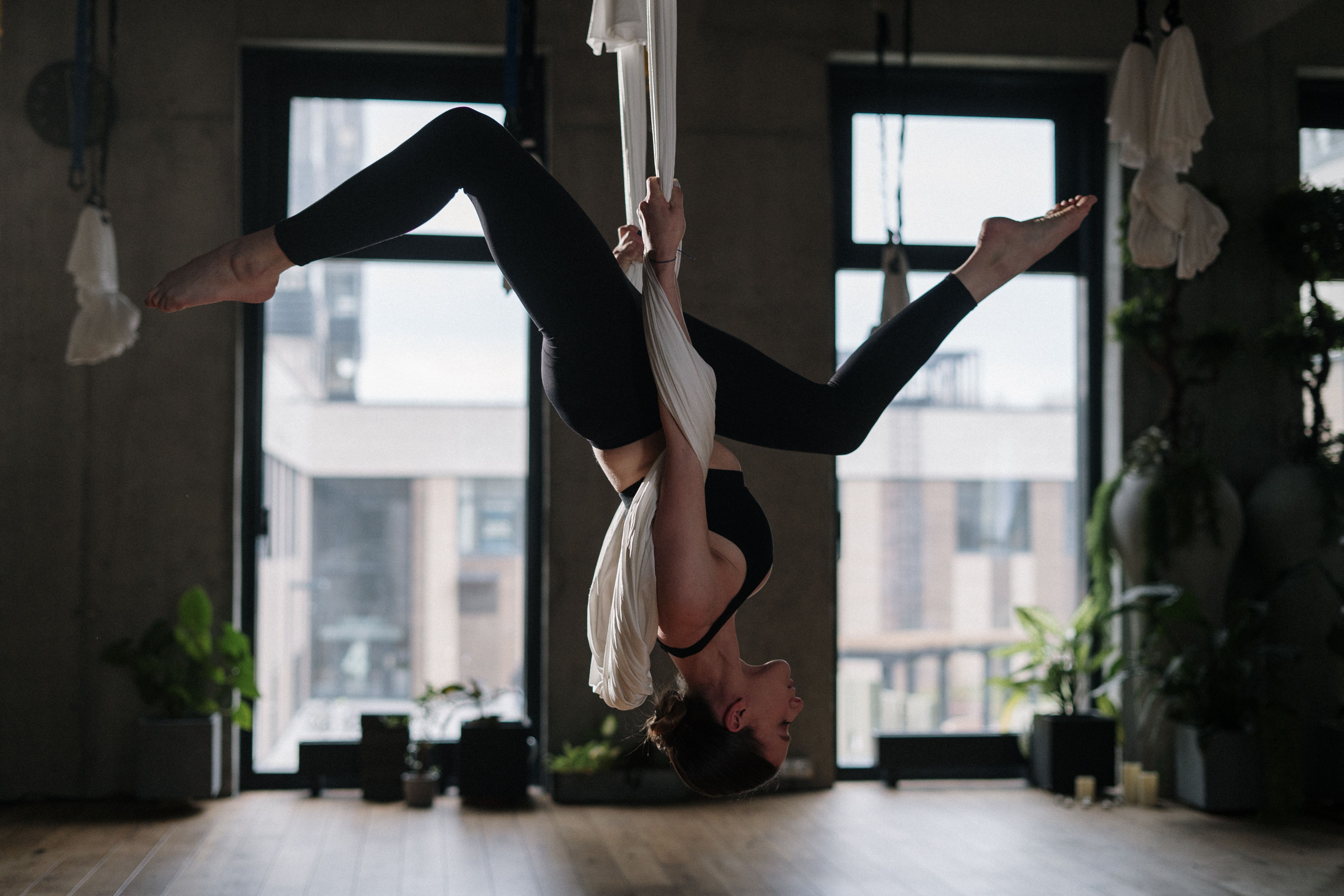
I was hanging upside down in a silk hammock, staring at a gecko on the ceiling, when it hit me: this was the most relaxed I’d felt in months. Not on a massage table. Not lying on a beach. Suspended mid-air in a yoga studio overlooking rice fields near Seseh.
Aerial yoga in Bali wasn’t on my original list. I’d come for the vinyasa, the sound healings, maybe a breathwork session if I felt brave. But a friend dragged me to a class at Udara one morning, “just try it, you’ll love it”, and I haven’t looked back since.
If you’ve been scrolling past those upside-down hammock poses on Instagram and wondering whether aerial yoga is actually worth it, or just another photogenic wellness trend, I get the scepticism. I had it too. But here’s the thing: aerial yoga in Bali is one of the best wellness experiences on the island, and it’s far easier to get into than it looks. You don’t need to be flexible or strong. You just need to show up and trust the fabric.
This is everything I wish someone had told me before my first aerial yoga class in Bali: where to go, what to expect, and what it actually costs.
What Aerial Yoga Actually Is (And Why Bali Does It Differently)
Aerial yoga uses a soft fabric hammock (sometimes called a silk or a sling) suspended from the ceiling about a metre off the ground. You use it to support traditional yoga poses, hang upside down for spinal decompression, and move through sequences that would be impossible on a mat. Christopher Harrison developed the practice in the early 2000s. He was a Broadway aerial performer and gymnast who realised his acrobatic training techniques worked surprisingly well as therapy.
The AntiGravity brand Harrison created eventually spread worldwide, but Bali turned it into something else entirely. Studios here don’t feel clinical. You’re practising in open-air shalas with ocean views, surrounded by frangipani, with a breeze coming off the rice paddies. It changes the experience completely: less “gym class,” more “floating meditation.”
Bali also attracts some of the best aerial yoga teachers in Asia. Many studios run dedicated teacher training programmes, so the instruction is thorough. At Udara, for instance, they offer a 50-hour aerial yoga teacher training certification alongside their daily drop-in classes.
The other thing Bali does differently is price. In London or Sydney, an aerial yoga class might set you back £25–£35 and require booking weeks in advance. Here, you can walk into a studio the same morning and pay as little as IDR 139,000 (roughly £7). That difference means you can actually commit to a regular practice instead of treating it as a one-off novelty, and that’s where the real benefits start showing up.
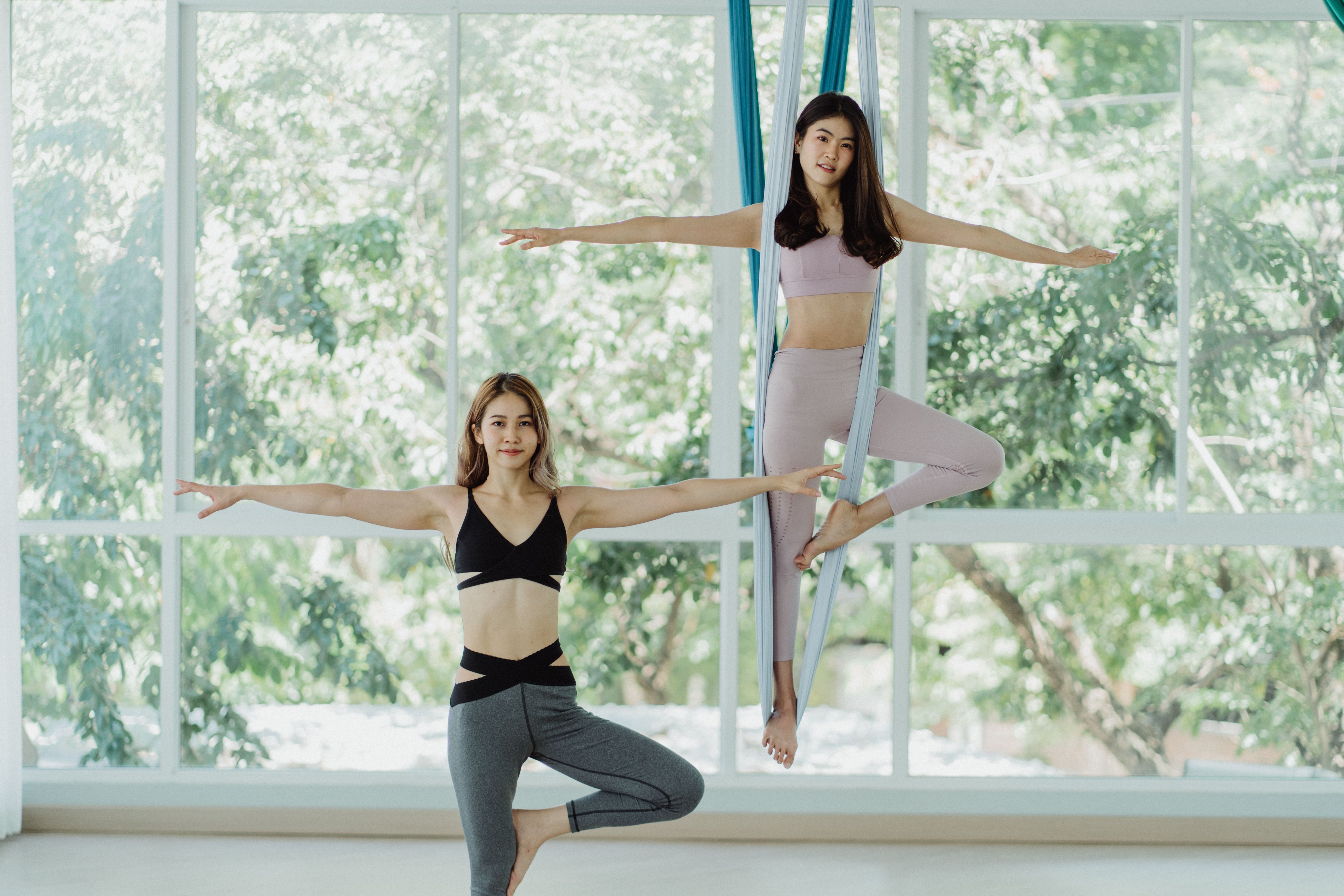
Photo by Ketut Subiyanto / Pexels
Where to Try Aerial Yoga in Bali: Studios Worth Your Time
I’ve tried aerial yoga at half a dozen places across the island. These are the ones I keep going back to.
Udara Bali, Seseh is the one I recommend most for aerial yoga specifically. It sits on the coast between Canggu and Tanah Lot, overlooking Seseh Beach, and runs five or more aerial yoga sessions daily, plus aerial pilates and aerial relaxation classes. The two aerial shalas have ocean views that make the whole thing feel almost absurdly beautiful. Single classes are IDR 150,000, or you can grab three classes for IDR 420,000 (valid for a month). They also do unlimited day passes (IDR 300,000 on weekdays, IDR 350,000 on weekends) which include the pools, sauna, and meditation spaces. It’s adults only, minimum age 14.
Samadi Bali, Canggu offers “FlyHigh” aerial yoga from their studio on Jalan Padang Linjong near Echo Beach. Classes are IDR 155,000 per drop-in. Samadi is known for its plant-based cafe downstairs, so you can refuel with a decent smoothie bowl afterwards.
Radiantly Alive, Ubud runs “Fly High Yoga” classes from five dedicated shalas on Jalan Jembawan. Drop-ins are IDR 165,000. The Ubud setting suits a quieter, more introspective practice if Canggu feels too busy.
The Yoga Barn, Ubud needs no introduction: it’s arguably the most famous yoga studio in Southeast Asia. They include aerial yoga in their class schedule, and at IDR 165,000 a class, it’s the same price as Radiantly Alive. The space is spectacular, set in the jungle on Jalan Hanoman in Pengosekan.
Serenity Eco Guesthouse, Canggu has the cheapest aerial yoga I’ve found on the island (IDR 139,000 per class) from a cosy studio on Jalan Nelayan. Brilliant if you want to try it without a big financial commitment.
What Your First Aerial Yoga Class in Bali Actually Feels Like
Nobody tells you about the first five minutes. You walk in, see a row of hammocks hanging from the ceiling, and your brain immediately starts calculating whether the fabric can hold your weight. (It can.) I watched the instructor at Udara wrap herself into what looked like an impossible cocoon and swing gently back and forth, and all I could think was “absolutely not.”
But then you start. The first moves are gentle: sitting in the hammock like a swing, leaning back, getting used to the fabric supporting your hips. Within ten minutes, you’ve forgotten about the height because you’re only about half a metre off the ground anyway. By twenty minutes, you’re hanging upside down and wondering why you waited so long.
The inversions are the part everyone worries about. Going upside down for the first time feels strange: blood rushing to your head, that mild panic of trusting fabric that’s basically a giant scarf. But the instructor talks you through every step, and the decompression in your spine is immediate. My lower back, which complains after every long-haul flight, went quiet for three days after that first class.
Photo by Dwi Rizqi F / Pexels
Most classes end with a “floating savasana”: lying wrapped in the hammock like a cocoon, swaying gently. This is the bit that gets people hooked. Several women in my class were openly emotional afterwards, which the instructor said happens all the time. Something about being held and suspended loosens tension you didn’t know you were carrying.
One practical note: wear fitted clothing. Loose tops ride up when you’re inverted, and nobody needs that surprise.
The Benefits I Didn’t Expect from Aerial Yoga in Bali
I went in expecting a workout. I got that: my core was sore for two days after the first session, despite years of regular yoga. The hammock forces stabilising muscles to work in ways a mat never does, and the upper body work is surprisingly intense for something that looks so graceful.
But the benefits that surprised me were less physical. Aerial yoga asks for a specific kind of trust: you have to let go of control and let the hammock hold you. For someone who spends most of the day gripping a laptop and clenching her jaw on Zoom calls, that letting-go is properly therapeutic. My sleep improved within two weeks of practising three times a week.
Spinal decompression is the other big benefit, and it’s not subtle. Hanging upside down lets gravity gently lengthen the spine, easing compression from sitting, standing, and carrying bags. If you’ve been travelling with a heavy backpack, or hunching over a laptop in a Canggu coworking space, you feel it straight away. Research into inversion therapy suggests it can reduce back pain, though the specific evidence base for aerial yoga is still developing.
Flexibility improves faster than with mat yoga, because the hammock helps you into deeper stretches without forcing anything. I could touch my toes comfortably within a month, which hadn’t happened since roughly 2012.
And then there’s the mental side. Bali’s wellness scene can feel overwhelming: so many modalities competing for your attention that choosing one becomes its own source of stress. Aerial yoga cuts through that. It’s physical enough to quiet an anxious brain and calm enough to leave you properly settled afterwards.
How Much Does Aerial Yoga in Bali Cost? A Real Price Breakdown
One of the best things about aerial yoga in Bali is the price. Here’s what you’ll actually pay at the studios I’ve visited:
| Studio | Location | Drop-in Price | Approx. GBP |
|---|---|---|---|
| Serenity Eco Guesthouse | Canggu | IDR 139,000 | £7 |
| Udara Bali | Seseh | IDR 150,000 | £7.50 |
| Samadi Bali | Canggu | IDR 155,000 | £7.75 |
| Radiantly Alive | Ubud | IDR 165,000 | £8.25 |
| The Yoga Barn | Ubud | IDR 165,000 | £8.25 |
| Four Seasons Sayan | Ubud | IDR 700,000 | £35 |
The Four Seasons is the outlier. Their AntiGravity® Yoga class takes place in the Dharma Shanti Yoga Bale, a bamboo, lotus-petal-shaped structure set among rice terraces beside the Ayung River. It’s jaw-droppingly beautiful, and the IDR 700,000 price (plus 10% service charge and 11% government tax) reflects that. Private sessions for up to two people are IDR 1,600,000. Worth it as a one-off treat if the budget stretches.
For regular practice, Udara’s multi-class packages are the best deal. Three classes for IDR 420,000 (valid one month) brings the per-class cost down to IDR 140,000, and the unlimited day pass at IDR 300,000 on weekdays is brilliant value if you plan to stay for multiple sessions, use the pools, and linger at the cafe.
Most studios accept cash and card, though it’s always worth carrying rupiah. A few of the smaller spaces still prefer cash, and some add a card surcharge.
Compare those prices to London, where a single aerial yoga class at a decent studio runs £20–£30, and you start to see why so many people build a regular aerial practice in Bali that they’d never manage to afford at home.
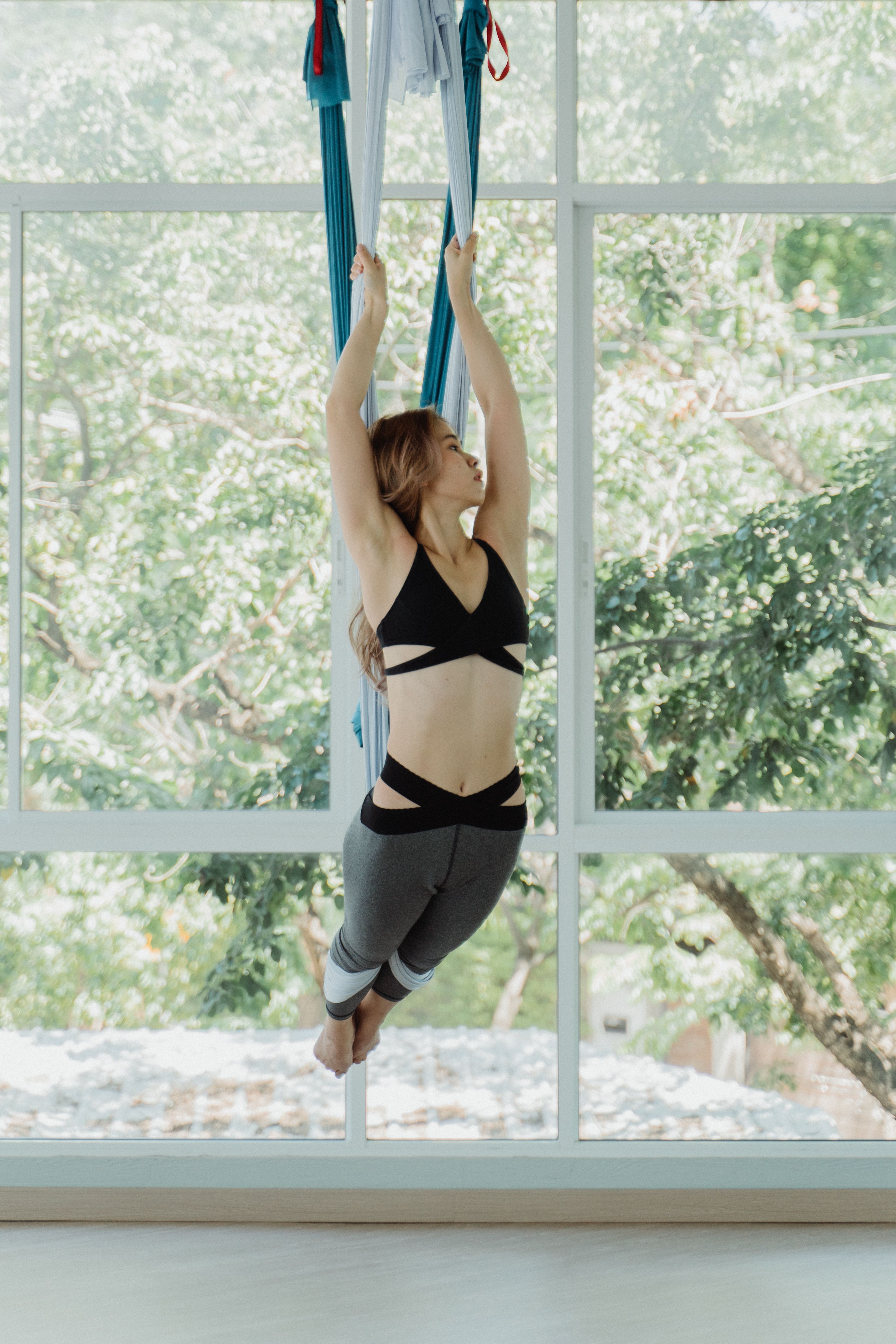
Photo by Ketut Subiyanto / Pexels
Final Thoughts
Aerial yoga wasn’t the Bali wellness experience I planned to fall for. I had my eye on breathwork retreats and sound healing ceremonies, and the hammock thing seemed like something for Instagram rather than for me. I was wrong.
If you’re in Bali and curious, start at Udara or Samadi: both are welcoming to complete beginners, the prices are gentle, and the worst that can happen is you spend an hour swinging gently in a hammock with an ocean view. Hardly a disaster.
For anyone dealing with back pain from travel, desk work, or just the accumulated tension of relocating your life to a tropical island, the spinal decompression alone is worth the IDR 150,000. And if you happen to cry during floating savasana, just know you won’t be the first, and the instructor has definitely seen it before.
Have a question about aerial yoga in Bali, or a studio recommendation I’ve missed? I’d love to hear from you: reply to this newsletter or find me on Instagram @destinedforBali.
FAQs
Q: Do I need yoga experience to try aerial yoga in Bali?
A: Not at all. Most studios run beginner-friendly classes where instructors guide you through every step. Several people in my first class had never done any yoga before, and they got on brilliantly. The hammock supports your body weight, so some poses are actually easier than they’d be on a mat.
Q: Is aerial yoga safe during pregnancy?
A: Most studios in Bali advise against it during pregnancy, particularly the inversions. The compression around the hips and abdomen, combined with going upside down, isn’t worth the risk. Always check with your doctor and let your instructor know before class.
Q: What should I wear to an aerial yoga class in Bali?
A: Fitted clothing: leggings and a snug top that won’t ride up during inversions. Avoid loose shorts, baggy t-shirts, and anything with zips or buckles that could catch on the fabric. Most people go barefoot. Leave jewellery at home too, especially rings and bracelets, as they can snag the hammock silk.
Q: How much does a single aerial yoga class cost in Bali?
A: Drop-in prices range from IDR 139,000 (roughly £7) at budget-friendly studios like Serenity Eco Guesthouse in Canggu to IDR 700,000 (roughly £35) at the Four Seasons Sayan. Most mid-range studios charge between IDR 150,000 and IDR 165,000 per class.
Q: Can aerial yoga help with back pain?
A: In my experience, yes. The inversions and spinal decompression give noticeable relief from lower back pain. Hanging upside down lets gravity gently lengthen the spine, easing compression from sitting and travelling. If you have a specific spinal condition, check with a physiotherapist before trying inversions.
Q: Where is the best aerial yoga studio in Bali?
A: Udara Bali in Seseh is widely considered the best dedicated aerial yoga studio on the island. They run five or more aerial sessions daily in ocean-view shalas, offer aerial pilates and aerial relaxation, and have strong teacher training credentials. In Ubud, Radiantly Alive and The Yoga Barn both run quality aerial yoga classes.
Q: Is aerial yoga a good workout?
A: More than I expected. The hammock needs constant engagement of your core and stabilising muscles, and the upper body work is harder than it looks. I was sore for two days after my first class, despite regular mat yoga practice. Most sessions combine strength, flexibility, and balance work in a single hour.
Q: Do I need to book aerial yoga classes in advance in Bali?
A: Depends on the studio. Udara recommends booking through their website, though walk-ins are accepted when space allows. The Yoga Barn and Radiantly Alive in Ubud can fill up during peak season (July–August and December–January), so booking a day ahead is wise. In quieter months, walk-ins are usually fine.
Q: What is the difference between aerial yoga and antigravity yoga?
A: AntiGravity® Yoga is a branded programme created by Christopher Harrison, using a specific Harrison AntiGravity® Hammock. “Aerial yoga” is the broader term for any yoga practice using a suspended fabric hammock. In Bali, most studios use “aerial yoga” or “fly high yoga,” though the Four Seasons Sayan specifically offers licensed AntiGravity® classes.
Q: Can children do aerial yoga in Bali?
A: Depends on the studio. Udara Bali is adults only, with a minimum age of 14. Some studios run family-friendly or kids’ aerial sessions, but they’re less common. Check with the individual studio before booking if you’re travelling with younger children.


