Things to Do in Ubud: Bali's Cultural Heart
My honest guide to the best things to do in Ubud: Monkey Forest, Tegallalang, the free Campuhan Ridge Walk, Saraswati Temple and the art market, with current 2026 prices.
The first time I walked into the Sacred Monkey Forest, a macaque the size of a cat sat on the path, peeled a rambutan and stared at me like I was the tourist attraction. I’d come to Ubud expecting yoga retreats and smoothie bowls (and there is plenty of that), but what kept me coming back, year after year, was the older, quieter Bali underneath. If you’re working out the best things to do in Ubud, this is the version I’d give a friend: honest, current, and with the prices I actually paid in 2026.
Ubud sits up in the cool hills of Gianyar, about an hour and a half north of the airport on a good run, longer when the traffic on Jalan Raya snarls up. It’s the island’s cultural heart in a real sense: temples with morning offerings, a palace that still hosts dance, rice terraces carved by hand centuries ago. You can do the headline sights in two days, but I’d give it three or four. Below are the spots I send everyone to, what they cost now, and the little annoyances nobody mentions until you’re standing there in the heat wondering where the queue starts.
The Sacred Monkey Forest: Ubud temples and cheeky macaques
Start here, ideally early. The Sacred Monkey Forest Ubud is a 12-hectare sanctuary right at the bottom of Monkey Forest Road, home to over 1,200 long-tailed macaques and three moss-covered temples that the Balinese still use for worship. It’s open daily 09:00 to 18:00, and the Monkey Forest entrance fee in 2026 is IDR 80,000 for adults on weekdays, IDR 100,000 at weekends, with children 6–11 at IDR 60,000.
A word from experience: the monkeys are wild, clever and completely unbothered by you. Don’t carry food, don’t dangle sunglasses off your shirt, and zip your bag. I watched one unzip a day-pack and make off with a water bottle, looking thoroughly pleased. The staff are good with the cheekier ones, and there are sarongs to borrow at the temple sections.
What surprised me was how lovely it is as a forest, monkeys aside: a ravine, a stream, banyan roots like melted candles. Give it an hour, more if you linger by the bathing temple. If you’d rather have it sorted with a guide who knows the etiquette, you can book a Monkey Forest visit here. Go at opening or you’ll share the place with three tour coaches.
Tegallalang rice terrace and the Alas Harum Bali swings
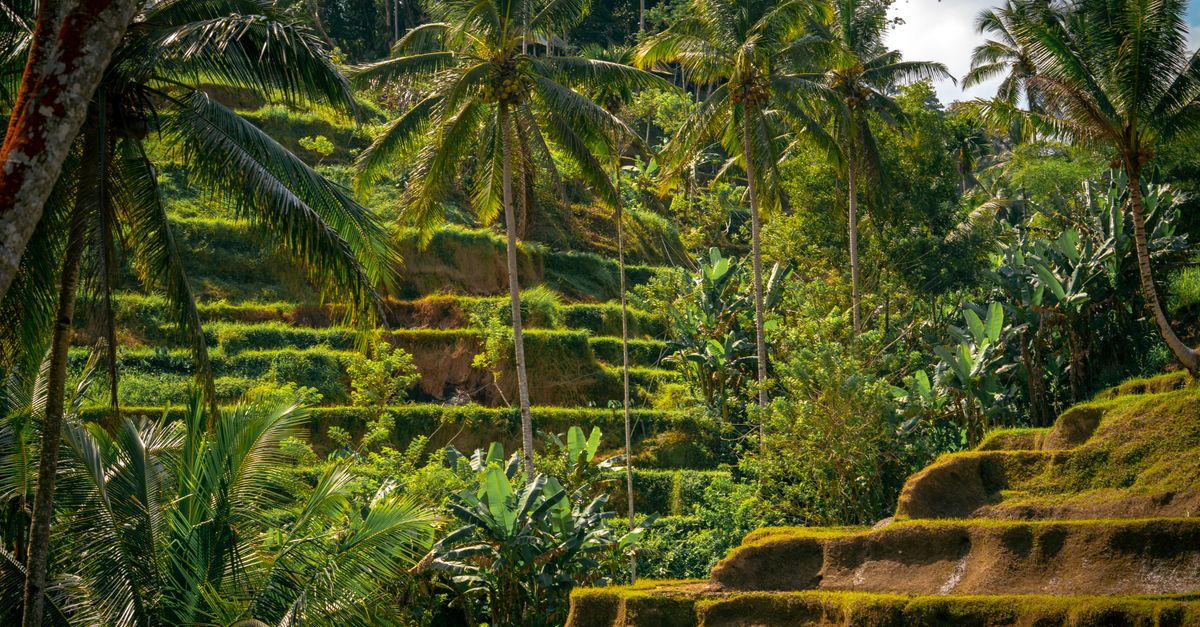
You’ve seen the photo: emerald steps of paddy dropping down a valley, a lone farmer in a coolie hat. That’s the Tegallalang rice terrace, about 20 minutes north of central Ubud. Entry is a small donation of roughly IDR 25,000, though once you’re walking the paths, individual landowners may ask for another small contribution to cross their section. Bring cash in small notes and a bit of patience; it’s how the farming families earn from the foot traffic, and nowhere on site takes cards.
Right beside it sits Alas Harum Bali, a slicker, ticketed operation built into the terraces. Entry is around IDR 70,000, and from there it’s pay-per-thrill: the famous Bali swing in Ubud starts at roughly IDR 150,000 and climbs depending on the package, plus sky bikes and a glass platform for the photos everyone’s after. It’s open daily 07:00 to 19:00. Is it a bit theme-park? Yes. But the views are genuinely huge, and the coffee tasting (including the infamous luwak) is a fun half hour. You can grab an Alas Harum day pass with the swing to skip faffing at the ticket desk. Come before 10am. The swing queues by midday are brutal. Prices here shift often, so always check locally before you go.
Campuhan Ridge Walk: free Ubud walks with the best views
If you do one thing that costs nothing, make it this. The Campuhan Ridge Walk is a paved spine of footpath running along a grassy ridge between two river valleys, just northwest of the centre. It’s free, open around the clock, and the only money you’ll part with is a small parking fee if you arrive by scooter.
I do it at first light. Set off from near the Gunung Lebah temple by about 6am and you’ll have the ridge to yourself, mist sitting in the valleys, the grass still wet. By 8am it fills with influencers and the heat arrives properly, and there’s almost no shade up top, so it’s morning or late afternoon or nothing. The walk itself is gentle, maybe 2km out before it tips into a lane of warungs and cafés where you can stop for a coconut. It’s not technically rice terraces, but the wild alang-alang grass and the river gorges give you that hill-country Ubud feeling without a single ticket booth. Wear trainers; the path bakes hard and slippery after rain.
Saraswati Temple and the heart of cultural Ubud
Tucked behind a café in the middle of town is one of my favourite quiet corners: Saraswati Temple, properly Pura Taman Saraswati. You walk in past a long lotus pond (pink blooms, dragonflies, carved sandstone gates) to a temple dedicated to the Hindu goddess of knowledge and the arts. There’s no entrance fee; donations are welcome, and it’s open daily 07:00 to 17:00. Dress modestly, shoulders and knees covered, as you would at any working temple.
This is the Ubud cultural heart in miniature. In the evenings the courtyard hosts traditional Balinese dance (the gamelan, the flickering hands, the gold headdresses) and you can watch from Café Lotus over dinner or buy a ticket for the performance. I’d happily pay just to sit by the lotus pond at midday with a cold kopi while the offerings get refreshed. It’s a two-minute walk from the palace and the market, so it slots neatly into an afternoon. Go around 9am when the lotuses are open and the light through the gates is at its softest. By mid-afternoon the flowers close up and the magic dims a little.
The Ubud Art Market and a proper rummage
Across from the Royal Palace, the Ubud Art Market (Pasar Seni) is where you’ll do your souvenir damage. It runs roughly 08:00 to 18:00, with some stalls staying open later, and sells the lot: rattan bags, batik sarongs, wood carvings, painted kites, those woven hats everyone brings home. Haggling is expected and good-natured. I usually start at around half the asking price and meet somewhere in the middle, with a smile.
Here’s the honest bit. The ground floor near the entrance is touristy and repetitive; the better, cheaper finds are upstairs and round the back, where the older traders sit. Go early for fewer crowds and fresher patience from the vendors, or late when they’re keen to make a last sale. For real craft (not mass-produced), wander out to the villages: Mas for wood, Celuk for silver, Batuan for painting. Getting between them is far easier with a driver, and hiring a private car and driver for the day costs less than you’d think split between two. While you’re in town, an Ubud cooking class is one of the best ways to understand what you’ve been eating all week.
The best of Ubud isn’t a single attraction: it’s the rhythm of temple offerings, terraced green and slow afternoons that you fall into once the day-trippers leave. Do the Monkey Forest and Tegallalang early, walk the Campuhan ridge at dawn, and leave room to sit by the Saraswati lotus pond doing absolutely nothing. That’s the bit you’ll remember. I’ve been refining this list for years and it still isn’t finished, so if you’ve found a warung, a hidden temple or a terrace I’ve missed, reply and tell me. I’ll go and check it myself.
FAQs
How many days do you need in Ubud? Two days covers the headline sights, but three or four lets you slow down. With more time you can fit in a cooking class, a rice-terrace morning and day trips to nearby temples and waterfalls without rushing.
Is the Monkey Forest in Ubud worth it? Yes, if you go early and respect the monkeys. It’s a genuinely beautiful sanctuary with ancient temples, not just a monkey zoo, and at IDR 80,000–100,000 it’s good value for a peaceful morning before the crowds.
How much does the Monkey Forest cost in 2026? Adults pay IDR 80,000 on weekdays and IDR 100,000 at weekends, with children 6–11 at IDR 60,000. It’s open daily 09:00 to 18:00, and you can pay at the counter or kiosk by cash or card.
Is Tegallalang rice terrace free? No, but it’s cheap, around IDR 25,000 entry, with small extra contributions if you walk through individual farmers’ sections. Bring small notes of cash, as the booths don’t take cards.
How much are the Bali swings at Alas Harum? Entry to Alas Harum is around IDR 70,000, and the swings start at roughly IDR 150,000 and rise by package. Sky bikes and glass-platform photo spots cost extra on top.
Is the Campuhan Ridge Walk free? Yes, it’s completely free and open 24 hours; you only pay a small parking fee if you arrive by scooter or car. Go at sunrise or late afternoon, as there’s almost no shade on the ridge.
Do you have to pay to enter Saraswati Temple? No, Saraswati Temple has no entrance fee. Donations are welcome. It’s open daily 07:00 to 17:00, and you should dress modestly with shoulders and knees covered.
What time does Ubud Art Market open? The market generally trades from around 08:00 to 18:00, with some stalls open later. Early morning is best for smaller crowds, while late afternoon vendors are keener to make a final sale.
Can you haggle at Ubud Art Market? Yes, haggling is expected and friendly. I usually start at about half the asking price and settle somewhere in the middle, always with a smile: it’s part of the experience, not a battle.
Is Ubud worth visiting over the beach towns? If you want culture, green hills and temples, yes. Ubud is Bali’s cultural heart (slower and cooler than the coast), though it’s busier and pricier than it used to be, so go early and stay a little out of the centre.
Before you go: I wrote this in 2026 and double-checked every price, fee, opening time and rule I could, but Bali changes fast. Treat the figures here as a guide and confirm the latest details before you book or travel.
Some of the links in this article are affiliate links: if you book through them I may earn a small commission at no extra cost to you. I only ever recommend things I would happily send a friend to.